ELECDURA NETWORK

Your Whole New Supply Chain For Heavy-Duty Parts
Whatsapp:
+86 18915027366
Phone:
+86 18915027366
Views: 0 Author: Elecdura Publish Time: 2025-06-13 Origin: Site
German turbocharger buyers should shortlist manufacturers and supply partners by the required application, product condition and service route, not by a universal brand ranking. BorgWarner, Garrett, BMTS, Continental and MAHLE provide manufacturer or manufacturer-backed aftermarket reference points; MOTAIR, BTS Turbo and BE Turbo offer specialist supply routes relevant to Germany. Their coverage and commercial roles differ. Confirm the complete turbo identity, the actual product line being quoted and the party handling returns before comparing prices. A German address does not prove German manufacture, and an electric actuator does not, by itself, identify a variable-geometry turbocharger.
This guide is for fleet purchasing teams, commercial-vehicle parts distributors and repair coordinators who need a defensible replacement order. It preserves the distinction between choosing a supplier and approving a particular turbo. A company can be relevant to the first decision while having no verified replacement for the engine in front of you. The practical outcome is a shortlist tied to complete assembly references, application records and agreed supply conditions.
For an independent aftermarket enquiry, the heavy-duty turbocharger range is a starting point for discussing the required product family. It is not evidence that a listed replacement is made by, authorized by or interchangeable with any manufacturer discussed here. Keep the installed turbo identification and engine details attached to the enquiry so the commercial conversation begins with a specific application.
The companies below are included because official product information or manufacturer-side distributor records establish a relevant role. Their order is not a comparison of reliability, market share or factory quality. No site audit, sample test or endorsement of these companies is implied. In a German sourcing exercise, the useful comparison is whether a route can supply the required assembly and support the transaction you intend to make.
On smaller screens, swipe the comparison table horizontally to view all three columns.
| Company or programme | Role to distinguish | Question that changes the enquiry |
|---|---|---|
| BorgWarner | Turbo manufacturer with a defined REMAN programme | Is this new supply or an identified programme remanufactured unit? |
| Garrett Motion | Manufacturer with several replacement product lines | Which product line and complete catalogue reference are offered? |
| BMTS Technology | Manufacturer whose aftermarket programme extends beyond its own turbos | What is the identity and application basis of this particular catalogue item? |
| Continental Aftermarket | Published OE replacement projects for selected applications | Does the documented programme include this engine? |
| MAHLE Aftermarket | Manufacturer-backed programme with truck turbocharger coverage | Which truck application, reference and installation information apply? |
| MOTAIR Turbolader | German specialist distribution route listed by turbo manufacturers | Which brand, condition and current supply arrangement will appear on the order? |
| BTS Turbo | Specialist supplier with ORIGINAL, REMAN and BUDGET lines | Who made or remanufactured the offered unit, and what accompanies it? |
| BE Turbo | Specialist distributor with original-manufacturer and remanufactured offers | Which offered product, rather than the whole business, does a claim describe? |
A truck-focused buyer does not need to request the same quotation from every company in the table. Eliminate routes without a documented match before discussing quantity or discount. Conversely, a supplier whose public page emphasizes passenger cars should not be dismissed solely for that reason if it provides a separate, verifiable commercial-vehicle catalogue match. Application evidence determines relevance; the prominence of a brand name on a search results page does not.
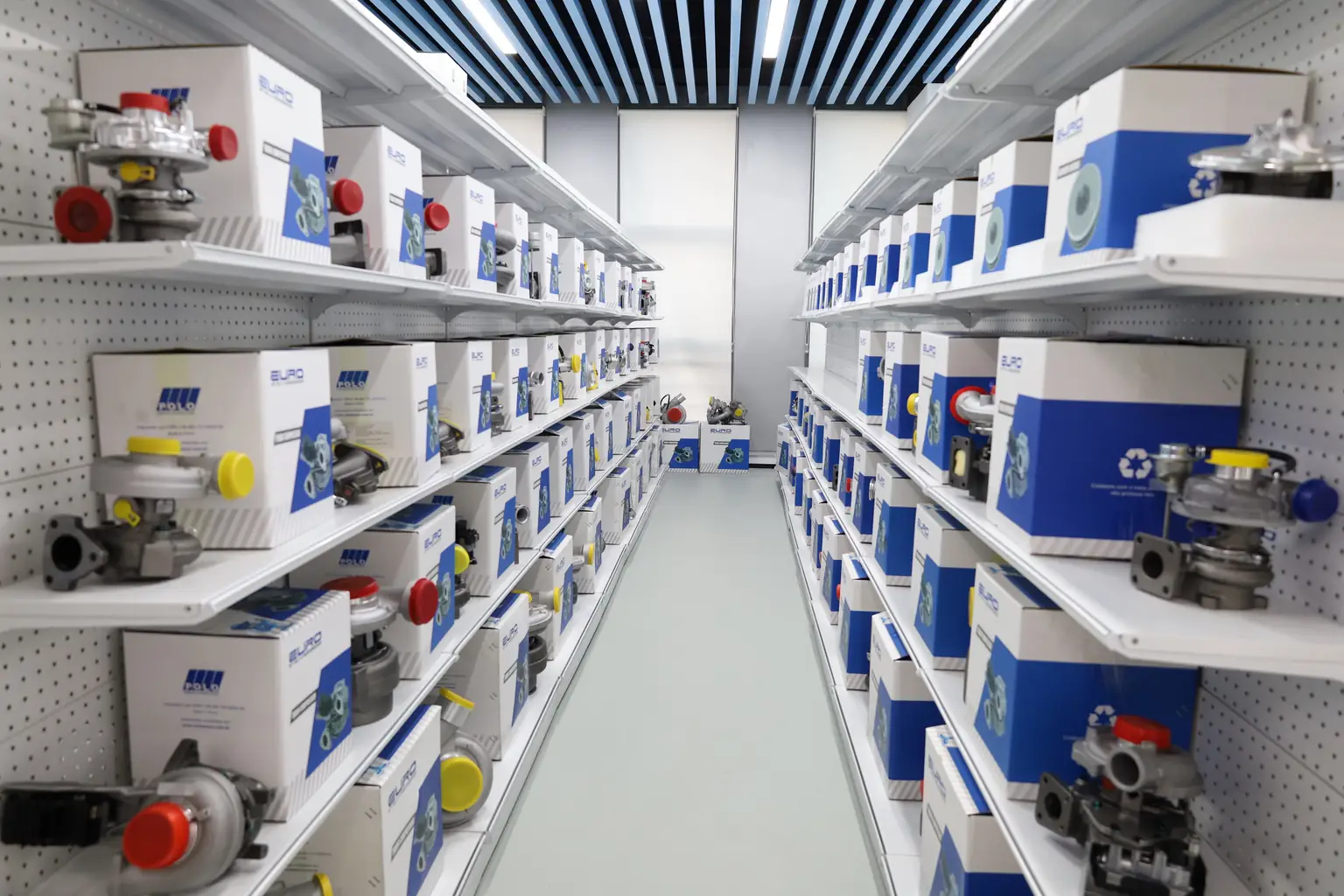
Sample displays can document visible products, but the manufacturer, supply route and origin require separate records.
BorgWarner is a turbocharger manufacturer, and its official REMAN programme describes remanufactured products for passenger cars and commercial vehicles. Programme identity matters: an independent workshop rebuilding a BorgWarner-branded housing is not thereby supplying an official BorgWarner REMAN product. The original casting brand and the organization responsible for the finished replacement are separate facts.
Before sending a removed turbo back, establish whether the offered programme accepts its reference and condition. BorgWarner's published rules exclude dismantled turbos and units with broken connecting flanges, and require eligible cores from OE turbo manufacturers. A workshop should therefore resolve the return route before breaking down a core merely to prepare a purchasing photograph. The page links an accepted-core list; the presence of a familiar brand on the old unit is not sufficient.
For your comparison sheet, keep the replacement price, core surcharge and any expected credit separate. This makes an offer with a conditional credit visibly different from a new-unit quote with no core obligation. Ask the seller to connect its quotation to the relevant programme and acceptance terms, rather than using the word remanufactured as an unexplained quality label.
Garrett's replacement catalogue and product-range guide distinguish Original Equipment, Original REMAN and other programmes. Those names should remain visible in the quotation. The company's technology portfolio includes commercial-vehicle applications, but a broad portfolio does not establish availability for every engine or make one programme a substitute for another.
A distributor buying Garrett-branded replacements should ask for the complete catalogue number and the offered product line together. If the quote contains only a turbo family, the receiving team cannot reliably reconcile the carton with the approved application. If the product line changes during negotiation, revisit condition, included components and return terms instead of assuming that a shared brand preserves the original offer.
Use the manufacturer's replacement distributor locator when the seller claims authorization. A listing supports the identified channel relationship, not the fitment of every item sold through it. For an unlisted reseller, the appropriate next question concerns traceable upstream supply; absence from a locator alone is not proof that a physical turbo is counterfeit.
The BMTS aftermarket programme explicitly includes passenger-car, commercial-vehicle and agricultural applications. It also states that the programme extends beyond BMTS' own turbochargers. This is an important qualification when a purchasing team moves from recognizing BMTS as an OE manufacturer to interpreting an individual aftermarket catalogue item.
Ask which exact product is offered, how its replacement reference was established and which documentation applies to the supplied configuration. Do not describe every item in the wider programme as the same BMTS unit originally installed by the vehicle manufacturer. Equally, wider programme coverage is not a reason to reject an item: it is a reason to record its identity accurately before comparing it with a brand-specific alternative.
For an agricultural or mixed-fleet enquiry, separate each engine installation rather than sending one equipment-brand description. A programme covering agricultural applications can justify approaching that supply route, but it does not resolve differences between engine ratings, installation arrangements or turbo revisions. The catalogue match must still explain why the proposed assembly belongs on the requested machine.
Continental's published turbocharger range presents projects for Ford's 1.0-litre EcoBoost, Volkswagen Group 2.0-litre petrol engines and BMW Group 1.5-litre petrol engines. These are specific application programmes, not evidence of comprehensive truck coverage. A heavy-duty buyer should not interpret Continental's inclusion in a German supplier article as proof that it has a replacement for the truck under review.
The BMW application and distributor page also identifies an electric wastegate actuator. This provides a concrete example of why electrically driven control and variable turbine geometry must not be treated as equivalent labels. Its application table illustrates the more useful purchasing approach: connect an aftermarket reference to documented engine and vehicle applications.
If your enquiry is outside the published projects, request affirmative catalogue evidence rather than inferring either inclusion or exclusion from the brand's reputation. Keep the answer with the quotation. A buyer should be able to explain why a supplier was retained on the shortlist without claiming that every product in its wider business was reviewed.
MAHLE's commercial-vehicle information specifically includes exhaust-gas turbochargers in its truck offering and describes manufacture across group facilities. This supports considering MAHLE as a manufacturer-backed aftermarket route for truck enquiries. It does not establish that every supplied turbo was made in Germany or that the requested engine is covered.
Use the offered MAHLE reference to obtain the applicable catalogue record and installation information. Where a repair requires additional lines, seals or hardware, specify which items are included and which remain separate. The existence of a broad engine-parts programme does not make an unspecified collection of parts a complete, application-approved installation package.
A fleet purchasing team can also ask which technical information will reach its workshop with the order. Product support is most useful when it resolves an application-specific issue: an installation restriction, an included component or a replacement-reference question. General training availability should not be entered into the purchase record as evidence that the offered turbo has already been checked against this engine.
MOTAIR is a relevant German specialist supply route because it appears in the manufacturer-side distribution records published by Continental and Mitsubishi Heavy Industries' European turbocharger distributor directory. A manufacturer's listing is stronger evidence of that particular relationship than an unrelated seller's display of several brand logos.
That evidence should not be stretched into a claim about every product MOTAIR currently offers. Ask the company or supplying channel to identify the brand, new or remanufactured condition, assembly number and return arrangement of the actual quote. A distribution relationship and responsibility for remanufacturing are different roles, even when both can occur within one specialist supply business.
For buyers using older catalogues or saved supplier notes, reconfirm the programme name and order contact before sending a core or arranging collection. Historical commercial information may still be useful for finding a route, but it should not define today's transaction. Keep the response tied to the named seller and purchase reference so a later receiving query can reach the party that made the commitment.
The BTS product-line descriptions distinguish ORIGINAL products from series manufacturers, REMAN units remanufactured by BTS, and the BUDGET alternative range. These are useful commercial distinctions. A BTS REMAN unit should not be described as remanufactured by the original turbo manufacturer merely because the original hardware carries that manufacturer's identity.
When reviewing alternatives from the same supplier, keep the product-line field beside the price. Otherwise, an internal purchasing system can turn a change of condition or source into what appears to be a discount on the same article. Confirm the offered application and included scope for each line rather than transferring approval from an ORIGINAL quotation to a BUDGET quotation without review.
BTS also describes supply as individual turbos, turbos with mounting kits and service sets on its products page. For a workshop order, write down the selected package and its contents. The word complete should refer to an agreed list, not to a purchasing team's assumption that every ancillary item needed by the repair is inside the carton.
BE Turbo's official business description presents original-manufacturer supply and a separate remanufactured offer, with commercial-vehicle, agricultural, construction and other application categories. Its German-made wording appears in the remanufactured-product context. That wording must not be expanded into a statement that every new turbo supplied through the company was manufactured in Germany.
For a mixed order, ask the quotation to distinguish new original-manufacturer products from the remanufactured items rather than assigning one condition to the entire shipment. Where a country-of-origin requirement matters to your customer, obtain evidence for the relevant item or lot. A statement about a remanufacturing programme cannot settle the origin of an unrelated new product from a global manufacturer's catalogue.
BE Turbo publishes several service and availability claims. Treat those as matters to confirm for the reference, destination and order date, not as independently audited performance results. For a German workshop awaiting a replacement, a written dispatch commitment for the identified unit is more useful than importing a website-wide delivery headline into an order with different circumstances.
A replacement enquiry should record the turbine-control design first. For a wastegated or variable-geometry turbo, record the actuator drive separately. Wastegate and variable-geometry describe the control mechanism; pneumatic and electric describe its drive. A documented free-floating turbo has no integral control mechanism, so its actuator field can correctly be not applicable. Mixing these descriptions in a single list can misclassify a legitimate product.
A wastegate regulates a bypass around the turbine wheel. Variable-nozzle or variable-geometry designs alter the exhaust-flow passage through a movable mechanism. Garrett's explanation of turbocharger types describes wastegate actuation by pneumatic or electric means and variable-nozzle actuation by pressure, vacuum or electronics. The existence of an electrical connector therefore does not establish which turbine-control design is present.
For procurement, write the two fields separately even when the supplier's catalogue combines them in a product description. Record the design from the application evidence, then record the actuator identity and connection arrangement where applicable. Distinguish a confirmed absence of an actuator from missing information. Mark a genuinely unknown field unresolved; an inferred label can silently select the wrong assembly.
Photographs help document the installed arrangement, but they have limits. A visible actuator housing does not reveal its internal electronics, operating specification or application calibration. A pneumatic capsule does not, without supporting information, establish whether its intended control supply is pressure or vacuum. Ask for the reference and application basis rather than turning the appearance of a hose or connector into a functional approval.
The same caution applies to replacement proposals involving transferred actuators. A quote for a complete turbo with its specified actuator is different from a quote that expects the workshop to reuse, set up or adapt a removed component. Require the supplier to state that condition before approval. The responsible workshop must use the application-specific service information; a supplier shortlist is not an instruction to change linkage length, stops, electrical connections or calibration.
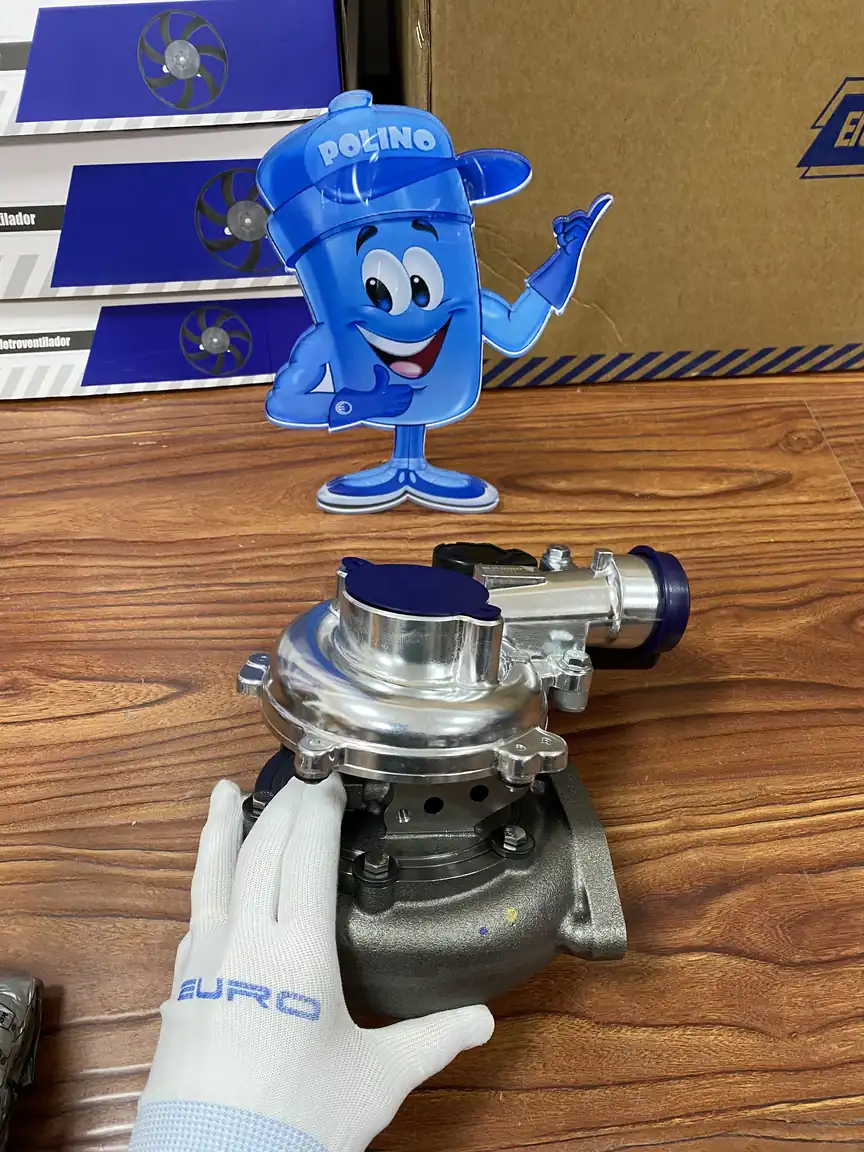
Compare visible interfaces with the approved configuration; confirm the control design and actuator specification from the application record.
A German purchasing route can involve a global manufacturer, a German distributor, an overseas production location and a workshop in another country. None of those facts is contradictory. The problem begins when a buyer uses one address to stand in for the entire chain. Record the legal seller, the party dispatching the goods and the claimed product origin as separate entries.
Manufacturer-side directories make this distinction tangible. Continental's published channel information names BE Turbo, BTS and MOTAIR in Germany; MHI's European directory also lists these German distribution routes. This supports a reason to contact them for the relevant manufacturer programme. It does not say that the distributors manufactured those brands' products, that every catalogue item is German-made or that any unrelated reseller is covered by the same authorization.
If a customer specifies German manufacture, clarify the requested fact before requesting quotations. They may mean a German brand, a German seller, manufacture at a German site, or local support. Those are materially different requirements. Ask what product-origin evidence the customer's purchasing process requires and have the proposed seller state what it can provide for the exact goods. Do not silently substitute a German invoice address for a manufacturing requirement.
For remanufactured supply, the place where the current remanufacturing work occurred and the origin of the original components can be different facts. Ask which claim the documentation supports. This guide does not determine customs origin or eligibility for a trade preference; those questions require the applicable transaction documents and qualified trade advice. A marketing phrase is not a substitute for that review.
German local support can still be commercially valuable even when the product was made elsewhere. Identify who receives a disputed unit, who authorizes a return and who communicates the assessment to your workshop. Confirm the working language, required records and destination for the return. These arrangements affect how the transaction will be managed, but they should be negotiated and recorded rather than assumed from the supplier's location.
Start with the complete identity of the installed turbo, not a broad request such as turbo for a German truck. Obtain a readable nameplate photograph and a faithful transcription of its references. Keep the vehicle or equipment identity, engine designation and relevant installation information alongside it. Where the removed unit may already be an alternative replacement, distinguish its label from the engine manufacturer's parts record.
A different offered number does not automatically mean a mismatch. It may represent a service reference, a replacement programme or a supersession, but the supplier needs to explain the relationship. Ask which catalogue record or manufacturer notice connects the installed application to the new number. Retain both references and that explanation; replacing the old number in a spreadsheet loses the trail needed to review a later discrepancy.
Define the physical supply scope next. Does the quote cover a complete turbo, an assembly without its actuator, or a core intended for rebuilding? Which gaskets, clamps, fasteners or other installation items are included? List exclusions as clearly as inclusions. A complete turbocharger is not automatically a complete engine-side repair package, and a pictured accessory is not necessarily a supplied accessory.
Then resolve configuration differences that the application record does not answer. Compare the agreed port and flange arrangement, mounting features, housing orientation and actuator connection with the installed configuration. Use like-for-like photographs with clear viewpoints. Where dimensions are necessary, state the reference points and the applicable drawing or specification; do not approve a measurement described only as about the same.
For an import or repeat-stock order, establish whether the approval concerns one sample, one identified batch or a continuing specification. Ask the supplier to disclose a change in source, product line, assembly configuration or label reference before shipping against the next order. This is especially important when a distributor can offer several alternatives under one familiar search reference. A repeat order number should not hide a change of product.
Receiving inspection should answer whether the delivered unit matches the agreed order and arrived in acceptable visible condition. Photograph the product and carton identities before labels are separated from the unit. Compare the supplied brand, condition, reference and accessories against the quotation. If the carton and product disagree, hold the affected item while the seller explains the discrepancy; do not correct the label locally and erase the evidence.
Inspect visible interfaces for impact damage, contamination, missing protection and obvious configuration differences. A damaged flange or exposed opening matters because it changes the receiving decision. Record what you can see without attributing an unseen cause. A damaged carton does not prove internal turbo damage, and an intact carton does not eliminate the need to inspect the assembly.
A hand rotation, an attractive casting or a clean paint finish is not a substitute for model-specific performance evidence. Separate visual acceptance from any balancing, airflow-setting or actuator-setup documentation required by the purchase specification. Request the applicable evidence and identification from the responsible supplier. Do not manufacture a universal clearance, rotational feel or actuator movement threshold from examples belonging to another turbo design.
When the offer concerns a core or a partial assembly, the receiving question changes. The buyer must know which housings, controls and other components will be reused and who accepts responsibility for the completed unit. A collection of correctly identified parts is not automatically an approved complete turbo. This is why a parts display should explain supply scope, not stand in for evidence that a finished assembly has been tested.
Keep the receiving record concise enough to use again: accepted identity, observed condition, included items and unresolved differences. For a pilot installation, retain the workshop's application and service records separately. Acceptance of the delivery establishes what was received; a successful installation adds evidence for that application under its recorded conditions. Neither event proves the suitability of every other reference offered by the supplier.
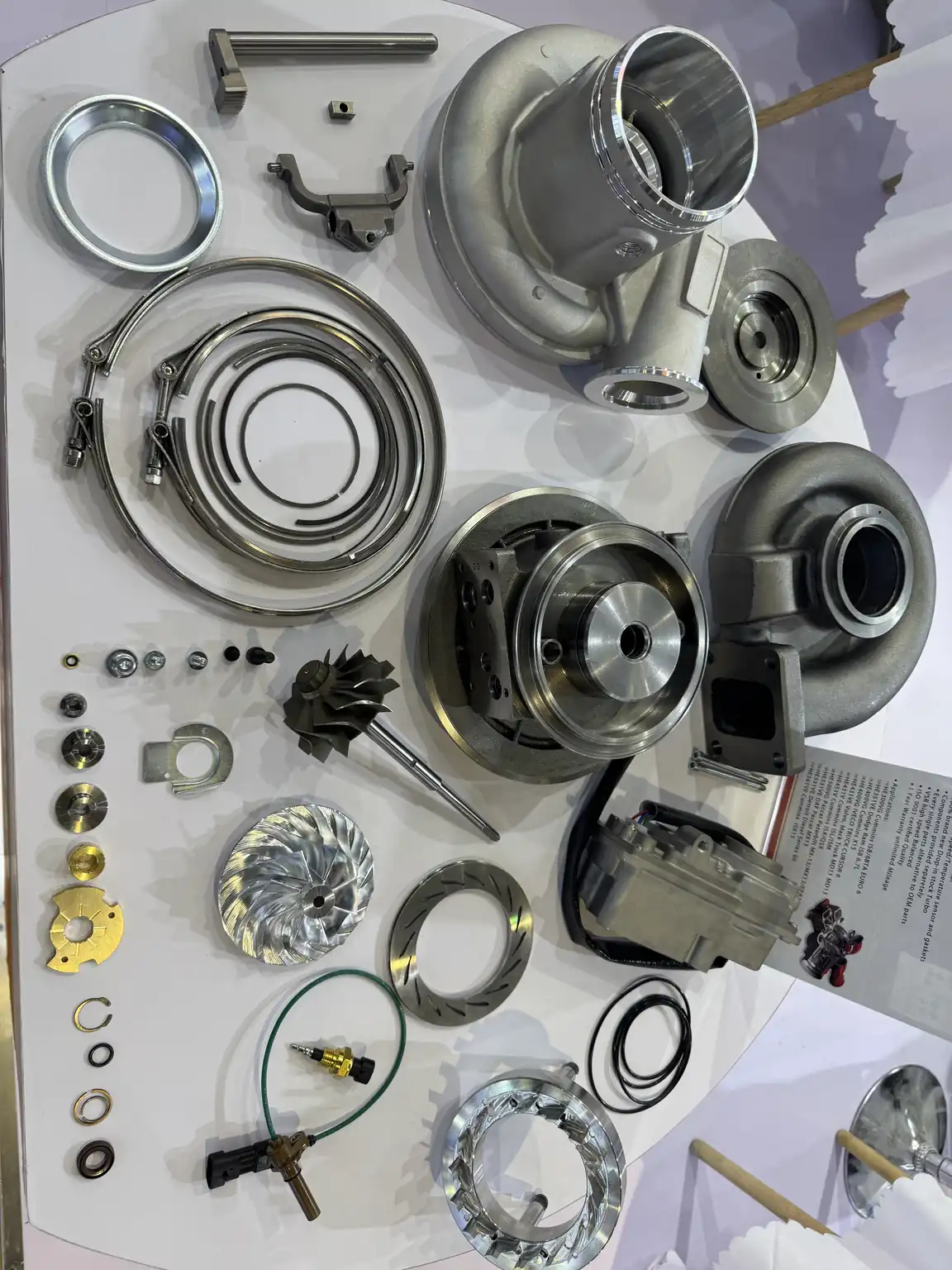
A component display explains possible supply items; it does not prove that every part belongs to one matched, tested turbocharger.
Only compare prices after product identity and condition are aligned. A new manufacturer-branded turbo, a named manufacturer's remanufactured product and a specialist's remanufactured alternative are different offers. They may all merit consideration, but a lower price is not automatically a discount on the same product. Show the difference explicitly so the person approving the order understands what changed.
For core-based supply, record when any surcharge becomes payable, what evidence accompanies the returned unit and what happens if the core is rejected. Confirm the practical return route before assuming a credit in the repair budget. A core held by a remote workshop, an already dismantled unit or an uncertain original reference can change the attractiveness of an exchange arrangement even when the replacement itself is appropriate.
Distinguish goods available for allocation from a catalogue entry or an estimated replenishment date. Ask the seller to confirm the offered reference, quantity, dispatch basis and delivery destination together. If the vehicle is immobilized, communicate the required arrival date and ask whether the proposed commitment meets it. Do not convert a general website delivery claim into a guaranteed result for a different destination or an unavailable item.
Return handling also belongs in the comparison. Establish how a wrong-reference claim differs from a reported operational failure, which records are required and whether a replacement can be supplied while the case is reviewed. The answer is a commercial term to agree, not a warranty promise this article can make on a supplier's behalf. Compare the terms actually offered instead of ranking companies by assumptions about their support.
Consider a hypothetical fleet buying one urgent replacement and planning stock for a later maintenance cycle. The urgent unit needs an exact application match and a confirmed dispatch commitment. The stock order needs those same identity controls plus an agreed repeat-supply specification. Combining them into one request for the cheapest turbo can obscure which requirement matters to each line.
For the urgent line, send the installed assembly reference, engine information, photographs of relevant connections and the required supply condition. Tell the supplier whether the workshop needs an actuator-equipped complete unit or has an explicitly approved alternative scope. Record the original reference even if a new service number is proposed. Ask for a clear answer on the unresolved match before spending time negotiating an unrelated bulk discount.
For future stock, separate the confirmed applications and quantities instead of assuming one turbo will cover a mixed fleet. Identify what makes each line different and ask the supplier to quote those lines individually. A company with a broad programme may help consolidate purchasing, but consolidation should follow verified matches. It should not force different engine installations into one reference for the convenience of the ordering system.
Your final enquiry should include the destination, acceptable product lines, quantity, required date, accessory scope and any origin or return-document requirement. State which details remain unknown. Ask the supplier to identify the proposed brand and condition and to explain any substitution. That creates a useful written response even when the answer is that the requested combination cannot be supplied.
Elecdura can be approached through the heavy-duty turbocharger enquiry route for an independent aftermarket matching discussion. Provide the installed reference, engine details and connection photographs, and request confirmation of the offered configuration and commercial terms. Elecdura is not presented here as a German manufacturer or an authorized representative of the companies in this shortlist.
This comparison concerns replacement sourcing, not engine redesign, performance tuning or emissions-system modification. If the proposed installation changes the original operating specification, it requires an engineering and application review beyond a supplier comparison. A physically similar turbo is not an approval for a different duty or control strategy.
It also does not establish that the turbo caused an engine complaint. The workshop must determine the required repair through the applicable service process before purchasing is asked to choose a replacement. Where a customer contract or the application requires a particular approved source, use that requirement to constrain the shortlist. Do not treat a general aftermarket option as permission to bypass a specific acceptance condition.
Agree a shared description of the product line, condition and included scope while preserving the original part references exactly. Keep the supplier's original quotation with the translated purchasing record. If a translated condition could mean either repair, remanufacture or exchange supply, ask the seller to clarify it in writing. Translation can make the document usable, but it should not silently resolve a commercial ambiguity or alter a product identifier.
No. A temporary website failure does not establish that the company has stopped trading or supplying a programme. Retain the candidate as unconfirmed where appropriate, use a current manufacturer-side channel record when available and obtain a dated response from the supplier. Do not replace missing evidence with an old marketing claim. The order can proceed only when the information needed for its approval is resolved through an acceptable source.
Review the change before treating the previous approval as valid. A shared application cross-reference does not make a new original product, a remanufactured unit and an independent alternative the same commercial item. Ask what changed in condition, source, included components and supporting documentation. Keep the old approval and the new proposal linked, then record the decision for the new offer instead of overwriting the earlier evidence.
Not necessarily. Core eligibility and replacement fitment answer different questions. Ask why the returned unit was rejected and compare that reason with the agreed core terms. Separately verify that the supplied replacement matches the approved engine application and configuration. A lost core credit can change the commercial outcome without proving a fitment defect; conversely, an accepted core does not prove that the replacement is correct.


