ELECDURA NETWORK

Your Whole New Supply Chain For Heavy-Duty Parts
Whatsapp:
+86 18915027366
Phone:
+86 18915027366
Views: 0 Author: Site Editor Publish Time: 2026-06-12 Origin: Site


Published company information can help an alternator buyer decide whom to contact, but it cannot approve the supplied part. Compare a company's stated product range with the evidence available for the exact alternator being quoted: its identity, electrical and mechanical configuration, condition, sample record and repeat-order controls. A company that offers a relevant product family is a candidate for an enquiry, not automatically an approved supplier for every application.
This directory introduces China-based alternator businesses through their own published materials. It is not an audited league table. The profiles distinguish stated product scope from the questions a buyer still needs to resolve. A brand-series heading, export claim or factory photograph does not establish that a particular alternator is available, interchangeable or suitable for a buyer's market.
The scope is vehicle alternators and related rotating-electrical components, rather than generator-set alternators. Inclusion reflects a relevant published product offering, not independent verification of current certification, production capacity, stock or export eligibility. Use the profiles to identify a suitable contact, then request evidence tied to the order.
Screening field | Evidence to request | Question it resolves |
|---|---|---|
Supplier identity | Legal seller, operating address, export entity, bank beneficiary and production relationship. | Do the website, invoice and responsible parties describe the same transaction? |
Vehicle product scope | Exact alternator family, voltage, output, mounting and application. | Is the offered product relevant to the required machine? |
Part identity | Offered reference, cross-reference basis, applicable supersession information, drawing and sample label. | Does the evidence support this part, rather than only a catalogue family? |
Process control | Required certificate scope, control plan and traceable test records. | What was checked for the actual sample or lot? |
Commercial responsibility | MOQ, delivery terms, lead time, claims process, packaging and change notification. | Who resolves a discrepancy, and what was agreed before ordering? |
The names are alphabetical, not ordered by quality, capacity or market share. The linked materials are company-authored discovery sources. The follow-up questions are purchasing recommendations, not findings that a company has failed an audit.
The Dongsheng website presents automotive starters and alternators. For an initial enquiry, request the offered part number, application basis, supplied condition and responsible production location. Broad overseas-market statements do not establish coverage for a specific vehicle or duty cycle; use sample-specific information to assess that offer.
Published CHCD product materials describe automotive alternators and starters across vehicle and equipment applications. Ask the quotation contact to connect the requested reference to a current technical sheet and identify the contracting entity and production responsibility. An application-area heading is not a replacement-catalogue entry for the buyer's exact part.
The Cixi Huaxing website presents alternators and components and publishes quality-system and testing-equipment statements. If certification is required, obtain the current document and verify its entity, site and scope through the appropriate issuer. For the part itself, ask for a sample-linked output record with test conditions; an equipment photograph cannot supply those results.
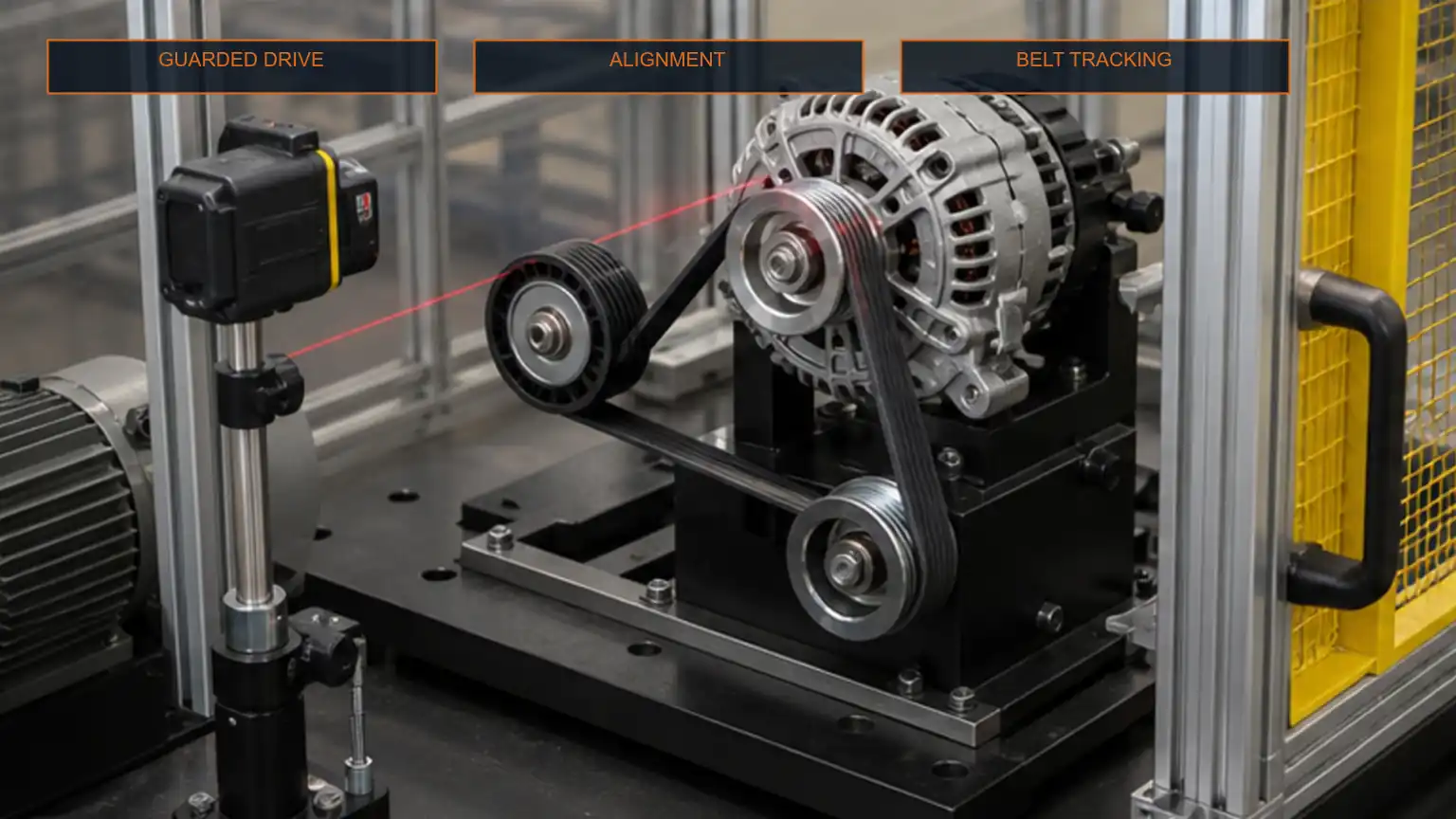
A controlled output check needs an approved specification. This staged illustration is not a supplier test report.
The EXEN website presents automotive alternators and starters and separately names Wenzhou and Jiangsu Excellens businesses. The relevant purchasing question is which entity and site will supply the requested part, not whether all statements under one brand can be combined into one company profile.
Ask the quotation to identify the seller and responsible site. Match any quality document and sample label to that scope. A document covering one named facility should not be treated as evidence for another without a demonstrated connection.
The Hebei Changli product site lists starters, alternators and related components. Specify whether the enquiry is for a complete alternator or a component. Ask for the offered reference, regulator and terminal configuration, condition and sample identification; these fields are more useful to a purchase decision than general company descriptions.
The Jinteng catalogue separates complete starters and alternators from component categories. That distinction matters when comparing offers for a distributor and a rebuilder. State the required supply form and included parts; a regulator, rectifier or pulley quotation is not comparable to a complete-unit price, even when the same family name appears.
The Moton website explicitly presents new and remanufactured starters and alternators. Require the supplied condition on each quotation line and label rather than inferring it from the company name or a generic product photograph.
For a new-unit order, establish the agreed component and assembly condition. For remanufactured supply, ask about core-return requirements, accepted-core rules, included replacement parts and the release record. Do not assume every reman offer uses the same process or core-credit arrangement.
The Zhejiang PL Electric catalogue exposes reference, application and electrical-specification fields. Use the actual product entry when requesting a controlled quotation. Listed vehicle and original-brand names describe catalogue references, not affiliation or automatic interchange across an entire family. Resolve the offered unit's identity from its specifications, not a category-page label alone.
The Ruishen site groups starters, alternators, DC motors and their components separately. A complete-alternator buyer needs a complete-unit identity and release record; a rebuilder needs component-specific compatibility evidence. Ask which processes and supplied components apply to the particular quotation instead of treating the full catalogue as one production capability.
The UTECK / SOYO product presentation includes alternator and starter categories. Request a current English quotation identifying the legal seller, supplied reference and product condition. The names used on the website do not, by themselves, establish the contracting relationship or production site for a future order.
Give each candidate the same application information: installed alternator reference and label photographs, vehicle or equipment model, engine, system voltage, required output, mounting arrangement, pulley type and grooves, terminal map and regulator or communication requirements. Add quantity, destination and proposed delivery terms. When only an OE reference is known, explain its source and request the supplier's applicable replacement basis.
The response should identify the reference actually offered and connect it to a drawing or controlled dimensional sheet, output evidence, product condition and sample label. A family photograph and an amp rating are not a complete response. Put packaging, MOQ, lead time, claims responsibility and change notification in writing, while leaving unresolved technical items clearly open.
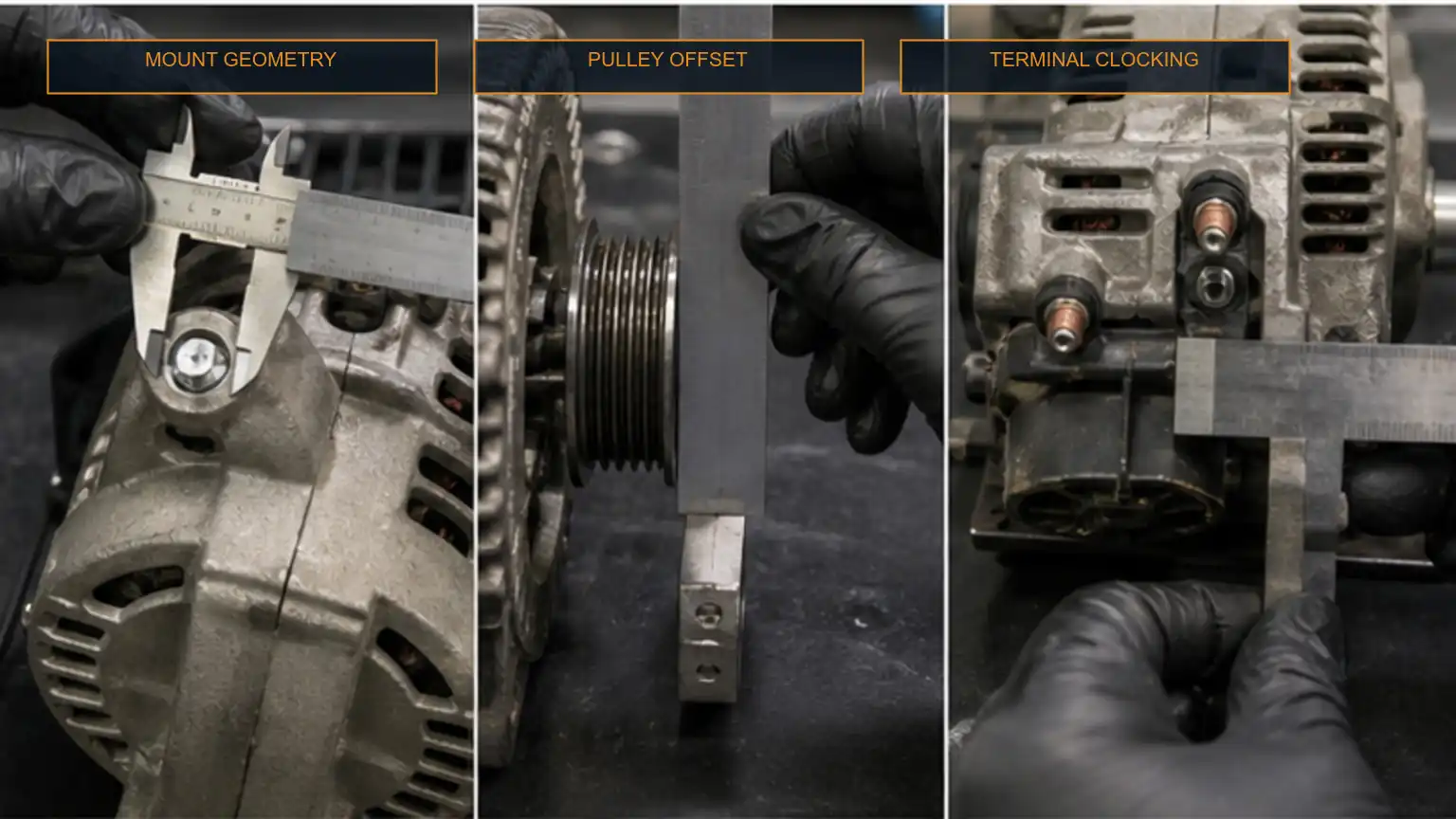
Use a controlled drawing and consistent measurement reference points. The illustration does not specify approved dimensions for an application.
A unit that bolts on can still be unsuitable. Compare mounting alignment, pulley configuration and belt line, housing clearance, fastener engagement, terminal functions and the required control connections. Verify the cooling and electrical-protection arrangement where applicable; a matching housing does not identify every internal or electronic feature.
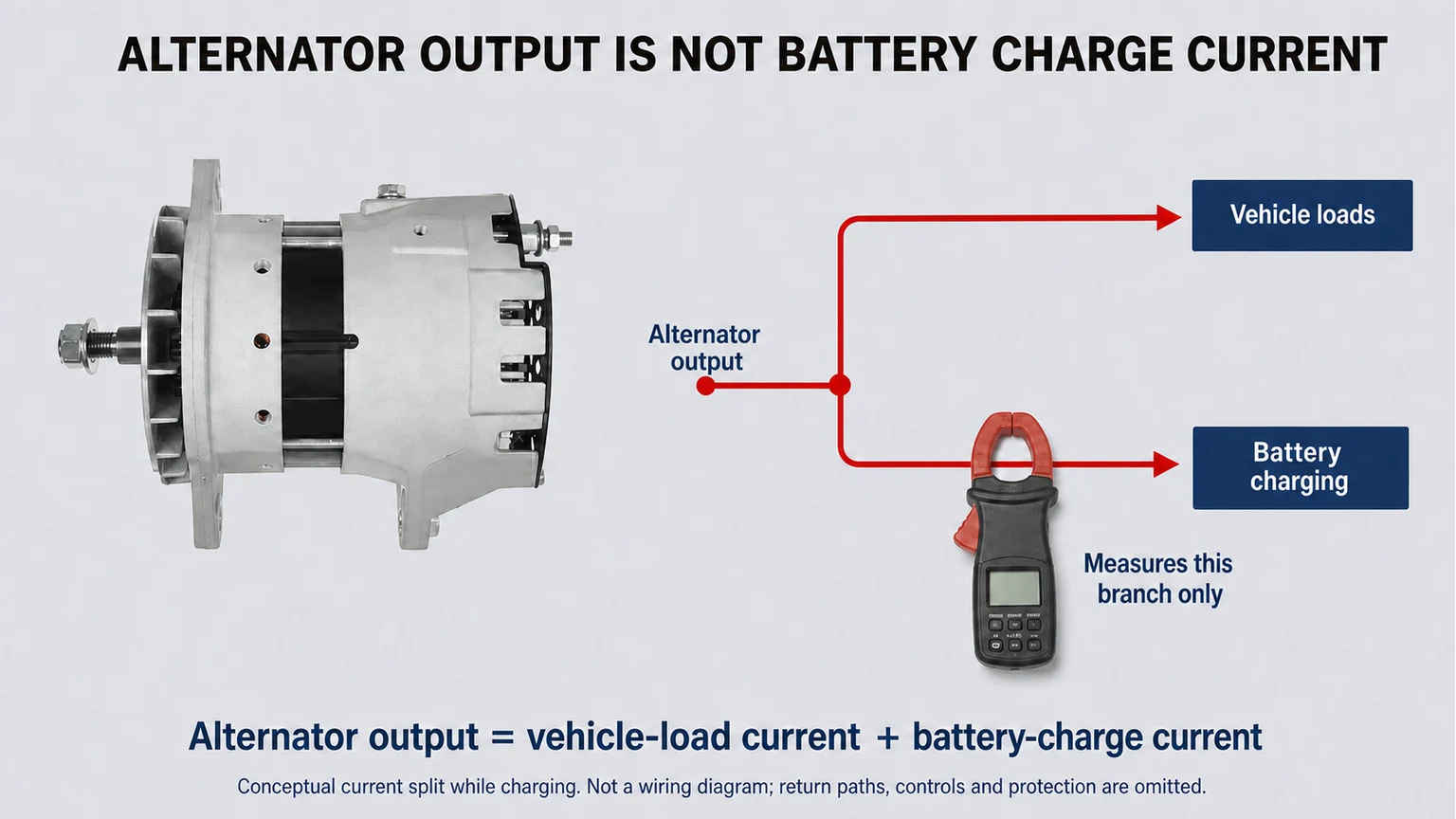
Check system voltage, required output, regulator behaviour and the relevant speed and temperature conditions. Use the alternator output testing under load guide to organise the evidence, and the 24-volt alternator selection guide where that system applies. A result from one test point does not establish performance throughout the operating range.
Assign a sample identity before inspection. Photograph the carton, label, markings, terminals, pulley and mounting points, then compare the unit with the approved reference and drawing. A competent technician should use a guarded setup, suitable calibrated equipment and the agreed method for any powered test. Retain the sample's serial or lot identification and output record; define ownership and disposition before any destructive examination.
Before production release, agree the reference and revision, critical component requirements, labels, packaging and test evidence. For repeat orders, compare the receiving record with the approved sample and specification. A familiar carton cannot establish that the regulator, rectifier, stator, pulley or bearing source remained unchanged; document the changes that require renewed technical review.
Mechanical behaviour and belt tracking require guarding and a defined setup. This staged image is not evidence for a profiled company.
Gate | Evidence for approval | Reason to hold |
|---|---|---|
Identity | Seller, payment, export and production relationships reconcile. | An unexplained entity or address mismatch. |
Fitment | The reference basis, drawing and sample agree. | Only a photograph or unsupported cross-reference is available. |
Performance | Output and regulator evidence identifies the sample and method. | An amp label without relevant test conditions. |
Supply control | Lot identity, approved configuration and change-notification rules are documented. | Unresolved substitution rights or configuration differences. |
Commercial release | Delivery, claims, warranty and packaging responsibilities are agreed. | The price is firm but the discrepancy process is unclear. |
These are offer-specific gates, not a numerical company ranking. A supplier approved for one alternator family may still need separate qualification for another. Record the part, site and commercial programme to which each decision applies.
Review the Elecdura heavy-duty alternator range for sourcing orientation, then send the reference, application, electrical requirements, quantity and destination for a matching enquiry. A proposed equivalent remains conditional until the supporting evidence and required sample review resolve its suitability.
Company links support the attributed product-scope descriptions, not independent verification of capacity, certification or individual-part performance. Request current information for the entity and product actually quoted. The technical illustrations are educational graphics, not photographs of tests performed by the companies in this directory.


