ELECDURA NETWORK

Your Whole New Supply Chain For Heavy-Duty Parts
Whatsapp:
+86 18915027366
Phone:
+86 18915027366
Views: 0 Author: Site Editor Publish Time: 2026-07-22 Origin: Site
Heavy-duty starter motor identification is the point where a no-start complaint becomes an accurate replacement order. In commercial diesel applications, a buyer may receive a starter with a scratched label, a partial OE number, a different remanufactured tag, or no readable label at all. Searching by a vehicle name alone is risky because the same vehicle family can use different engines, voltages, mounting arrangements, and starter drives. The reliable approach is to identify the complete installed unit from its electrical, mechanical, and application characteristics.
Elecdurauto's heavy-duty starter motor catalog supports OE-number and application matching for fleets, repair businesses, importers, and distributors. This guide is designed for the identification stage before a quote or bulk order. It explains what to record on a removed starter, how to interpret common markings, and how to avoid confusing a similar-looking motor with a compatible aftermarket replacement.
A part number is valuable, but it is only one field in a complete identity card. The most reliable record combines the label with voltage, power rating, tooth count, drive type, mounting, terminal layout, engine application, and clear photographs. Each field rules out a different type of mismatch.
All OE, manufacturer, rebuilder, and supplier numbers visible on the label or housing
Voltage, rated kW, and rotation direction where marked
Pinion tooth count, gear diameter, and drive type
Nose housing shape, mounting-hole count, diameter, and offset
Terminal count, terminal positions, solenoid orientation, and connector style
Engine model, equipment model, and production or serial range
Keep the record with the product inquiry rather than in a separate repair note. For B2B buyers, that same information becomes the foundation for a correct label, carton, SKU description, and repeat-order process.
Voltage is the first discrimination point. A 12V starter and a 24V starter may share a family appearance but are not interchangeable. Rated power adds a second filter: a high-compression industrial or heavy-truck diesel may need more cranking capability than a light-duty application. The electrical requirement must also agree with the vehicle's battery system and cable arrangement.
Mixed fleets make visual guessing particularly dangerous. A 24V unit installed on a 12V system will not perform as intended, while a 12V unit exposed to 24V can be damaged quickly. Check the battery bank, label, wiring diagram, and vehicle specification. Do not use the truck's country of operation as a shortcut for voltage identification.
A higher kW rating can sound attractive, but it may bring different cable demand, mounting dimensions, drive geometry, and control requirements. Use the rating to compare approved alternatives, not to select a substitute without fitment proof. Cold-cranking conditions, engine displacement, compression, oil viscosity, and accessory drag all influence the starter requirement.
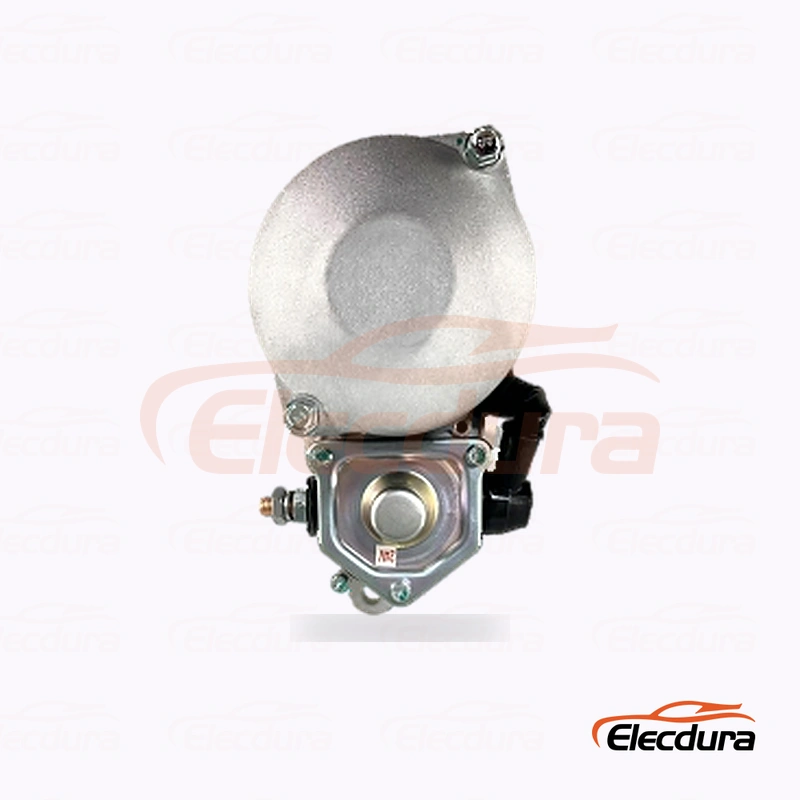
Side-view images should be kept with the identity card to confirm housing, solenoid, and mount layout.
The pinion drive transmits torque from the starter to the flywheel ring gear. Tooth count, pitch, outer diameter, engagement depth, and nose-housing relationship are critical. A starter may bolt to the engine while using the wrong drive gear, creating noise, incomplete engagement, rapid wear, or damage to the ring gear.
Many heavy-duty starters use a pre-engaged drive: the solenoid moves the pinion into the ring gear before the main contacts power the motor. Some legacy units use a different engagement arrangement. The drive system affects the nose housing, solenoid linkage, pinion travel, and test procedure. It must be identified as part of the complete assembly.
Gear-reduction starters use an internal gear train to increase torque. They can be smaller than a comparable direct-drive unit but still have high cranking capacity. Their mounting and drive specifications remain application-specific. A gear-reduction label does not make two starters equivalent.
When working from a Cummins reference, a 228000-7380 starter motor product record documents a 24V, 7.5kW, 10-tooth configuration. Those details should be compared directly to the removed unit. They should not be generalized to every Cummins engine or every 24V starter request.
Mounting is where many part-identification errors become installation failures. The number of bolts, bolt-hole diameter, pilot diameter, nose length, flange thickness, starter position, and clocking must be checked. A starter that has the correct voltage and tooth count can still place the pinion at the wrong depth if the mounting face is different.
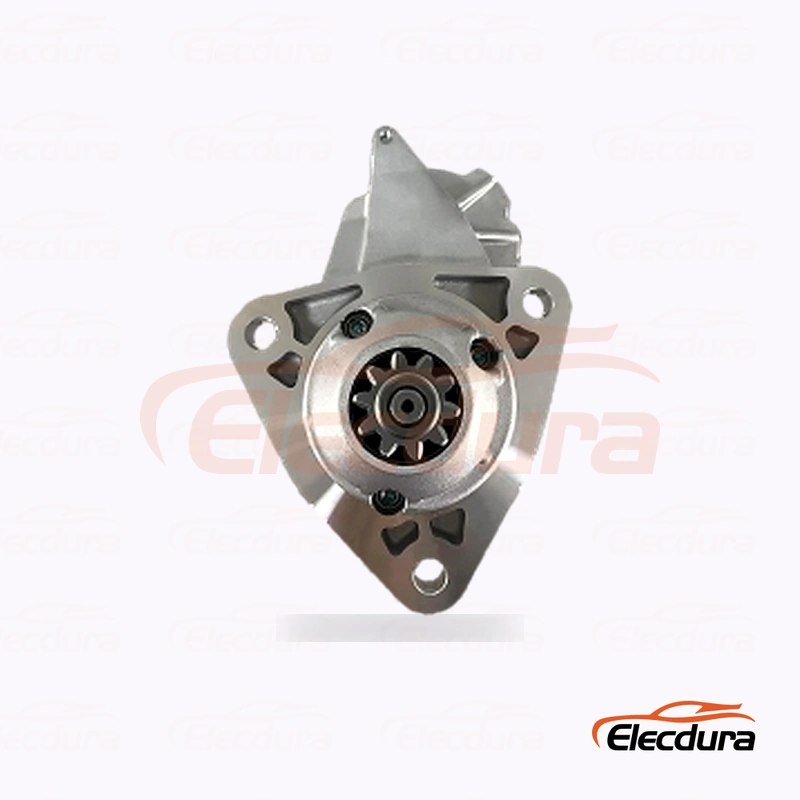
A perpendicular photo of the drive end is more useful than an angled workshop photo. Include a scale where possible and capture the bolt pattern, pilot, pinion, and nose casting. For large fleets, create a simple image standard so field teams submit the same views on every inquiry.
Some equipment has been repaired with adapters, replacement flywheel housings, or mixed components. If an adapter or spacer is present, record it. Do not assume it belongs to the original engine configuration. The next replacement must match the installed arrangement or the machine must be returned to the approved configuration.
The drive-end view verifies the elements most likely to be missed in a label-only inquiry.
Terminal layout separates starter motors that otherwise share a housing family. Record the location and size of the battery stud, motor stud, control terminal, ground terminal where fitted, and any additional connector. A rear-terminal photo should show the solenoid clocking and cable orientation. This is crucial in applications where the harness has little clearance.
One design may use a simple start-signal terminal, while another has an additional relay, thermal protection, or management connection. Connecting the wrong wire to the wrong terminal can damage the switch circuit or create a no-crank complaint. The original starter's connector and the vehicle harness should be compared before the order is released.
Solenoids vary in contact arrangement, plunger travel, coil design, and lever geometry. A solenoid reference can support research, but it must be connected back to the full starter identity card. Buyers who receive a solenoid-only request should ask for the complete starter label and terminal photographs before quoting.
OE and well-known reference numbers are helpful for cross-reference research, catalog organization, and communication with repair shops. They do not prove that every number in a database represents the same specification or that a replacement is a genuine item from the referenced brand. The safer commercial wording is aftermarket replacement, OE-reference match, or replacement for OE number, after the fitment has been verified.
A 10461758 39MT starter motor provides a useful example. The OE reference, 24V rating, 8.5kW output, 12-tooth drive, Cummins application, and mounting must all align. One reference number by itself is not enough to confirm a universal fitment or a branded-product claim.
For first orders, require four images before technical approval: label side, terminal side, drive end, and mounting face. Add a fifth image showing the installed position if pipework, frame clearance, or cable routing is tight. This approach is faster than a return and is particularly useful for importers who must approve a sample before container or pallet quantity is packed.
Write the tooth count, flange diameter, mounting-hole spacing, nose length, and terminal positions beside the photos. Measurements do not replace a catalog match, but they expose a mismatch early. Keep the approved sheet with the SKU so new staff do not repeat the first inquiry.
Name the internal SKU with the primary OE reference, voltage, power, tooth count, and application family. A consistent naming convention helps warehouse teams distinguish closely related units and improves the quality of distributor product listings.
Incoming inspection should compare the item to the approved identity card. Verify the product label, carton label, voltage, terminal layout, tooth count, drive-end shape, mount, and any agreed accessories. For a high-torque industrial application, a 50MT 24V 9kW starter motor reference can be used as a specification example, but the application, OE match, and actual mounting must be confirmed for each order.
For fleets and distributors, request consistent packaging, product photos, and labeling across repeat supply. That consistency supports receiving checks, reduces pick errors, and makes it easier to investigate a claim if a field unit does not match the approved sample.
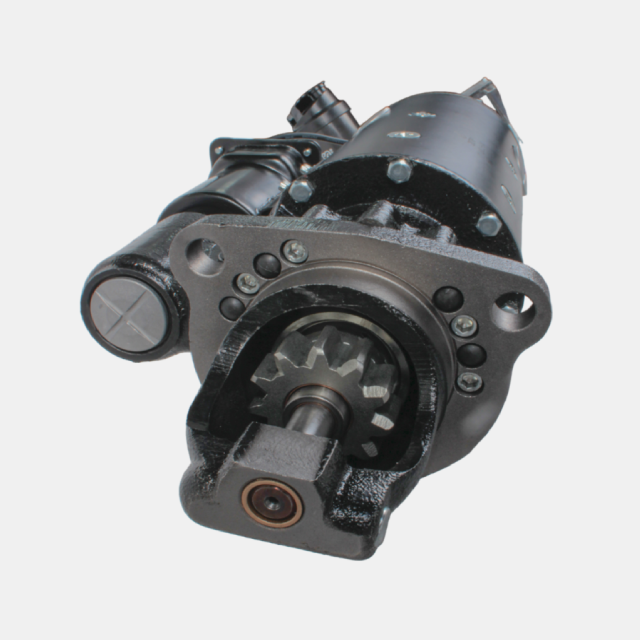
High-torque units need the same identity-card discipline as truck starters, with added attention to engine and duty cycle.
A single heavy-duty starter can appear under an OE number, an aftermarket number, a remanufactured number, a motor-family number, and a regional distributor number. Keep these references in separate fields rather than merging them into one long title. The primary searchable field should be the verified number on the approved application. Other numbers should be marked as references and should never override a confirmed physical mismatch.
Label a number as confirmed by sample, confirmed by technical catalog, buyer-supplied marking, or unverified inquiry. This small discipline tells a sales team how much evidence is behind a proposed match. It also prevents a temporary customer description from becoming a permanent catalog claim.
Vehicle makes are useful for search visibility, but engine and flywheel-housing details normally decide starter fitment. Record engine family, output, transmission or bellhousing variation where relevant, and serial range. When the same truck can be fitted with several engines, an application statement that names only the truck is not precise enough for order approval.
If a photo, vehicle application, and old number point to different families, stop and investigate. Do not choose the cheapest or most available item. Ask for the missing photograph or measurement and document the final decision. This is faster than reverse logistics and helps protect a buyer's relationship with a workshop or fleet customer.
Some starter inquiries deserve a more careful review because the vehicle has been modified or the original unit is not a reliable reference. This commonly happens with older trucks, engine conversions, industrial equipment rebuilt from mixed components, and units with multiple previous repairs.
Legacy vehicles may have service replacements that differ in external appearance from the original production unit. A rebuilt starter may carry a local tag that hides the original family. In these cases, combine the physical inspection with engine, flywheel, and mounting information. Avoid using a remanufacturer label as the only cross-reference source.
Mining, quarry, and agricultural equipment may damage cable lugs, mounts, or starter nose housings over time. Look for fretting, broken braces, cable chafing, water ingress, and heat exposure. The replacement starter must be correctly identified, but the installation environment must also be corrected so the new unit has a realistic service life.
When the same vehicle has replaced multiple starters, ask for the service history. Recurrent failures can reveal battery imbalance, ground-path resistance, incorrect cranking time, engine mechanical drag, or an unsuitable previous replacement. Catalog matching alone will not solve those problems, so the buyer should pair the part order with a basic electrical and mechanical review.
A starter identity card converts scattered workshop information into a record that a buyer, catalogue team, and supplier can use consistently. It should include the old unit's complete reference markings, voltage, rated power where known, drive tooth count, rotation, mounting pattern, nose-cone shape, terminal layout, connector details, engine and equipment application, and photographs from several angles. It should also record any OE-reference number used during research and the source of that reference.
The card does not need to claim a branded original component. Its purpose is to document the evidence used to select an accurately matched aftermarket replacement. This is particularly important where a starter number has been superseded, a vehicle has been rebuilt, or several starter families appear in a broad application search. A clear identity card keeps the final choice traceable after the vehicle has left the workshop.
Ask for a straight-on mounting-face image, a side image showing the pinion and nose, a terminal-side image, a full label image, and a photograph of the connector or solenoid. Include a ruler where a mount dimension or pinion diameter may be disputed. If the starter is still on the engine, take an image of its installed orientation and nearby brackets. These details often resolve questions that a vehicle registration or a partial number cannot answer.
Do not rely on a photograph that is too dark, cropped, or taken from far away. It may be enough to recognize a general starter style but not enough to distinguish a flange, terminal, or drive difference. For B2B purchasing, requesting better evidence early is faster than sending a speculative alternative and later handling return freight, labour claims, and customer dissatisfaction.
Critical dimensions can confirm an identification: mounting-hole spacing, pilot diameter, nose length, overall length, pinion position, and terminal clearance. However, a single matching dimension does not prove full interchangeability. Pair dimensions with electrical rating, drive characteristics, engine fitment, and reference evidence. This prevents a visually similar industrial or automotive starter from being selected for a heavy-duty application with different torque or engagement requirements.
When a sample is available, compare the proposed replacement side by side with the removed unit before a bulk order. Check that the mounting face is flush, the pinion position aligns with the flywheel engagement plane, the terminals can be connected without strain, and the solenoid or relay interface matches the original circuit. Retain approved comparison photographs in the SKU file for repeat orders.
After the first fitment is approved, create a concise repeat-order specification that lists the approved aftermarket part reference, engine or equipment application, voltage, power range, mounting description, terminal arrangement, packaging requirement, and inspection checkpoints. It should also state the evidence that must be supplied when a customer claims an alternative application. This gives purchasing teams consistency without pretending that every future request is identical.
For fleets with mixed equipment, use a separate identity card for each engine and bellhousing combination. Combining several applications into a single vague starter description is how catalogue overlap and cross-shipments begin. A disciplined identity-card process supports fewer returns, more reliable stock data, and a clearer technical conversation between the fleet, repair shop, importer, and aftermarket supplier.
Correct heavy-duty starter motor identification depends on evidence from the whole unit: electrical rating, drive, mounting, terminals, application, references, and photographs. A label alone can be incomplete, while a similar housing can conceal an expensive fitment error. Create a starter identity card before quoting, use OE references only as verified matching tools, and inspect incoming units against the approved record. That process gives B2B buyers a practical route to reliable aftermarket replacement sourcing and fewer avoidable returns.