ELECDURA NETWORK

Your Whole New Supply Chain For Heavy-Duty Parts
Whatsapp:
+86 18915027366
Phone:
+86 18915027366
Views: 0 Author: Site Editor Publish Time: 2026-07-22 Origin: Site
When a heavy-duty diesel engine will not crank, buyers often ask for a starter solenoid when the vehicle actually needs a complete starter motor, or request a complete starter when the problem is outside the unit. The terms are closely connected, but they do not describe the same purchasing decision. A solenoid controls the high-current engagement and, on many designs, moves the drive into the flywheel. The starter motor converts battery power into the cranking torque that turns the engine. Separating those functions helps a fleet, rebuilder, or distributor specify the right part the first time.
Elecdurauto supplies heavy-duty starter motors for application and OE-number matching. This guide focuses on a different question from a repair test: how to identify the requested component, decide whether a separate solenoid is appropriate, and build a repeatable aftermarket sourcing record for trucks, buses, construction equipment, mining machinery, and agricultural diesel engines.
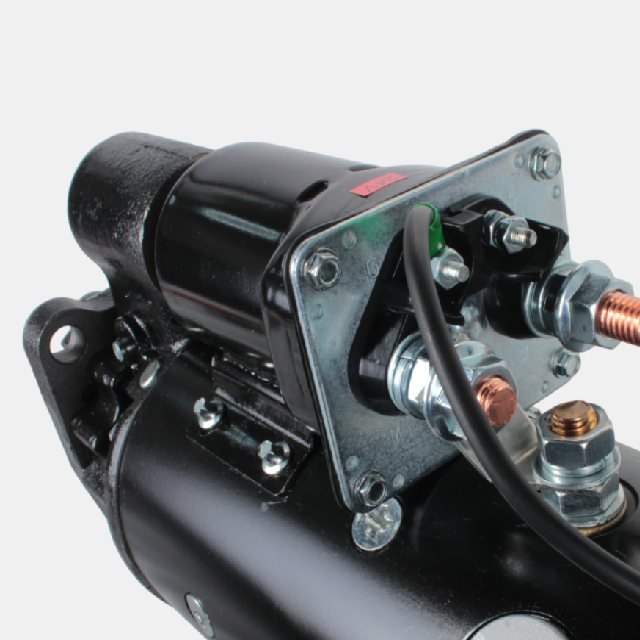
A starter motor is the complete cranking assembly. It normally includes an electric motor, field system, armature, brushes, housing, drive gear, nose housing, and an engagement mechanism. Depending on the design, the solenoid may be mounted on the starter, integrated into the assembly, or serviceable as a separate item. It is not accurate to assume that any solenoid can be swapped between starters with a similar appearance.
After the start signal arrives, the solenoid creates a magnetic pull that moves a plunger. In many pre-engaged starter designs, that movement pushes the pinion into the ring gear and closes the high-current contacts feeding the motor. The sequence matters. A solenoid with burnt contacts may click but fail to pass enough current; a mechanical engagement problem may allow the contacts to close without reliable drive engagement.
The motor has to produce enough torque and speed to crank a high-compression diesel engine through oil drag, cold weather, and accessory loads. Gear-reduction designs use internal gearing to increase torque with a more compact motor. Direct-drive designs have a different physical envelope and may use a different nose, switch arrangement, or pinion specification. These are complete-assembly characteristics, not solenoid-only characteristics.
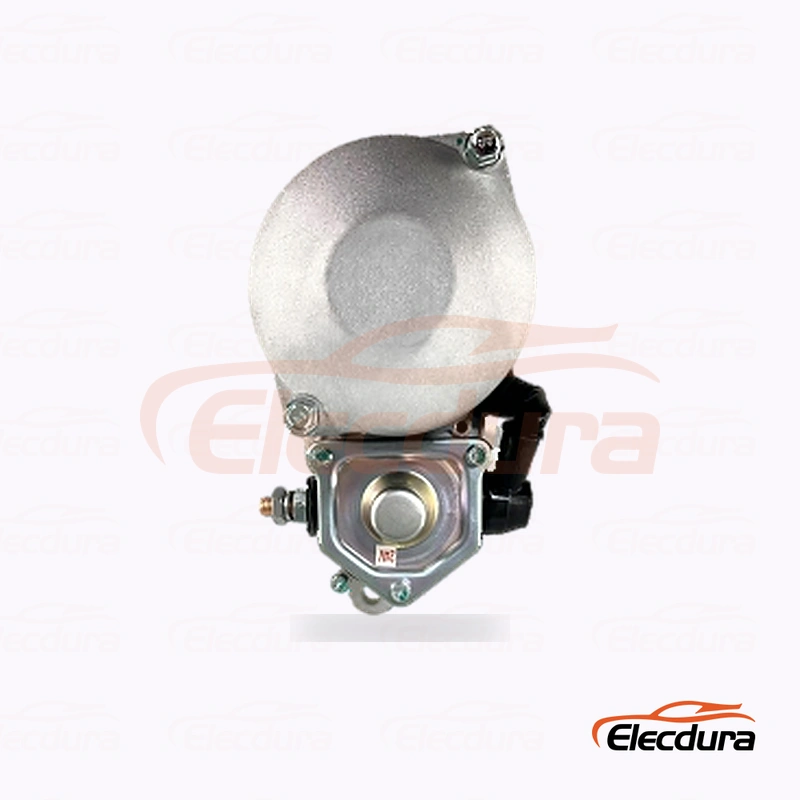
Rear-terminal photography is essential when differentiating a starter assembly from a solenoid-only request.
A single click, repeated clicks, slow cranking, no sound, or a free-spinning starter can each be caused by more than one component. The battery, cable connections, ground path, control relay, ignition switch, starter solenoid, motor brushes, pinion drive, ring gear, and engine condition all influence what the driver hears. A symptom is a starting point, not a purchase specification.
A click can indicate a solenoid attempting to pull in, but it does not prove the solenoid is the failed part. The battery may be weak, the positive cable may have excessive resistance, the ground strap may be corroded, or the high-current contacts inside the solenoid may be worn. Before ordering a solenoid, ask whether battery voltage and cable voltage drop were checked under a start attempt.
Slow cranking may indicate a motor under excessive mechanical or electrical load. A cable that becomes hot points toward resistance. A motor that draws abnormal current with sound cables may have internal wear or a seized drive. In that situation, a complete starter motor may be the more appropriate sourcing option, but only after the starter circuit and engine are evaluated.
If the motor spins but the engine does not turn, inspect the pinion, overrunning clutch, shift mechanism, ring gear, and mounting alignment. Replacing only the solenoid will not correct a damaged drive or an incorrect mounting nose. This is why a photo of the removed unit's drive end is as useful to a buyer as a photo of the terminal end.
Good B2B starter-motor quotations begin with identification, not price. A buyer should capture the number on the starter label, the engine and vehicle application, voltage, rated power, tooth count, mount pattern, and terminal layout. If the request is for a solenoid, capture the solenoid number and the complete starter number together. A solenoid reference alone may not identify the original drive, switch, or mounting configuration.
Is the buyer replacing the mounted switch assembly or the entire starter?
Does the removed part have a serviceable solenoid number?
What is the voltage, engine family, and equipment application?
How many main terminals and control terminals are on the unit?
Is the pinion tooth count and drive-end mounting confirmed?
Is the part new aftermarket replacement, remanufactured, or an OE reference match?
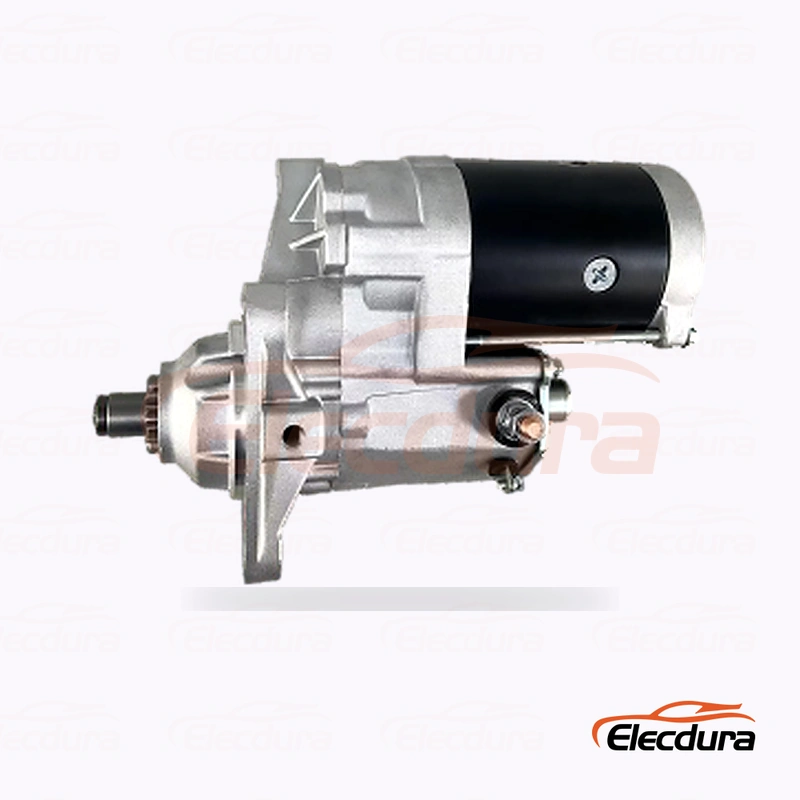
For example, a 228000-7380 Cummins 6CT8.3 starter motor is a complete 24V 7.5kW, 10-tooth assembly. Its terminal, drive-end, and application information have to remain together in the quote. Using an old marking as an OE reference can help locate an aftermarket equivalent, but it does not justify calling the replacement genuine unless that status is documented.
Heavy-duty starters are not a single family of parts. The solenoid may be a separate externally mounted switch, an integrated pull-in-and-hold unit, or a model-specific assembly with a unique lever relationship. Gear-reduction starters, long-frame industrial starters, and legacy direct-drive units can differ significantly even where the mounting flange appears familiar.
When the solenoid is engineered as part of a specific starter platform, a complete assembly gives the buyer one verified combination of motor, drive, switch, and mounting. This can reduce field diagnosis time and return risk for fleets that need predictable recovery from a no-start event. It also simplifies batch inventory because the stock code represents the complete installed unit.
A separate solenoid can be sensible for a professional rebuilder with test capability, known core condition, documented service procedure, and access to the exact switch specification. It is less suitable where the drive, commutator, brushes, and housings have unknown wear. A low-cost solenoid does not restore the life remaining in the rest of the starter.
Adding a remote solenoid to compensate for voltage loss or a damaged harness may hide the root cause. It can introduce new failure modes and complicate warranty assessment. The correct long-term repair is to restore the original control circuit and use a compatible starter assembly.
A price inquiry without photographs is often incomplete. Ask for a clear rear view showing the main studs, signal terminal, and connector; a drive-end view showing the nose and pinion; and a side view showing the mounting ears. These three views quickly expose differences in terminal clocking, nose length, mounting offset, and drive architecture.
A 10461758 39MT starter motor, for example, is identified by more than a 24V rating. Its 8.5kW output, 12-tooth drive, Cummins application, mounting geometry, and terminal layout form the actual fitment record. Those checks are particularly important for distributors who receive mixed cores or customers who request parts by a handwritten number.
Drive-end views help confirm tooth count, nose configuration, and mounting compatibility.
Fleet maintenance teams need a concise fault record. Purchasing teams need an unambiguous part record. Combining the two without structure creates mistakes. A technician may note "solenoid clicks" while a buyer needs voltage, output, application, drive, and electrical connection information. Use two linked forms rather than one vague message.
Include the driver's complaint, the battery condition, start-circuit voltage drop, control-terminal behavior, removed-unit symptoms, and whether the engine can be turned manually. This helps decide whether to inspect the starter further or investigate the vehicle circuit.
Include OE number, starter model, voltage, kW rating, tooth count, mounts, terminal photos, engine, vehicle, quantity, target market, and packaging requirements. For a separate solenoid, add the starter model and solenoid reference. This record lets the supplier quote an aftermarket replacement accurately and supports repeat ordering later.
Receiving inspection protects a distributor before a product reaches a fleet or repair shop. It should verify that the carton, label, visible terminal layout, drive-end shape, mount, and reference number agree with the approved specification. Do not rely on a general product photo after the first order; compare the actual incoming unit to the agreed sample or drawing.
Confirm voltage marking, rated power where listed, gear tooth count, pinion movement, nose condition, terminal hardware, and mounting holes. Rotate the drive only in the permitted direction and follow the supplier's handling guidance. For complete heavy-duty assemblies, test documentation and label consistency are useful controls for repeat wholesale programs.
Confirm plunger length, terminal arrangement, housing clocking, connector style, coil specification, and mounting interface. A solenoid that looks nearly identical can still have different pull-in, hold-in, or contact characteristics. Receiving staff should not open or modify the unit merely to make it fit.
Not every fleet needs the same stock strategy. A long-haul vehicle may allow planned replacement. Mining equipment, public transport, emergency service vehicles, and agricultural equipment in season can face high downtime costs from a no-start event. For those applications, a complete matched starter may be a better emergency stock item than a collection of individual switches.
High-torque applications also benefit from a clear specification. The 50MT 24V 9kW heavy-duty starter motor is an example of a complete-unit reference suitable for matching torque demand, engine application, mounting, and OE number. It should be sold as an aftermarket replacement matched to the application, not represented as genuine branded product without verification.
High-torque starter selection must consider engine compression, duty cycle, and mounting, not only the solenoid.
A solenoid-only order can be appropriate when the starter model is confirmed, the original unit is otherwise within service limits, the repair is performed by a capable workshop, and the fault has been isolated to the switch assembly. It is also useful for established rebuild programs that document core condition and test the rebuilt unit before release.
It is not the right choice when the starter has unknown internal wear, damaged drive components, poor housing condition, repeated overheating, or unclear fitment. In those cases, the buyer should evaluate a complete replacement, then correct any cable, relay, battery, or ground issue that could damage the new unit.
Use the condition of the installed starter to choose the purchasing path. Where the starter model is confirmed, the drive is sound, the housing and brushes have been inspected, and a qualified rebuilder has isolated a failed switch, a matching solenoid may be justified. Where any of those conditions is unknown, a complete starter assembly reduces the number of uncontrolled variables. For urgent fleet downtime, include the cost of a second removal, towing, and missed equipment availability in the comparison rather than looking only at the unit price.
For stocking decisions, keep separate records for service components and complete replacement assemblies. Do not let a solenoid SKU become a substitute for a full starter fitment record. This simple distinction improves catalog accuracy, protects the end customer, and gives the supplier the information needed to keep packaging, labels, and repeat-order specifications consistent.
A good heavy-duty starter quotation starts with a stated failure, not simply a requested part name. “Clicks once,” “starter stays engaged,” “slow crank after a hot stop,” and “no solenoid sound” are different starting points. The buyer should ask the workshop to record what was heard, whether voltage was measured at the solenoid terminals, whether the pinion engaged, and whether the engine turned. This turns the inquiry into a technical request that can be checked against the complete starter configuration.
The statement should also identify the battery voltage, engine condition, recent electrical repairs, and whether the complaint is intermittent. A 24V starter can appear to have a solenoid problem when one battery in the series pair is weak. A starter that stays engaged after key release may have a sticking relay or wiring fault rather than a defective solenoid. Replacing parts without that context can convert an inexpensive diagnosis into repeat labour and an avoidable return.
Solenoids are often catalogued by starter family, terminal arrangement, plunger travel, contact rating, and mounting. They should not be selected only by a broadly similar appearance. A few millimeters of mounting position or a different terminal layout can affect engagement, cable routing, or current switching. When a buyer requests a solenoid, keep the complete starter reference on the order record and state that the component is being supplied for a verified starter family.
The same caution applies to a complete replacement. Two starters may share voltage and power but differ in pinion tooth count, nose cone, flange pattern, rotation, clocking, or control terminals. An aftermarket replacement should be positioned as matched to the documented application and OE-reference evidence, not as an assumed equivalent solely because it fits a broad engine brand search.
For distributors supplying repair shops, include a compact handoff note with the shipment: verify batteries under load, clean and tighten cable ends, inspect ground straps, confirm relay operation, compare the new unit to the removed unit, and test cranking voltage after installation. These steps are short enough to be used in a busy workshop but reduce the risk that a good replacement is fitted into the same damaging circuit.
Where the workshop rebuilds starters, require an end-of-repair test that confirms solenoid pull-in, hold-in, current draw, drive movement, and return action. The test record does not need to be complicated; it needs to show that the solenoid was verified as part of a complete assembly. This is especially important when a vehicle works in dusty, wet, high-vibration, or high-heat conditions.
For a fleet buyer, the choice between a solenoid and a complete starter should include technician time, access difficulty, transport risk, production loss, and the likelihood of a second removal. A solenoid-only repair can be economical when the unit is proven healthy. It becomes expensive when unknown brush wear, drive wear, or housing damage forces another repair shortly afterward. Documenting that total-risk comparison creates a more reliable stocking policy across different vehicle and equipment groups.
A starter solenoid and a starter motor work together, but they require different sourcing decisions. The solenoid manages engagement and high-current switching; the complete motor assembly delivers the cranking torque and includes the drive, mount, and electrical architecture that must fit the engine. For heavy-duty B2B buyers, the safest process is to document the full installed starter, diagnose the circuit before ordering, and choose a solenoid-only repair only when the exact starter and service condition are confirmed. That approach reduces returns, protects fleet uptime, and makes aftermarket replacement sourcing more repeatable.