ELECDURA NETWORK

Your Whole New Supply Chain For Heavy-Duty Parts
Whatsapp:
+86 18915027366
Phone:
+86 18915027366
Views: 0 Author: Site Editor Publish Time: 2026-09-22 Origin: Site
Larger rear mounting holes can be intentional on a pad-mount alternator. Some designs locate the unit closely at the drive end and allow more clearance at the rear. Inspect the specified mounting drawing, bore condition and intended bracket before treating the difference as a defect.
Identify the shaft side first, then compare front and rear positions separately. A photograph or a bolt passing through the hole cannot establish the required tolerance. Do not enlarge a bore or pull a mismatched unit into place with the mounting bolts.
For buyers selecting a complete unit, the heavy-duty alternator range supports an application-led inquiry. This guide addresses a narrower question: how to investigate a reported mounting-hole discrepancy before an installation attempt or supplier return.
Delco Remy's pad-mount hole explanation describes a common front locating position shared by long- and short-pad arrangements. The drive-end holes provide a closer fit around the bolts; rear clearance accommodates variation while the assembly is secured. That is a locating-and-clamping arrangement, not evidence that every bore should have the same diameter.
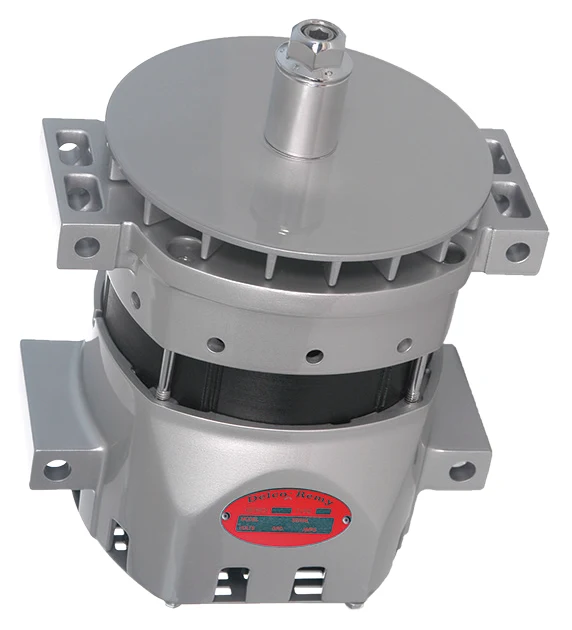
A visual comparison becomes misleading when one inspector calls the shaft side the front and another labels the same end from its position in the vehicle. Mark the drive end and rear end on the inspection photographs before recording a discrepancy. Keep the photograph, measurement and drawing orientation consistent.
Identify the shaft side before labeling front and rear measurements. This photograph shows location, not bore tolerance or an approved interchange.
A larger bore describes the opening through one mounting feature. A different center-to-center distance describes the location of one hole relative to another. These are separate drawing dimensions. Neither can be established reliably by comparing the outside edges of cast mounting ears in angled photographs.
Ask the supplier to identify the disputed feature on the dimensional drawing. If the report says only “rear holes too large,” it does not yet establish whether the issue is bore diameter, spacing, a missing sleeve or a comparison with a different mount style.
Delco Remy's mounting-configuration guide describes engine or bracket holes that accommodate different pad lengths. The useful purchasing point is to confirm the intended bracket positions rather than assuming that a different rear mounting position proves a wrong shipment.
Do not extend that mechanical arrangement into a complete interchange approval. The proposed replacement still needs the correct pulley position, voltage, electrical connections, output suitability and surrounding clearance. A mounting description is only one part of its identity.
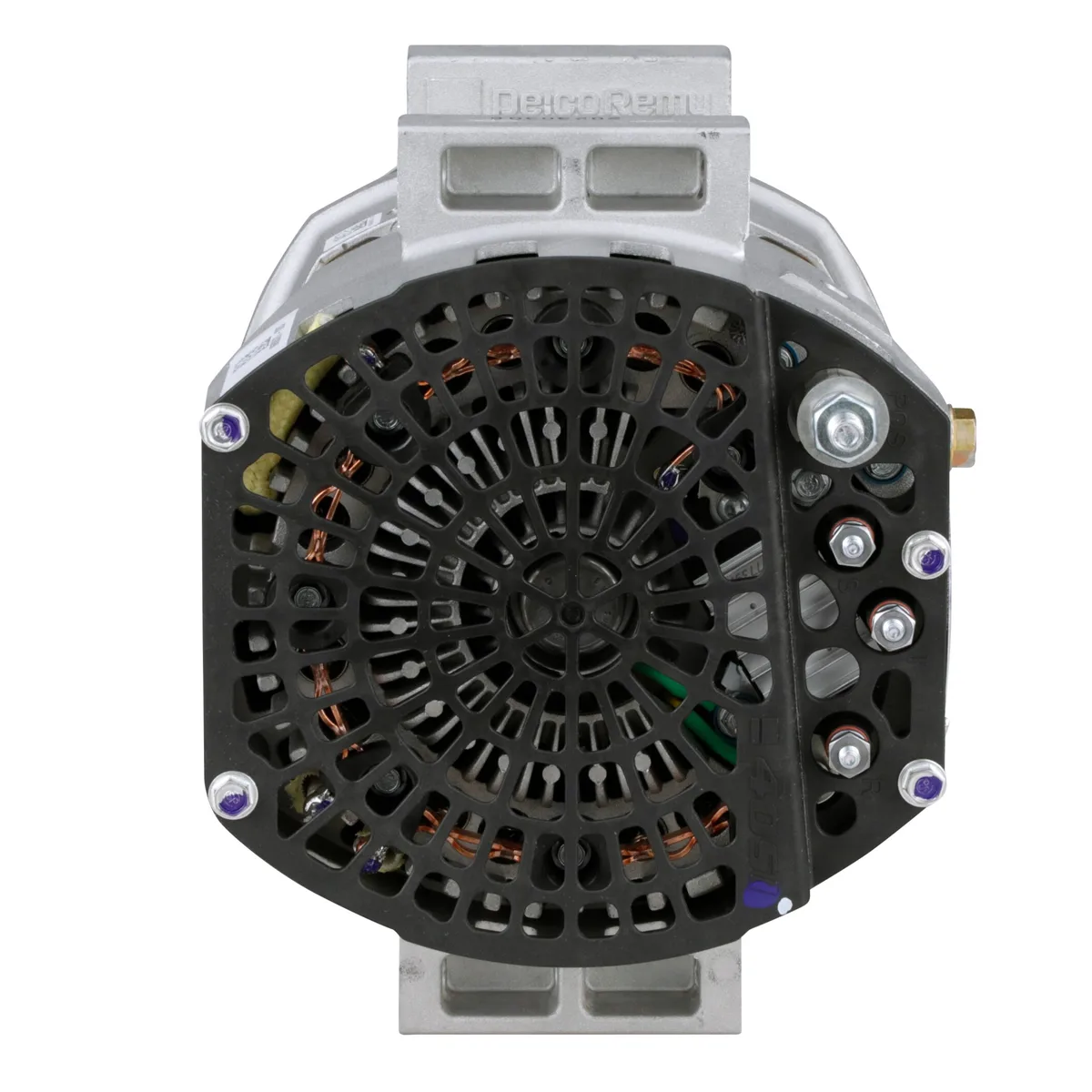
A rear view records electrical connections and clearance as well as the mount. This is a different photographed unit, not the reverse view of the first image.
If a delivered part has an apparently regular opening without visible impact or movement marks, compare it with the specified drawing and an identified reference unit. That appearance supports further investigation; it is not a pass result. Photographs cannot establish roundness, surface condition throughout the bore or compliance with a manufacturing tolerance.
Record the instrument, measurement position and the units used. Keep a quick caliper screen separate from any formal bore measurement required by the drawing. A reading across a chamfer or paint edge should not be compared with the specified working diameter as though both describe the same surface.
Oval-looking openings, polished contact tracks, displaced metal, cracks or fretting residue should be photographed individually. An intentional clearance feature does not explain away evidence of movement or damage. Equally, one mark alone does not establish whether it arose during previous service, handling or an attempted installation.
Set that unit aside for assessment rather than installing it to see whether the bolts will hold. Record whether it arrived new or remanufactured and whether the mark was present before fitting. Avoid filing, drilling or cleaning away the disputed evidence before the supplier has reviewed it.
A replacement may have the expected bores yet fail to sit correctly because the comparison involves the wrong bracket positions, trapped debris, a displaced sleeve or unrecorded hardware. The broader alternator bracket fitment guide covers pad geometry, support and alignment. Use it when the whole mounting interface is in doubt.
Before any trial fitting, a qualified technician should follow the equipment isolation and support procedure. Receiving staff should not use the mounting bolts to pull a misaligned or rocking assembly into place. Record what prevents seating and resolve that condition against the correct installation information.
A pivot or hinge arrangement can use a floating bushing to transmit clamping force. Caterpillar's Starting and Charging Systems Application & Installation Guide, section 9.3 treats this separately from pad mounts and cautions against forcing the hinge bushing flush with the housing. Do not use a pad-mount clearance explanation to justify movement at a hinge joint.
The same guide identifies a washer requirement for the pad-mount arrangement it describes. Hardware selection and tightening procedures remain application-specific: a generic hole-size article cannot supply the bolt grade, torque, washer stack or repair limit for an unidentified alternator.
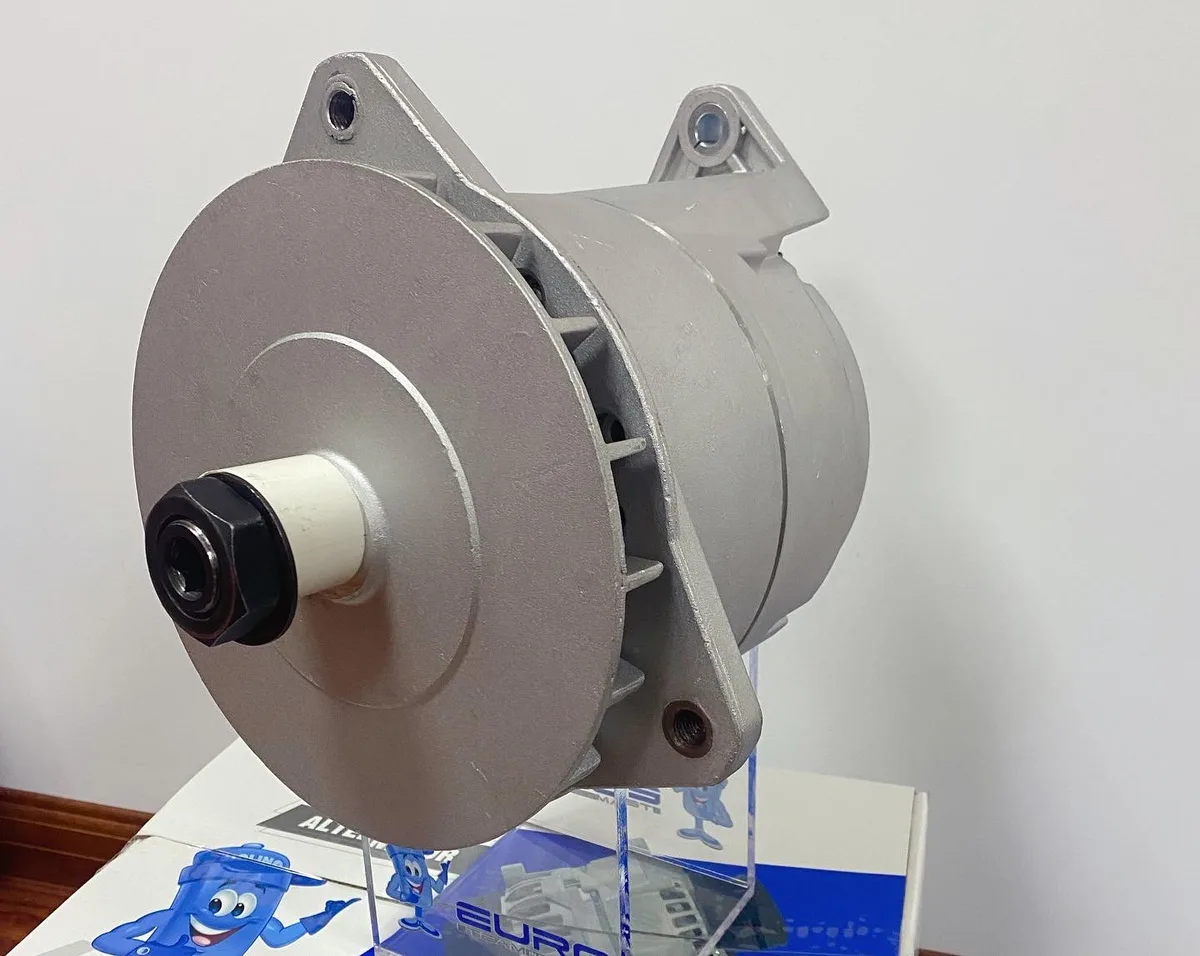
Supplier-display photograph of a hinge-style mounting arrangement. Its bore and hardware requirements must not be inferred from a pad-mount drawing.
Keep the first report focused on the disputed interface. Include the following together, rather than sending an isolated close-up with no part identity:
The ordered reference, delivered label and applicable drawing revision.
One full-unit photograph identifying the shaft side, plus close-ups of the disputed bores.
Front and rear readings labeled by location, instrument and measurement method.
The engine or bracket reference and photographs of the intended mounting positions.
Whether fitting was attempted, and any marks observed before that attempt.
Ask for a clear disposition: confirmation that the measured feature matches the approved drawing, a request for further inspection, or an agreed correction or replacement. A reply that another customer fitted the same family is not a dimensional acceptance record for this unit.
For an Elecdura alternator matching inquiry, send the unit reference and labeled mounting photographs with the application and quantity. State whether you need help identifying a replacement or investigating a delivered-part discrepancy; those requests need different evidence.
No. It demonstrates only that the particular bolt can pass through that opening under those conditions. It does not confirm the specified clearance, the hole position or the condition of the clamping faces. Compare the correctly identified bolt and bore with the applicable drawing before recording acceptance.
It can be a useful comparison if its identity and service history are known, but a worn or previously modified unit is not a manufacturing standard. If its bore differs from the replacement, check both against the intended part specification. Preserve the distinction between original design geometry and changes that may have occurred in service.
Only an approved application-specific arrangement can establish that. Adding a sleeve changes the clearance; changing a washer may alter how load reaches the mounting surface. Do not improvise either to conceal an unresolved mismatch. Request the specified hardware and the correct mounting procedure for that reference.
It is not a tolerance specification for all alternators, an approval of a damaged bore or a guide to modifying a bracket. Hinge mounts, proprietary mounting patterns and revised housings require their own documentation. If the part identity or drawing cannot be established, leave the dimensional decision unresolved instead of assuming that a larger rear hole must be intentional.