ELECDURA NETWORK

Your Whole New Supply Chain For Heavy-Duty Parts
Whatsapp:
+86 18915027366
Phone:
+86 18915027366
Views: 0 Author: Site Editor Publish Time: 2026-09-23 Origin: Site
Two different balance curves do not automatically mean that a supplied CHRA is defective. They may describe different test arrangements, operating ranges or measurement conventions. Equally, a supplier's explanation about machine variation is not a reason to disregard a repeatable failure against an applicable limit.
For a rebuilder or distributor, the useful question is: were the same assembly and a comparable test method evaluated? Resolve that question before approving a return, adjusting the rotating assembly or treating a generic chart as proof for an entire shipment.
Separate component-balancing records from the final assembled-core result. Schenck's equipment range distinguishes machines for compressor wheels and turbine rotors from those for complete core assemblies. A result for one component is not automatically the acceptance record for the assembled CHRA.
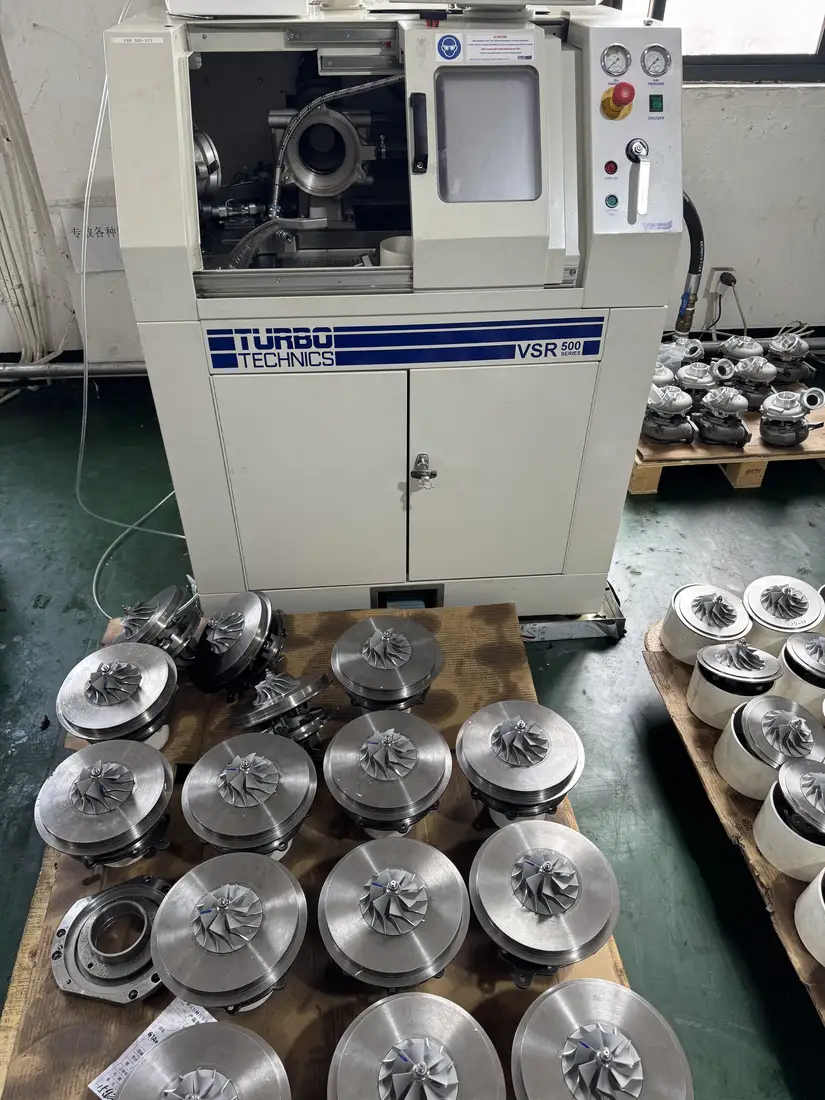
Ask the supplier to name the object tested: compressor wheel, shaft-and-turbine assembly, assembled rotor or complete lubricated core. Then connect the result to the part you will receive. A photograph of several units beside a machine establishes neither individual test completion nor a shared pass result.
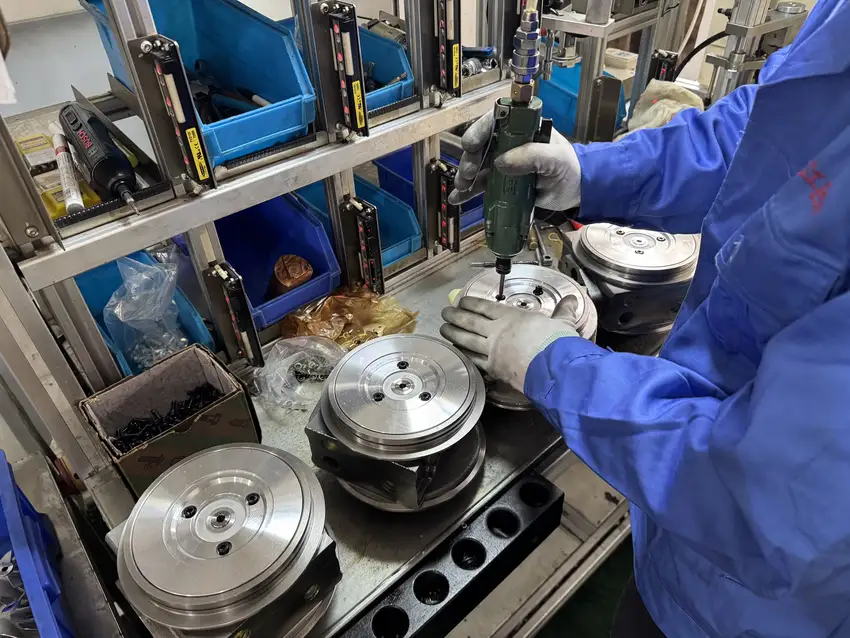
Real workshop reference: center-housing assembly is a production step, not a substitute for a traceable final balance result. The photograph does not establish the torque or acceptance status of these units.
Turbo Technics describes its VSR 500 series specifically for larger commercial-vehicle and heavy-industrial cores. Its published features include model-specific adapters, oil-temperature control and saved test results. The presence of this equipment category is a useful reminder that large turbo size alone does not remove the need to establish the specified balancing process.
The test range must come from the applicable core and machine procedure. A machine's advertised maximum speed is not the required speed for every unit placed inside it. Buyers should request the actual range used, rather than inserting a headline machine capability into a purchasing specification.
Melett's discussion of balancing-machine variation identifies adapter design and clamping force as important reasons that the same core can produce different traces. The machine and fixture response also influence the measurement. This makes a visual overlay of two graphs an incomplete acceptance method.
Turbo Technics explains that a VSR trace represents the mounted assembly, including the CHRA and its mounting. It therefore treats housing design as relevant when setting vibration limits. Although equipment makers describe their measurement treatment differently, the practical consequence for a buyer is consistent: keep the fixture and test definition with the result.
Turbo Technics defines its VSR measurement in g-peak, an acceleration measure, plotted against rotational speed. That is not simply a mass value. Before comparing a second report, establish its units, speed scale, processing and applicable limit. A lower-looking line on a differently scaled graph is not necessarily a better result.
Also establish whether the supplied image shows the initial measurement, a correction run or the final accepted run. Keep the original electronic result where available. An isolated screenshot that loses the unit identity, axis labels or final status cannot support the same conclusion as the complete report.
A VSR 500 machine is visible in this supplied workshop photograph. The image shows equipment and nearby cores; it does not certify calibration, test settings or a pass result for any pictured unit.
Put the complete CHRA reference, unit or batch identifier and report number together. If a batch report is offered, ask which units were tested and how the remaining units are controlled. Avoid writing “100% tested” into your receiving record unless the supplier has provided evidence for that scope.
The report package should state the test date, equipment identity, procedure or template revision, adapter reference, measured range, units, acceptance criterion and final disposition. Where a field is unavailable, request an explanation from the responsible workshop. A missing detail is a review gap, not proof that the physical core has failed.
“High-speed balanced” describes a process claim. “Within specification” needs an identifiable specification and a result under that method. Agree these requirements before shipment, especially when your receiving workshop uses equipment different from the supplier's.
Do not create a universal vibration threshold from an internet example. Ask who owns the limit and whether it applies to the exact core, mounting and procedure. If the supplier provides a different approved method, evaluate that method rather than silently replacing its criterion with one from an unrelated machine.
Keep both reports and confirm that they refer to the same physical core. Ask the testing workshop to review the setup, adapter, clamping procedure and report selection. Request a controlled repeat using its documented method. Do not loosen the shaft nut or make a balance correction merely to make the graph resemble the supplier's image.
If the core repeatedly exceeds the applicable acceptance criterion, hold it for a documented technical decision. Send the supplier the complete result and setup information, not only a highlighted peak. Conversely, if only an unexplained visual difference remains, record the comparison as unresolved rather than asserting a manufacturing defect.
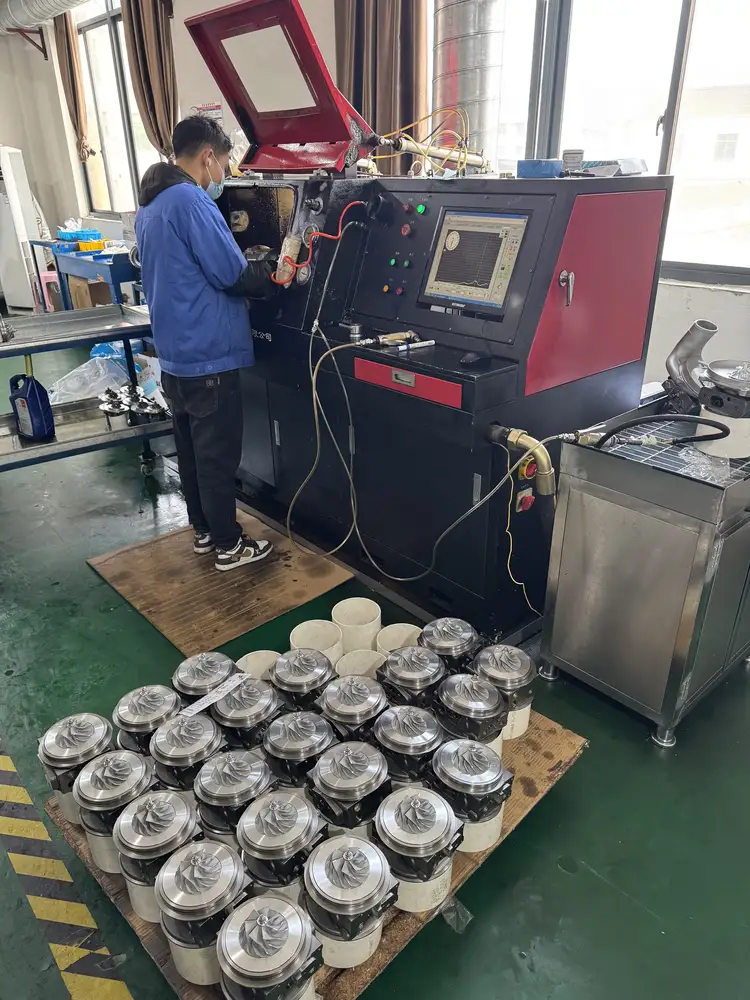
The test-workstation photograph provides process context. Screen values are not used as an acceptance example, and no result is attributed to a particular core from this image.
A satisfactory balance result does not establish wheel-to-housing compatibility, actuator calibration, vane flow, oil-path cleanliness or correct installation. Choose the correct replacement turbo core independently, then retain the checks required for the complete turbocharger.
For an Elecdura quotation, provide the complete turbo and proposed CHRA references, application, quantity and the balance documents your receiving process requires. Use the matching and quotation form to state those requirements before ordering. A quotation should identify what documentation can be supplied; it should not imply an unverified test facility or certification.
No. First establish a comparable method and the relevant acceptance criteria. Exact visual agreement between different fixtures and equipment is not, by itself, a defensible purchasing requirement.
No. It addresses the stated balancing test. Complete-turbo identity, housing condition and control settings remain separate decisions. This is particularly important when a balanced core is fitted into reused housings.
No. Preserve it, investigate the method and arrange a technically controlled comparison. Machine variation is a possible explanation to examine, not a blanket waiver for a failed test.