ELECDURA NETWORK

Your Whole New Supply Chain For Heavy-Duty Parts
Whatsapp:
+86 18915027366
Phone:
+86 18915027366
Views: 0 Author: Site Editor Publish Time: 2026-09-23 Origin: Site
A LIN-controlled truck alternator must match the vehicle's charging-control system as well as its mechanical installation. A plug that fits and an acceptable voltage reading do not, by themselves, prove that the replacement exchanges the right information with the vehicle. Confirm the exact assembly and its application-specific regulator before approving a substitute.
This distinction matters when a workshop reports a charging warning after replacement, or a buyer receives several offers with the same voltage and current rating. The question is whether the proposed unit meets the vehicle's communication requirements, not simply whether it can generate electricity.
LIN means Local Interconnect Network. In its commercial-vehicle regulator explanation, Delco Remy describes two-way communication between the regulator and the vehicle data system. Voltage regulation remains part of the job; communication allows the vehicle controller to influence it using the charging strategy selected for that application.
Delco Remy also identifies vehicle-specific presets. Therefore, a shared regulator housing is not a reliable basis for combining purchase references. Ask the supplier which original assembly and application its complete alternator replaces. An answer containing only “LIN regulator” leaves the application configuration unspecified.
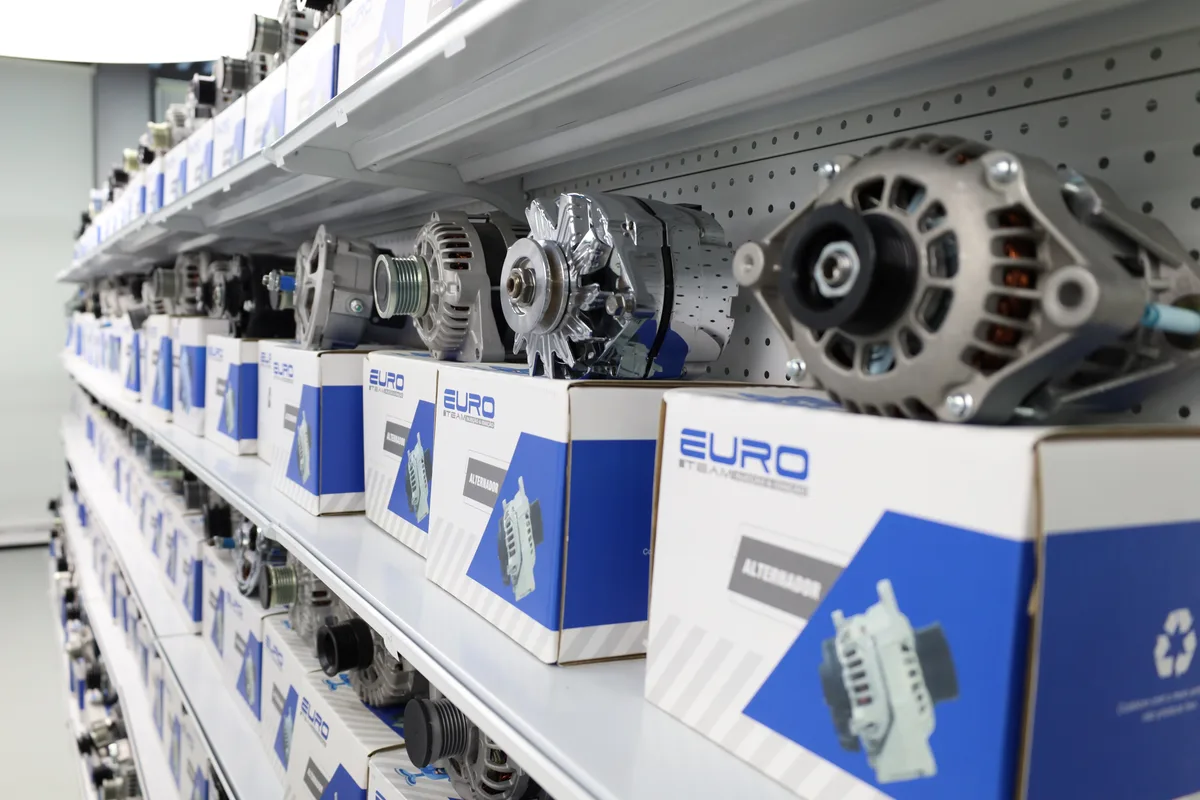
Different assemblies in a real product display. The pulley-side appearance does not identify their regulator protocol; these units are not presented as verified LIN examples.
A sense connection supplies battery-voltage information; a LIN connection carries digital messages. HELLA's multifunction-regulator guide separately describes S for battery sensing, DFM for utilization feedback and W for a phase signal. Those labels describe different functions. Do not substitute one connection for another because the terminals are small or the connector has a similar shape.
The Infineon regulator portfolio illustrates why a generic LIN designation is incomplete. It describes LIN versions and adjustable parameters used to tailor a regulator to an OEM application. These are component-level capabilities, not proof that every finished alternator containing such technology is interchangeable.
Start with the vehicle identification and original alternator reference, including any suffix or supersession. Add the offered complete-assembly number and, where the supplier provides it, the installed regulator reference. Request the applicable communication configuration or an authoritative application match. Do not ask a warehouse to establish electronic compatibility from connector photographs alone.
For example, Prestolite's catalog identifies P00317 as a 24 V LIN regulator for Mercedes-Benz truck applications, with a five-pin in-line connector and specific locating pegs. Its listed assemblies include A148P489 and A148P490. This is a defined catalog relationship, not approval for every five-pin truck alternator.
Prestolite publishes a separate P00283 LIN-regulator record with its own where-used list. A cross-reference for a regulator concerns that component. It does not independently establish pulley alignment, mounting geometry or output suitability for the complete unit. Keep the component match and the complete-assembly match separate in the quotation.
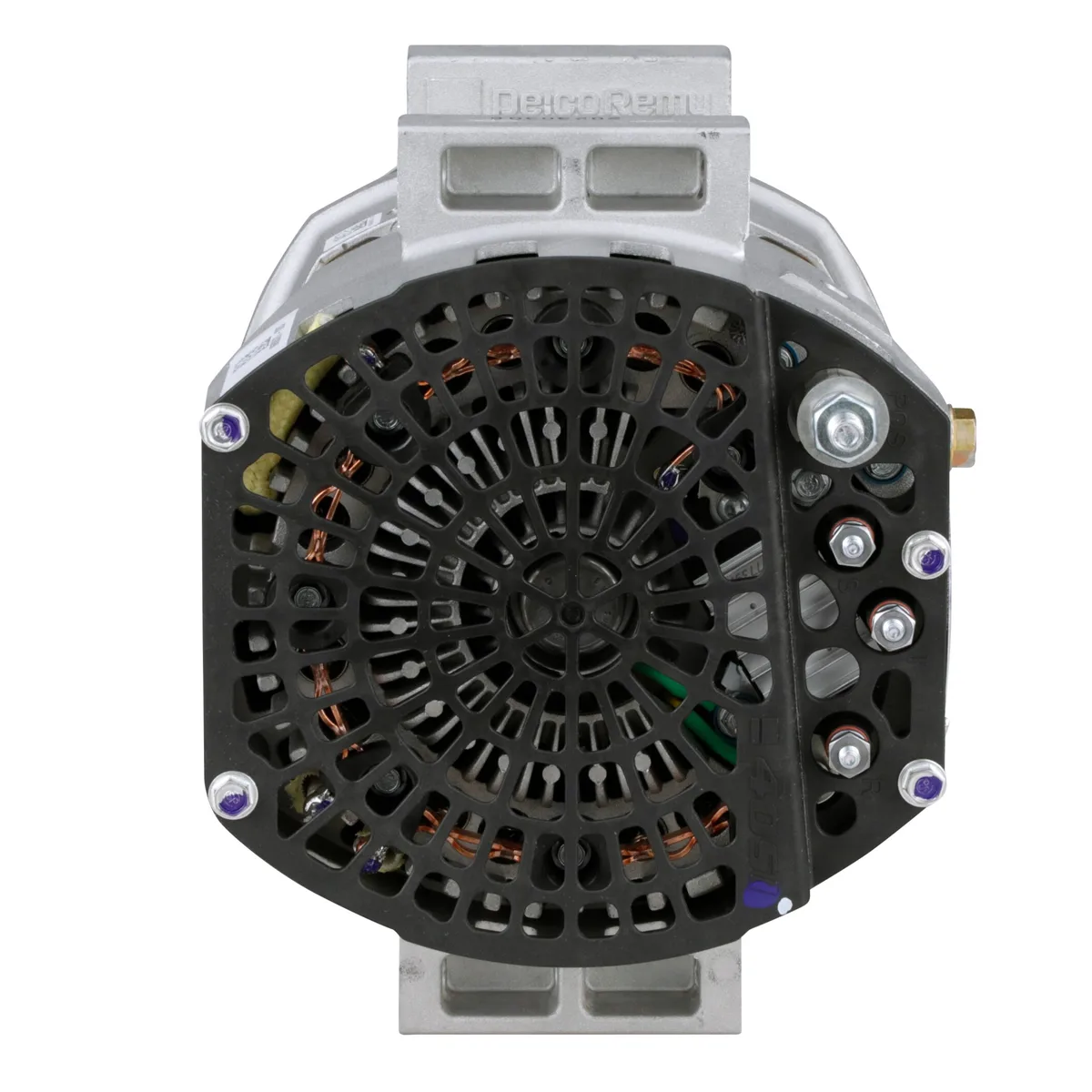
A rear-view photograph helps document physical connections. This reference unit has not been verified as a LIN alternator; a photograph cannot reveal the stored communication configuration.
Infineon describes configurations that can regulate without an active communication interface. Consequently, observing voltage during a test does not necessarily demonstrate successful LIN operation. This does not mean every LIN alternator uses the same fallback mode, voltage or delay. The applicable regulator documentation must establish the expected behavior.
For a bench-tested replacement, request the tested part number, the control mode used and whether the equipment supported that unit's communication requirements. “Output passed” is useful evidence of the test performed, but it should not be relabeled as “vehicle communication passed” unless that function was actually assessed.
HELLA's regulator diagnostic guide distinguishes fault-memory information, live parameters and examination of the LIN signal. Record the available fault description and operating conditions. Where supported, compare the requested charging behavior with the measured response using the vehicle manufacturer's procedure.
If communication is absent, the harness and connector require investigation. If data exchange is present but the charging result is wrong, that observation still needs interpretation alongside the battery, drive and main electrical connections. A communication-related warning is not, on its own, proof that the regulator is defective.
HELLA's examples are not universal truck test settings. Use the actual vehicle's wiring information and safe service procedure; do not inject power into a communication terminal or disconnect a running charging system as an improvised test.
A useful enquiry describes one intended installation and one proposed replacement, then identifies what remains unresolved. For LIN-equipped units, the communication question should be answered before a bulk order—not left to the receiving team after parts arrive.
Identify the complete original and offered references, vehicle application and system voltage.
Ask for the source supporting the application match and any required regulator configuration.
State whether the supplied test report verifies electrical output only or also the appropriate communication response.
Confirm any vehicle-specific commissioning requirement with the manufacturer or qualified service provider.
The last question is not an instruction to program every replacement. Some applications may require a prescribed setup step; others may not. The supplier should identify the actual requirement instead of making a blanket claim that all LIN units need coding, or that none do.
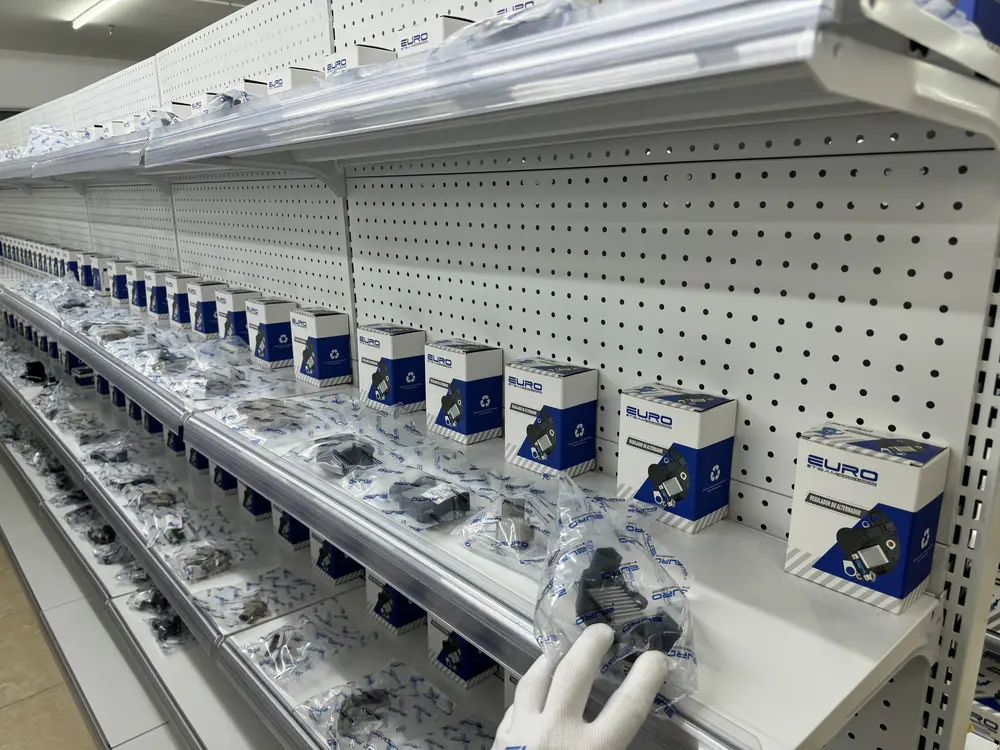
Packaged regulators in a real display. Keep the exact component reference with the offer; common packaging does not establish identical electronics or an approved substitute.
DENSO's alternator guidance emphasizes equivalent output, pulley specifications and installation interfaces when choosing a replacement. Communication compatibility adds to these requirements; it does not replace them. A correctly configured regulator cannot correct a mismatched mounting arrangement or pulley.
Use our voltage-regulator guide for the broader regulation and supply questions. For an application enquiry, send the original and proposed references, connector photographs and available fault or test information through the heavy-duty alternators page. Request confirmation of the exact offered configuration; no availability or interchange approval is implied by the examples in this article.