ELECDURA NETWORK

Your Whole New Supply Chain For Heavy-Duty Parts
Whatsapp:
+86 18915027366
Phone:
+86 18915027366
Views: 0 Author: Site Editor Publish Time: 2026-09-25 Origin: Site
A replacement turbocharger arrives with the compressor outlet pointing away from the charge-air pipe. The flange looks familiar, but the hose does not line up. Should the workshop turn the housing, modify the pipe, or return the unit?
The answer depends on the exact assembly and the manufacturer's approved configuration. Some specified references can be converted by changing compressor-housing orientation. That does not make every apparently similar turbo adjustable, and it does not authorise changing a wastegate rod, an electronic actuator or a variable-nozzle setting.
First describe the mismatch using the installed assembly as the reference. Is it the compressor outlet neck, the turbine inlet flange, the oil-return face, or the actuator connector? A photograph taken from the opposite end can make the same geometry look different. Compare both units from the same viewing direction, with the same mounting feature visible.
Record the full identification from the removed and supplied assemblies, including the suffix. If the replacement label cannot be read, obtain clarification before loosening anything. “Same engine family” and “same-looking casting” are not enough to explain a different outlet position.
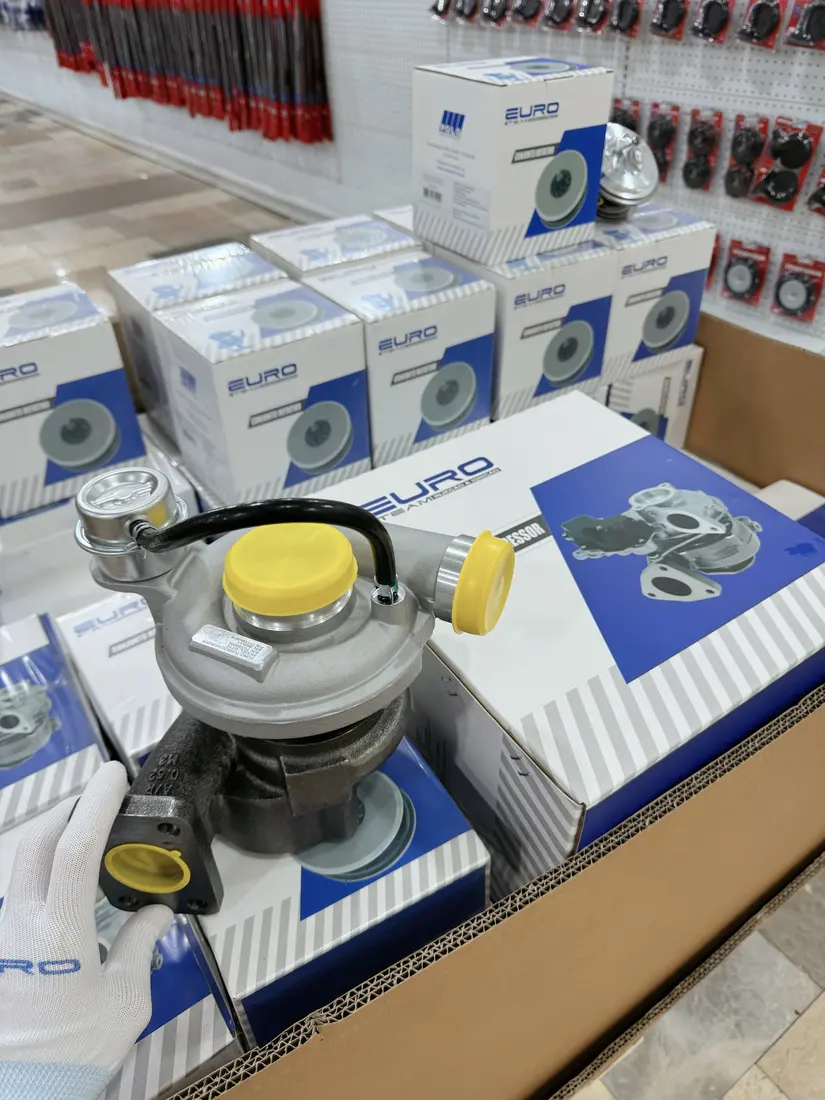
Interface reference: outlet, actuator and hose share the same assembly. This photographed unit is not identified as either Garrett reference discussed below.
Ask the supplier whether the delivered reference is an exact replacement, an approved supersession, or a part requiring a documented conversion. These are different answers. If a conversion is proposed, request its applicable part numbers and current instructions; a verbal assurance that it “just needs turning” leaves the essential work undefined.
Garrett's public summary of Technical Bulletin 003_2024 identifies 763886-5001S and 763886-5002S as differing by compressor-housing orientation. It describes converting the former to the latter so one stocked reference can cover the stated applications.
This is evidence for that specific conversion, not permission to apply the same approach to another turbo. The public summary does not provide the working angle, tightening values or complete procedure. Obtain the full applicable bulletin through the manufacturer or supplying specialist before carrying out the work; do not derive those settings from the photographs here.
A useful response connects the reference on the box to the reference on the unit and explains who will perform any approved conversion. It should also identify the final configuration being supplied. If the supplier cannot establish that connection, retain the assembly in its received condition while the discrepancy is resolved.
Compressor-outlet direction and center-housing oil drainage are separate checks. Moving the complete assembly to improve one connection can leave another interface wrong. Inspect the bearing-housing return face and the installed pipe route as part of the comparison, rather than judging fit only by whether the charge-air hose reaches.
Melett's oil-leak guidance identifies a twisted, bent or trapped return pipe as a possible contributor to oil leakage. A pipe forced into place is therefore not a satisfactory answer to an orientation mismatch. Use the application-specific installation information; there is no universal drain-angle limit supplied by this article.
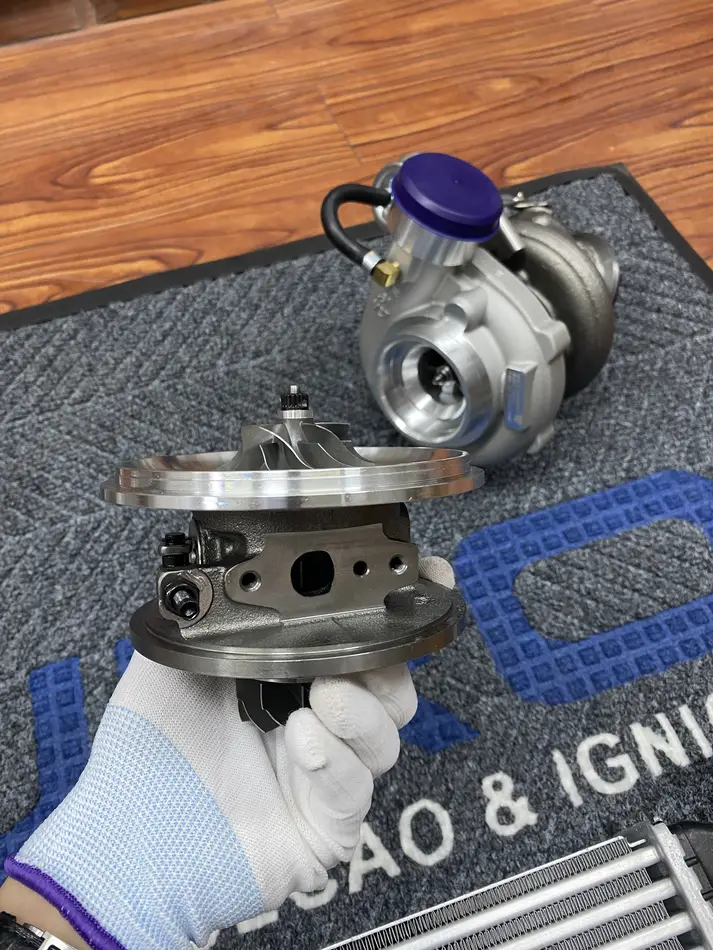
Center-housing reference: the exposed return face is a different interface from the compressor outlet. The photograph shows no measured installation angle.
Garrett's installation guide warns against changing turbo settings or calibration and specifically protects the minimum-vane position on variable-nozzle units. An outlet mismatch is not a reason to alter a stop screw or control adjustment. Identify the correct configuration or use an expressly applicable manufacturer procedure.
A core assembly also does not establish the final complete-turbo arrangement. The housings, linkage, actuator and application-specific installation requirements still matter. Keep “correct core” and “correct ready-to-install assembly” as separate conclusions when comparing a repair quotation with a complete replacement.
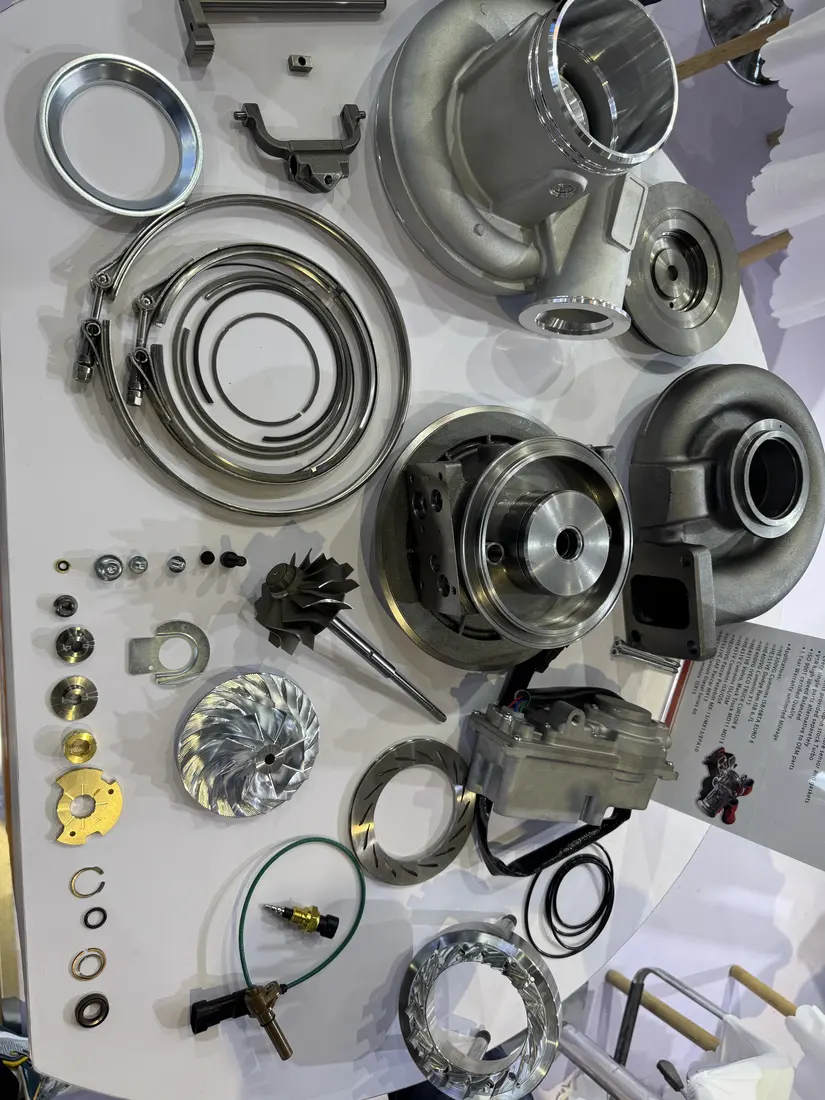
Component display: housings, retaining hardware and controls serve different functions. This is not a matched-kit list or an instruction to dismantle a supplied turbo.
Melett's HELLA actuator range distinguishes listed simple actuators supplied preconfigured from smart units supplied ready for calibration. Its published range concerns many passenger-car applications; it is not a truck-wide fitment approval. The relevant lesson for a buyer is to obtain the exact actuator and turbo pairing, rather than applying one listing's calibration statement to every assembly.
For a replacement order, send a compact comparison: both complete references, matching-angle photographs, a close view of the connection that does not align, and the engine or equipment identity. Ask for one of three clear outcomes: confirmation of the correct supplied variant, the applicable authorised conversion with responsibility agreed, or a corrected replacement reference.
Do not let packaging, delivery urgency or a familiar brand substitute for that answer. Preserve the received condition until the route is clear. Once the configuration has been confirmed, the workshop can follow the proper installation and commissioning procedure without using hose tension or an improvised control adjustment to conceal the mismatch.
For aftermarket sourcing, send Elecdura the original reference and interface photographs. State whether you need a complete turbocharger or repair components. Any proposed alternative still needs application verification; the photographs and manufacturer examples above do not establish stock availability, genuine-brand origin or universal interchangeability.