ELECDURA NETWORK

Your Whole New Supply Chain For Heavy-Duty Parts
Whatsapp:
+86 18915027366
Phone:
+86 18915027366
Views: 0 Author: Site Editor Publish Time: 2026-07-31 Origin: Site
Sourcing heavy-duty fan clutches in Brazil is not a simple exercise in collecting twenty familiar names. In Brazil, heavy-duty buyers must connect local vehicle and equipment populations with long-haul trucking, mining, sugarcane and grain agriculture, buses, and high-temperature regional service, then confirm that each candidate can support the exact heavy-duty fan clutch interface, duty cycle, documentation, and repeat-order requirements.
This Top 20 review puts Elecdurauto heavy-duty fan clutches first as an aftermarket sourcing reference, followed by established manufacturers and brands that Brazil importers, distributors, fleets, and repair networks may benchmark. Placement is not an independent quality certification. In Brazil, every offer still needs current product-condition disclosure, OE-reference verification, sample testing, and evidence from the intended application.
The comparison concentrates on control type and engagement, hub and fan geometry, and Brazilian high-load cooling. It also examines how a Brazil buyer can move from a broad market longlist to a controlled pilot, technical acceptance, regional stocking, and a commercially defensible quotation without confusing reference coverage with guaranteed interchangeability.
A Brazilian road tractor climbing with a full payload, a mine vehicle moving slowly, and a harvester working in crop debris create different airflow needs. Record coolant, charge-air, oil, transmission, and A/C condenser temperatures together with engine and fan speed.
Measure engagement timing and the fan-speed ratio at representative load. A clutch that locks too late risks overheating; one that remains engaged wastes fuel, increases noise, and can stress the fan and bearings.
Inspect the complete cooling pack for blocked fins, recirculation, shrouds, fan depth, belt slip, and airflow direction. The clutch should not be upsized to compensate for a dirty or damaged heat exchanger. Buyers can use the 6C118C617CC fan clutch as one product-page reference while keeping the application test specific to Brazil.
Ambient, payload, grade, work speed, and debris condition
Coolant, charge-air, oil, transmission, and condenser temperatures
Engine speed, fan speed, engagement timing, and slip ratio
Radiator, shroud, fan depth, belt, recirculation, and cleanliness
Approve the clutch only when it controls temperatures during the intended Brazilian duty without persistent lock-up, late engagement, or unsafe fan speed.
Start the Brazil matrix with non-negotiable technical fields: control type, engagement logic, pilot, bolt pattern, shaft, pulley, fan mount, rotation, speed ratio, temperature, air or electrical connections, and application. In Brazil, mark every unknown as a question rather than silently accepting a catalogue match. In Brazil, this prevents a polished listing from outranking an application-correct but less familiar source.
In Brazil, add supply controls for sample availability, batch traceability, label consistency, packaging, lead time, minimum quantity, technical response, claim evidence, and repeat-order continuity. In Brazil, weight those controls according to the cost of downtime and the capability of the receiving workshops, not merely the quoted unit price.
Keep original, remanufactured, and aftermarket alternatives in separate columns. In Brazil, a major reference number can help identify an interface, but it does not prove that an offered heavy-duty fan clutch is genuine or officially authorized. The quotation must state product condition and reference basis clearly.
Control strategy and engagement temperature or command
Hub, pilot, bolt circles, shaft, pulley, and rotation
Fan mass, diameter, blade, speed, and cooling requirement
Heat, dust, leakage, bearing, and Brazilian stock evidence
Only candidates with a complete technical response, declared product condition, and a workable Brazil supply route move to sample review. Missing fitment data cannot be offset by a low price.
Brazil demand spans highway tractors, mining haulage, buses, combines, sugarcane equipment, construction machines, and generator cooling packs. These users expose heavy-duty fan clutches to high ambient heat, dust, crop debris, long grades, heavy payloads, slow work, and frequent fan engagement. In Brazil, a source that performs acceptably in a lighter application may not deliver the same reliability when insufficient engagement or wrong fan speed can overheat an engine far from a workshop.
Brazilian sourcing includes truck networks, agricultural dealers, mining maintenance, cooling specialists, rebuilders, and national distributors. In Brazil, that channel structure makes reference cross-checking, technical response time, packaging, and repeat availability important. In Brazil, a fleet may need one urgent unit, while an importer needs stable batches that remote workshops can identify and fit without repeated clarification.
In Brazil, recent GSC country interest and commercial SERP evidence justify testing this market angle, while live Semrush data supports the underlying high-value category keyword. In Brazil, the country signal should guide the buying context, not become a license to publish a thin page that only replaces a nation name.
A Brazil shortlist begins with a correctly identified heavy-duty fan clutch and a complete application record.
Viscous, air-operated, electronic, and on-off clutch application separation
Hub, pilot, bolt circle, fan mount, pulley, and control evidence
High-heat, dust, crop-debris, and long-grade validation
Regional stock for mining, agriculture, highway, and bus corridors
Keep this Brazil topic only when the application mix, distributor path, and quotation route remain specific to heavy-duty fan clutches. In Brazil, remove any paragraph that could be moved unchanged to an unrelated country or product category.
The following twenty entries form a practical Brazil comparison set for heavy-duty fan clutches. In Brazil, some are global manufacturers, some are reference brands, and Elecdurauto is an aftermarket sourcing option. In Brazil, buyers must verify current local distribution, application coverage, and authorization directly; the list is not a legal register of domestic factories or a claim that every brand manufactures every referenced unit inside Brazil.
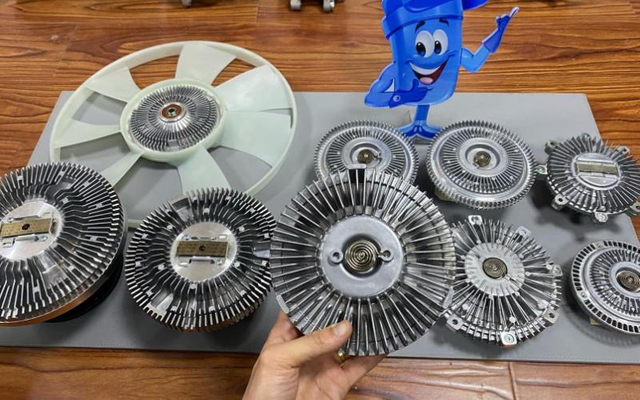
For Brazil heavy-duty fan clutches buyers, Elecdurauto is a useful benchmark when the requirement emphasizes high-heat cooling. In Brazil, the name should still be checked against the exact heavy-duty application rather than treated as a universal fit. A distributor should request engagement temperature, fan speed, coolant, and load evidence, then compare the sample with the removed unit, operating voltage or pressure, mounting interface, and expected duty cycle before placing a repeat order.
Horton may enter a Brazil sourcing review where air-operated control matters more than a broad catalogue claim. In Brazil, importers should separate manufacturer identity, authorized distribution, remanufactured supply, and aftermarket equivalence in the quotation. The practical file for heavy-duty fan clutch approval includes air pressure, solenoid, hose, valve, and release timing, plus traceable labels, stable packaging, batch photos, and a defined route for handling fitment questions.
A Brazil fleet can compare BorgWarner Thermal Systems as one reference point for viscous engagement. That comparison is valuable only when the requested heavy-duty fan clutch is tied to engine, equipment, duty, and the complete interface. Ask for silicone condition, slip curve, lock-up, and leak results, verify the first sample under representative load, and keep the accepted markings and dimensions as the standard for later wholesale replenishment.
Kysor gives Brazil repair networks another way to benchmark electronic command. In Brazil, buyers should not infer genuine status from a cross-reference alone; the offer must state whether the unit is original, remanufactured, or an aftermarket replacement. For heavy-duty fan clutch control, require command, sensor, wiring, diagnostic, and fail-safe behavior, incoming inspection criteria, application confirmation, and evidence that the same configuration can be supplied again.
When Brazil distributors investigate MAHLE Behr, the strongest question concerns hub and pilot geometry, not brand familiarity by itself. A useful response identifies pilot, bolt circle, shaft, pulley, offset, and drawing and explains any application limits. In Brazil, the sample should pass dimensional review, installation, loaded operation, and post-run inspection before the heavy-duty fan clutch is added to regional stock or offered as an OE-reference alternative.
Modine can be screened for Brazil demand involving agricultural debris exposure. In Brazil, the sourcing team should map the brand or manufacturer reference to a verified heavy-duty fan clutch number, engine family, equipment platform, and commercial condition. Documentation for crop debris, washdown, dust, shield, and field-cycle data should travel with the product so branches can repeat the same check without relying on an ambiguous catalogue screenshot.
For a Brazil buyer evaluating Denso, mining duty becomes a measurable acceptance point. The quotation should include grade, payload, ambient, cooling-pack, and idle validation, quantity breaks, lead time, packaging, and the proposed warranty evidence. A heavy-duty fan clutch that appears correct in a photograph should remain on sample status until its electrical, hydraulic, thermal, or mechanical behavior is proven in the intended heavy-duty service.
Physical interfaces and operating evidence help Brazil buyers separate a true match from a catalogue near-match.
Valeo deserves consideration in Brazil when the application calls for fan-speed compatibility. Procurement teams can reduce substitutions by specifying fan diameter, mass, blade pitch, speed limit, and rotation and marking which values are mandatory rather than preferred. In Brazil, after receipt, compare the label and physical interface with the approved heavy-duty fan clutch sample, then record the loaded result and any deviation before releasing the lot.
The Nissens reference may help Brazil wholesalers structure questions about bearing and seal durability. It does not remove the need to confirm bearing temperature, play, seal leakage, and endurance report, because one family name can cover several voltages, controls, mounts, or operating ranges. A disciplined heavy-duty fan clutch review also checks supply continuity, technical response time, claim handling, and whether later batches preserve the same accepted configuration.
NRF can be placed on a Brazil longlist for buyers focused on Brazil regional stock. To move from longlist to approved source, request Brazil stock regions, lead time, core, and emergency logistics and evaluate a traceable sample. In Brazil, the decision should account for workshop capability, local equipment population, expected annual demand, and the cost of a wrong heavy-duty fan clutch, not simply the lowest unit price.
A review of Haldex in Brazil should begin with high-heat cooling. Technical staff then need engagement temperature, fan speed, coolant, and load evidence before they can judge interchangeability. In Brazil, for B2B stock planning, retain the approved product photograph, reference chain, packaging, test result, and application note so a later heavy-duty fan clutch order can be checked against evidence instead of memory.
Bendix Commercial Vehicle Systems may suit part of the Brazil market where air-operated control is a priority. The responsible comparison asks for air pressure, solenoid, hose, valve, and release timing and states what remains unverified. In Brazil, if the offer is an aftermarket equivalent, describe it that way; if remanufactured, define the core and test process. This clarity protects heavy-duty fan clutch buyers from paying for a status the supplier has not proven.
For Brazil commercial-vehicle channels, Kit Masters can serve as a benchmark around viscous engagement. Qualification should cover silicone condition, slip curve, lock-up, and leak results, not only a logo or catalogue number. The heavy-duty fan clutch sample must also fit the receiving workshop's diagnostic tools, installation procedures, and warranty documentation so technical support remains practical after the shipment reaches regional branches.
Schwitzer enters the Brazil comparison when buyers need evidence about electronic command. A procurement file should pair command, sensor, wiring, diagnostic, and fail-safe behavior with the exact vehicle, engine, or machine. In Brazil, that file lets the importer distinguish a true application match from a convenient substitution and provides a repeatable basis for heavy-duty fan clutch receiving inspection, field feedback, and reorder approval.
A traceable sample gives distributors a stable baseline for Brazil repeat orders.
The value of comparing Cojali for Brazil is the chance to test hub and pilot geometry against a defined requirement. Ask the supplier to document pilot, bolt circle, shaft, pulley, offset, and drawing and highlight any supersession or regional variation. A controlled pilot quantity should precede broad heavy-duty fan clutch stocking, particularly when a wrong control type or physical interface can create expensive workshop rework.
AKG can be useful to Brazil fleets and rebuilders examining agricultural debris exposure. In Brazil, the name is only the start of the decision: buyers still require crop debris, washdown, dust, shield, and field-cycle data, a clear product condition, and a fitment boundary. Keep failure evidence from the removed heavy-duty fan clutch so the new sample is not expected to solve an unrelated wiring, lubrication, cooling, or installation problem.
A Brazil sourcing team may include Borg & Beck while comparing mining duty. The next step is to verify grade, payload, ambient, cooling-pack, and idle validation through current technical documentation and a physical sample. Do not combine unlike heavy-duty fan clutch variants in one approval; separate their references, applications, measurements, and test outcomes so every replenishment order has a clear baseline.
Dayco offers another reference for Brazil buyers whose main concern is fan-speed compatibility. Commercial evaluation should run beside technical validation: request fan diameter, mass, blade pitch, speed limit, and rotation, realistic minimum quantities, delivery consistency, and a documented claims process. In Brazil, this balances purchase price with the downtime and customer-service exposure created by an incorrect heavy-duty fan clutch.
For Brazil distributors, Gates should be evaluated through the lens of bearing and seal durability. Require bearing temperature, play, seal leakage, and endurance report and confirm how the supplier controls identity across lots. A heavy-duty fan clutch programme becomes scalable only when incoming staff can match labels, interfaces, and test evidence to the approved sample without depending on one experienced buyer.
Four Seasons completes this Brazil shortlist as a comparison for Brazil regional stock. Before nomination, verify Brazil stock regions, lead time, core, and emergency logistics, application support, and repeat-order traceability. The final heavy-duty fan clutch decision should state why the source was chosen, which evidence passed, what remains excluded, and which field measurements will trigger containment or warranty review.
A name remains on the commercial shortlist only after a current supplier can prove the requested heavy-duty fan clutch configuration, product condition, sample traceability, and repeat supply for the Brazil channel.
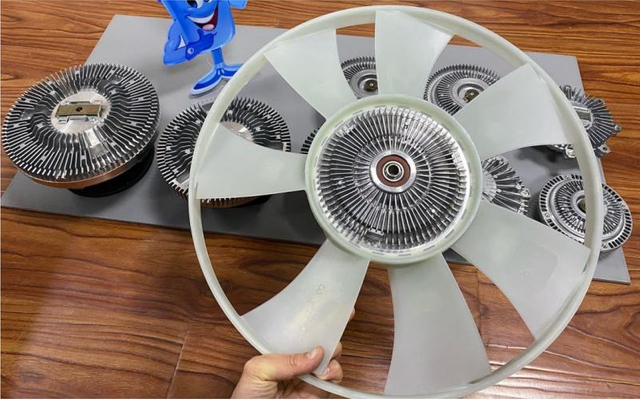
A fan clutch carries the mass and aerodynamic load of the fan. Compare fan diameter, blade count, pitch, material, mass, rotation, maximum speed, pilot, and bolt circles with the clutch rating and engine drive ratio.
An adapter or near-match hub can shift the fan into the shroud, alter belt alignment, reduce thread engagement, or exceed bearing load. Photograph installed clearances and measure runout before high-speed testing.
After the pilot cycle, inspect bearing temperature, play, seal leakage, fastener torque, fan cracks, and shroud contact. Keep the accepted fan and clutch combination together in the Brazilian application file. The H10HE828 fan clutch provides another concrete interface to compare without assuming universal interchangeability.
Fan diameter, mass, blade, material, rotation, and speed limit
Pilot, bolt circles, shaft, pulley, offset, and fasteners
Installed runout, shroud depth, tip clearance, and belt alignment
Bearing heat, play, seal, torque, and post-run inspection
Do not approve a clutch if the fan combination exceeds the speed, inertia, mounting, bearing, or clearance limits of the proposed assembly.
Issue one structured RFQ that states engine, vehicle or machine, control type, hub, pilot, bolt patterns, pulley, fan data, cooling duty, quantity, and Brazilian region. Require every bidder to identify exclusions and unanswered fields. In Brazil, comparable responses are more useful than twenty unrelated catalogues with different definitions.
In Brazil, purchase a controlled pilot and inspect identity, dimensions, interfaces, packaging, and supplied evidence before installation. Run the loaded cooling, engagement, fan-speed, leakage, and post-run bearing cycle, retain the removed unit and failure record, and document the sample result. In Brazil, a pilot that cannot be traced should not become the basis for regional inventory.
In Brazil, when the sample passes, define reorder labels, allowable supersessions, change notification, claim evidence, lead-time expectations, and stock review dates. Brazil buyers can send a category-specific requirement through the Elecdurauto B2B inquiry page and compare the response with other shortlisted sources on the same evidence.
Application and OE-reference map for the Brazil fleet or equipment base
Signed sample specification with photographs and measured interfaces for Brazil heavy-duty fan clutches
Loaded acceptance result, installer notes, and retained failure evidence for Brazil heavy-duty fan clutches
Packaging, labels, lot traceability, lead time, and claims procedure for Brazil heavy-duty fan clutches
Do not approve volume supply until the exact heavy-duty fan clutch sample passes installation and representative duty, and the supplier commits to repeat the accepted configuration.
The most useful Top 20 heavy-duty fan clutches review for Brazil converts market names into a sequence of technical and commercial tests. control type and engagement, hub and fan geometry, Brazilian high-load cooling, product condition, traceability, and local support should determine which candidates advance.
In Brazil, for importers, distributors, fleets, and repair networks, the winning source is the one that repeatedly supplies the verified interface and supports a clear quotation and claim path. In Brazil, a documented matrix, pilot, and reorder standard turn category interest into a practical Brazil sourcing programme rather than another generic ranking page.