ELECDURA NETWORK

Your Whole New Supply Chain For Heavy-Duty Parts
Whatsapp:
+86 18915027366
Phone:
+86 18915027366
Views: 0 Author: Site Editor Publish Time: 2026-09-24 Origin: Site
A UK workshop buying a turbo balancing machine needs to choose a working configuration, not simply the largest model number. The VSR 500, 510 and 520 give commercial-turbo rebuilders different levels of automation within one Turbo Technics family. The useful comparison is which tasks stay with the operator and what the quoted installation includes.
This shortlist is limited to those published configurations. It is not a ranking of all balancing-machine brands, an independent performance test or a claim that a higher-numbered machine produces a better-balanced core. UK buyers should also compare headquarters training with on-site commissioning, including the travel and downtime each route creates.
Record the turbo references from recent commercial-vehicle jobs and the core families you intend to add. Separate frequent repeat work from occasional large industrial units. A machine that suits the busiest family may still need additional tooling for a low-volume job; a few unusual cores can change the cost of the package.
For each family, ask the equipment supplier to identify the suitable adapter, lubrication connections, permitted mounting arrangement and applicable test programme. Record unsupported work separately instead of hiding it inside a general “heavy-duty coverage” description.
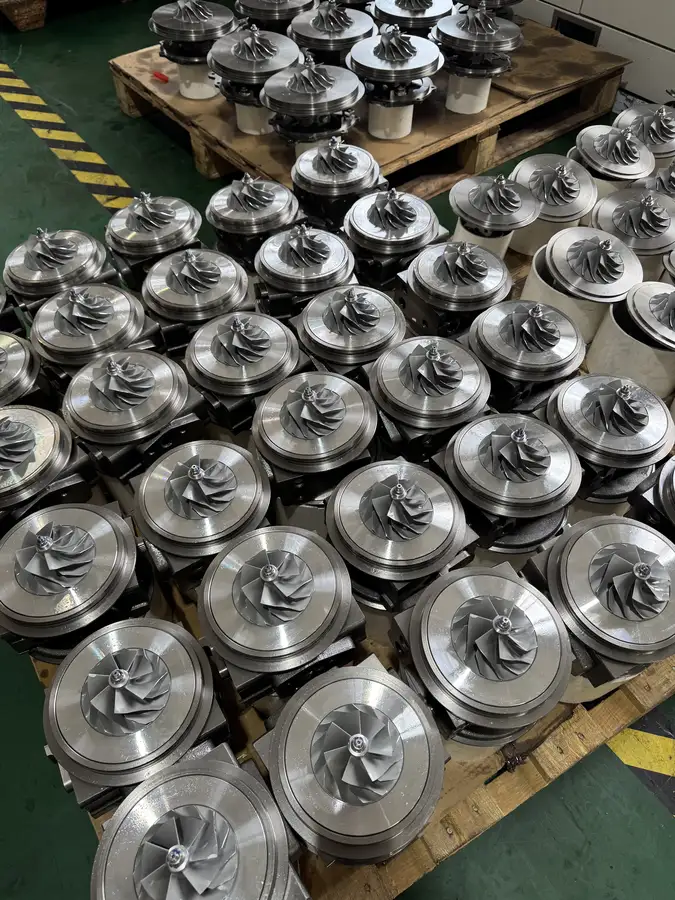
Workshop reference: the visible mix of CHRA sizes illustrates why application coverage should be listed by core family. This photograph does not establish adapter compatibility or test acceptance.
Turbo Technics asks for detailed drawings and preferably a core sample when an adapter is not already available. Its core-dimension guidance is a useful starting point, but a nominal wheel diameter alone is not enough to approve the complete mounting arrangement.
Include tooling part numbers in the quotation. Otherwise, two prices for the same machine label may cover very different portions of your intended workload.
Turbo Technics positions this family for larger commercial and heavy-industrial turbo cores. Its published VSR 500 specification and option matrix distinguish the following configurations; confirm the specification of the actual machine offered.
The base 500 provides the reference point for this comparison. The matrix does not list the automatic door, automatic rotor clamping or oil-mist extraction shown for the 510 and 520. Ask the demonstrator to walk through loading, securing the core, running the test and unloading, so the quotation captures the work the operator will perform.
The 510 adds automatic rotor clamping, an automatic door and oil-mist extraction in the published matrix. It does not show the 520's automatic speed and cycle control. Its practical value therefore depends on whether handling is a bottleneck in your workshop, rather than on assuming that every part of the cycle becomes automatic.
The 520 includes those handling features and adds automatic speed and cycle control. A buyer considering it should ask for a demonstration using representative cores and normal changeovers. Quoted automation does not remove the need for correct preparation, application selection, training and result review.
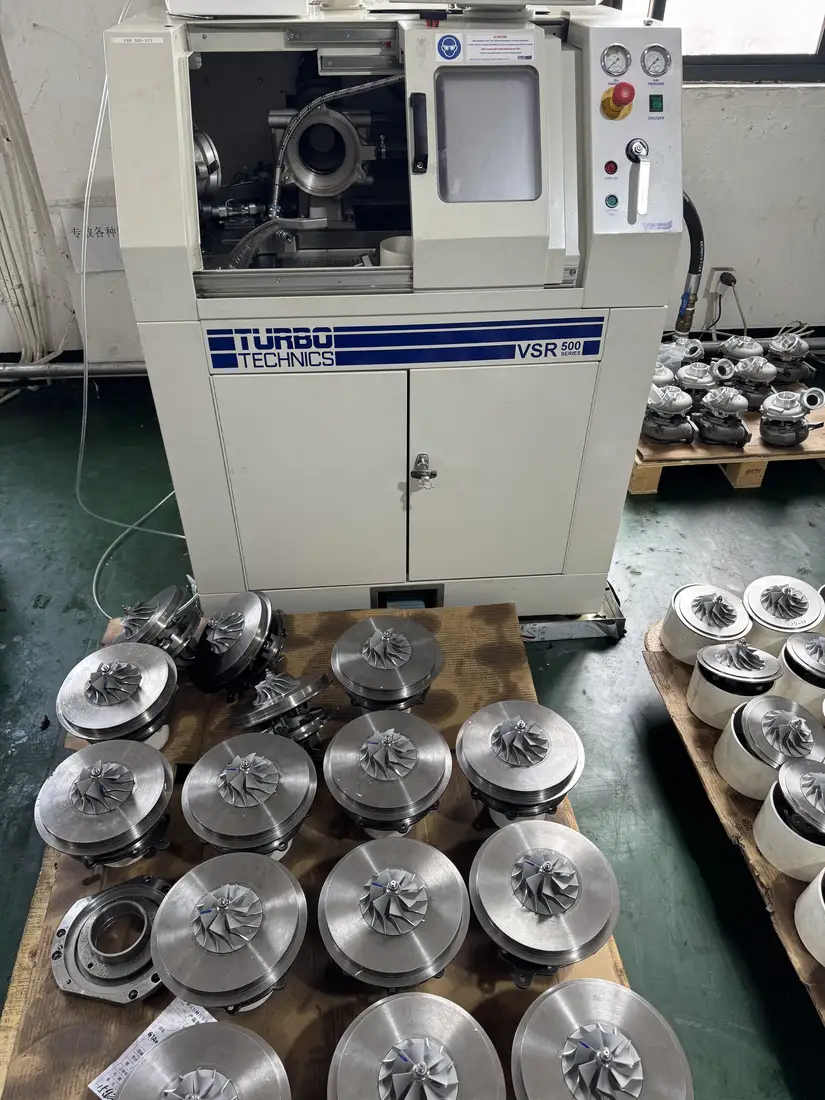
The machine in this reference photograph is labelled VSR 500. It is not a photograph of the 510 or 520, and does not verify its present calibration or service status.
Send each proposed configuration the same job mix. Observe preparation, mounting, test execution, any required correction, repeat testing, report handling and changeover. Note which activities require a skilled operator and which can happen while another core is being prepared.
A demonstration with identical cores in a long run answers a different question from a repair shop changing references repeatedly. Record both the elapsed time and the assumptions behind it. Do not convert a brochure throughput estimate directly into a staffing plan or a promised delivery capacity.
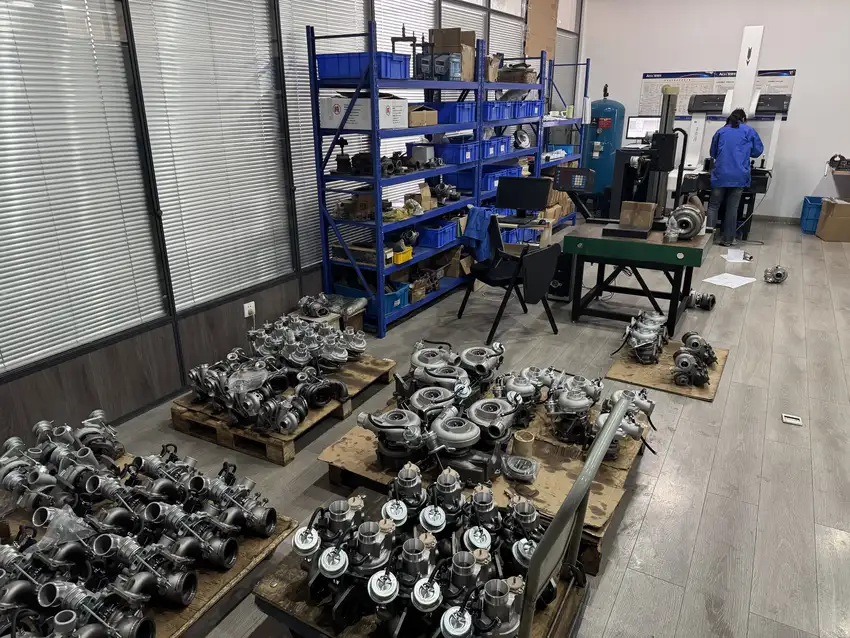
The cabinet footprint is only part of the layout. Plan where incoming cores, prepared assemblies, tested items and work needing attention will wait. Ask for the machine's installation requirements and safe access clearances before committing to a position. Keep the movement of parts and operators in the layout review.
Real workshop reference showing the space occupied by parts and adjacent operations. This is not a recommended safety layout, a UK location claim or a Turbo Technics training-site photograph.
Turbo Technics states that training is available to machine customers at its UK headquarters without a training charge; arrangements at customer premises carry an additional cost. Travel and accommodation are excluded. The programme covers installation, balancing, relevant setting procedures, maintenance and data storage. See the manufacturer's training terms for the published scope.
For a UK buyer, compare the cost of staff attending Northampton with the cost and scope of training on the installed machine. Ask whether your own core samples can be used, how many operators are included and what further support is available after the initial session. Confirm dates rather than treating training as immediately available.
Request separate lines for the machine configuration, application tooling, installation, training, maintenance requirements and support. Confirm the quotation currency, VAT treatment, delivery arrangements and any items the workshop must provide. A lower equipment price is not necessarily a lower cost for the same usable coverage.
Before accepting handover, agree what will demonstrate readiness: the specified configuration present, agreed applications demonstrated, operators trained and the sample report retrieved successfully. This is a purchasing acceptance plan, not a substitute for the manufacturer's commissioning procedure.
Turbo Technics lists VSR balancing and VTR variable-vane flow setting as separate equipment functions. Buying a VSR configuration does not by itself establish that the workshop can set every actuator or release every complete variable-geometry turbo. Review the test-equipment functions against the repair scope you plan to offer.
A well-equipped workshop still needs the correct CHRA or complete turbo for the application. If you are sourcing replacement parts rather than purchasing machinery, send Elecdura the turbo identification, engine application and required assembly scope through the parts enquiry page. Equipment sales, training and machine acceptance questions should go directly to the equipment supplier.
Choose the configuration after coverage, operating workload and the UK support package are clear. That makes the comparison useful even when the most automated option is not the right purchase for the workshop.