ELECDURA NETWORK

Your Whole New Supply Chain For Heavy-Duty Parts
Whatsapp:
+86 18915027366
Phone:
+86 18915027366
Views: 0 Author: Elecdura Publish Time: 2025-05-22 Origin: Site
A turbocharger manufacturer's name is a starting point for sourcing, not approval of a replacement. Garrett, BorgWarner, Cummins Holset and IHI provide manufacturer resources; independent aftermarket suppliers and repair specialists offer different routes. For a heavy-duty order, connect the engine application, the installed turbocharger and the offered assembly before comparing prices. Then separate the sales channel, product condition, included equipment and any core-return obligation. This guide explains how to turn those distinctions into an order that purchasing, the supplier and the receiving workshop can interpret consistently, without treating a brand list as a ranking or a promise of interchangeability.
The useful question is not simply which company makes turbochargers. It is which source can resolve the uncertainty in your particular enquiry. An engine parts record may identify the service assembly, a turbocharger catalogue may explain its replacement number, and the seller must still identify the item being supplied. These are related answers from different records. A familiar name on a quotation does not combine them automatically, and an independent company's product should not be described as a manufacturer-original assembly merely because its application references a well-known turbo family.
Garrett's replacement resources include a catalogue and a separate turbo-identification guide. The latter explains sales-channel numbering, making it useful when a workshop number and a quoted aftermarket number look different. BorgWarner's official REMAN programme answers a different question: what belongs to its remanufactured supply route and which old units can be considered for core return. Use the appropriate resource for the disputed field. A Garrett numbering example cannot validate another manufacturer's suffix, while a BorgWarner core rule cannot establish an independent rebuilder's refund policy.
When the enquiry includes both new and remanufactured offers, keep them as separate options until the buyer accepts the condition difference. Do not collapse them into one line headed with the same brand. The distinction affects what is being purchased and, where a return programme applies, what the buyer must supply later. A clean comparison can show both alternatives without implying that either one is inherently unsuitable. Approval depends on the identified application, the programme, the quoted obligations and the evidence available for the specific assembly.
Cummins directs buyers of Genuine Holset turbochargers and components to its Authorized Holset Distributor network. That is a useful channel-verification route, not a substitute for matching the required assembly. Ask the distributor to connect the engine information and current service reference to the offered item; a general statement that a seller handles Holset does not answer the application question. The official Holset aftermarket page is an appropriate starting point for that enquiry.
IHI Turbo America identifies commercial vehicles, agriculture, industrial equipment and marine among the markets it serves. Its Americas aftermarket page provides a route to ACES/PIES catalogue data and Master Distributors. These are useful resources for a buyer serving those markets, but an industry listed on the website is not confirmation that every engine in that industry has a currently offered aftermarket unit. Record the application-specific answer, not just the homepage. See the IHI Turbo America company site and Americas aftermarket resource.
Melett's published range includes complete turbochargers, CHRA core assemblies and repair components; describing it as only a loose-parts source would omit part of that range. The purchasing distinction is what the seller actually offers. A complete Melett product and a workshop rebuild using selected Melett parts are different propositions, with different parties responsible for final assembly and commercial support. State that difference plainly rather than allowing the component brand to stand in for the identity of the complete unit. The Melett product overview helps establish those product categories.
Rotomaster's heavy-duty release dated June 17, 2025 provides a bounded example of independent aftermarket coverage: it lists H1400101N for specified PACCAR MX13 applications and H1300138N for specified Cummins 6.7L applications. Those examples demonstrate why an application release can be more useful than a broad brand list, but they do not establish today's inventory or every model year. The release also distinguishes reference brands from the manufacturer of its products. Use the dated Rotomaster heavy-duty release to frame a catalogue enquiry, then confirm the current item.
A productive enquiry starts with three linked records: the engine or vehicle application, the installed turbocharger, and the assembly the seller proposes to deliver. Give each its own field. This prevents a common administrative shortcut in which the engine model becomes the entire description and every subsequent quotation is assumed to refer to the same item. Where serial-dependent application information is available, retain it. If the equipment owner has an authoritative service-parts reference, identify that source and the equipment to which it applies.
The installed-unit record should preserve the number exactly as found, including the suffix, alongside a readable plate photograph. Record uncertain characters as uncertain; do not silently choose the digit that produces a convenient search result. Distinguish information on the identification plate from markings cast into housings and from the supplier's own stock code. These may all help a specialist investigate, but they serve different purposes. A photograph of the entire unit also provides context for the plate image and reduces the chance of attaching a correct-looking close-up to the wrong enquiry.
The offered-unit record is the seller's commitment, not a copy of your request. It should identify the maker or independent product brand, complete offered part number, new or remanufactured condition, and whether the line covers a complete assembly or a core. It should also describe the supplied actuator and any separate equipment or fittings included in the price. An unanswered field is still unanswered when the seller repeats the engine name. Resolve it explicitly before treating two offers as alternatives for the same requirement.
These records become especially valuable when the removed unit may not be the original installation. A previous owner could have changed hardware, or the workshop could have received a machine with incomplete maintenance records. That possibility does not prove the existing turbo is wrong. It means its identity and the engine's documented requirement should be checked independently instead of using either one to validate the other by assumption. When they disagree, hold the selection question open for the appropriate application specialist rather than choosing the more legible number.
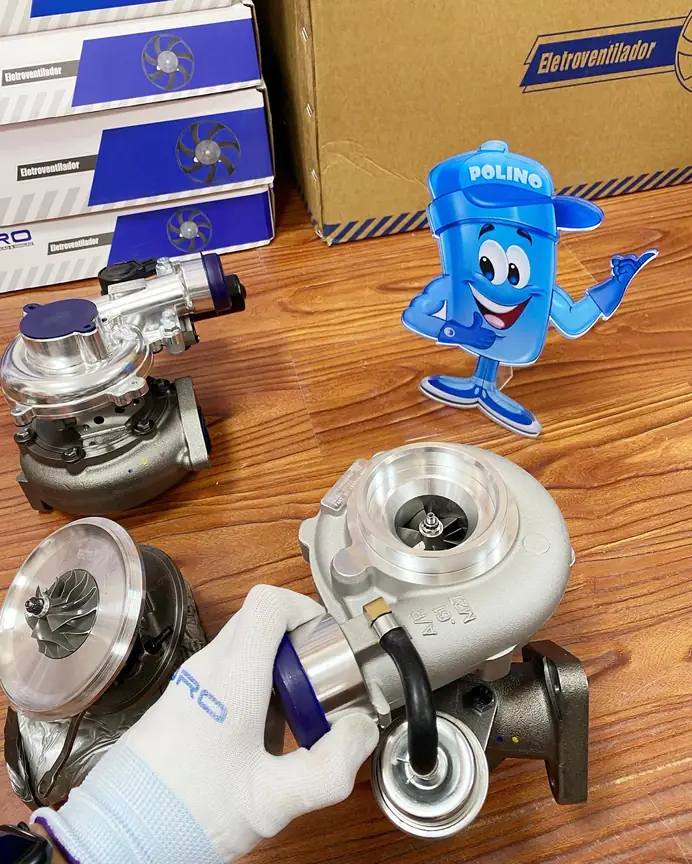
An overall product view helps connect identification photographs to the item being discussed; the image alone does not confirm its part number or fitment.
Garrett's replacement catalogue publishes a standard example that helps explain why apparently similar numbers appear in different documents. In that example, the IAM reference is 721021-5006S, the OES reference is 721021-5006, and the OE reference is 721021-0006. The catalogue also explains that its search recognises the standard number with or without the dash. These are manufacturer-published format examples, not three parts selected or approved here for a particular truck. Check the Garrett replacement catalogue for the current entry relevant to the actual enquiry.
| Published example | What it illustrates | What the example does not approve |
|---|---|---|
| 721021-5006S | Standard Independent Aftermarket, or IAM, format in Garrett's catalogue explanation. | No vehicle application, current stock or supplied contents have been checked for this guide. |
| 721021-5006 | Original Equipment Spares, or OES, format in the same explanation. | A missing suffix is not permission to delete suffixes from other records. |
| 721021-0006 | Original Equipment, or OE, format in the same explanation. | The format alone does not establish a universal replacement rule for other numbers. |
Garrett's separate identification page explains the channels: OE supply goes to vehicle or engine production, OES goes through the equipment maker's spare-parts route, and IAM goes through the independent aftermarket distribution route. Its examples also include legacy numbering and separate new and remanufactured forms. This matters because a single simplified pattern is not an exhaustive identification system. A serviceable older label should not be rejected solely for failing to resemble the newest example, nor should a suffix be interpreted using another brand's convention. Consult the Garrett turbo-identification guide when the channel or label format is uncertain.
For purchasing records, preserve the original string and keep any search-normalised version in a separate field. Removing a dash to use a search box is a retrieval convenience; removing characters from the description of the purchased goods is a commercial change. If a spreadsheet previously stripped a leading zero or truncated a suffix, return to the source photograph or document. Do not reconstruct the missing characters from the first result returned by an online search. The most plausible completion remains a hypothesis until the relevant identification evidence supports it.
A useful review separates three questions. First, have we transcribed the number correctly? Second, does the official resource explain why this channel uses that number? Third, does the relevant catalogue or documented supplier confirmation establish the offered assembly for our application? A yes to the first two does not answer the third. Keeping these questions separate also makes it easier to ask for help: the distributor can see whether the uncertainty is a damaged label, a sales-channel difference or a genuine application conflict.
The same discipline applies to packaging and accessory descriptions. Do not assume a gasket kit, actuator, installation hardware or another item is included because a photographed package somewhere online contains it. Identify the contents for the exact quoted line and put any exclusions beside the price. If a seller explains a suffix as a package distinction, retain the supporting entry and ask which contents will actually ship. This recommendation concerns clear ordering; it does not introduce a new decoding rule or override a manufacturer's description.
Once the number relationship is documented, name the actual deliverable on the purchase order. The installed reference can remain as the application cross-reference, while the approved offered reference identifies what receiving should expect. Otherwise, a correct replacement may arrive under an unfamiliar number and trigger an avoidable rejection, or an unapproved alternative may be accepted because staff recognise only the engine name. The purpose of recording both numbers is to preserve the decision, not to create a permanent equivalence list covering every future order.
There are several reasons a supplier may quote a number different from the one requested. It could reflect formatting, a documented sales-channel reference, a superseding service assembly, or an independent aftermarket replacement. These explanations require different evidence. Ask the seller to name the reason before discussing whether the price is attractive. A statement that the numbers are equivalent is too compressed to show which decision the buyer is being asked to approve.
For a supersession, request the traceable relationship from the requested reference to the offered one and any applicable conditions. Those conditions matter as much as the arrow between two numbers: the relevant engine range, associated parts or service instructions may determine how the change applies. Do not infer that every newer number replaces every earlier version in the family. If the available evidence establishes only a cross-reference from an independent catalogue, describe it as that rather than promoting it to a manufacturer-issued supersession.
For an independent replacement, identify the supplier's own complete number and the application it claims to cover. Keep the reference manufacturer in the cross-reference field, not the manufacturer field for the supplied item. This is not a judgement against independent supply. It makes the product's identity intelligible and assigns the approval decision to the right party. A buyer can knowingly choose an independent assembly while still requiring a precise fitment basis and a clear commercial route for questions about that assembly.
Sometimes the proposed alternative differs in actuator arrangement, housing orientation, connections or included equipment. Do not reduce that difference to a note saying minor modification required. Ask what changes, which documented application or service information supports it, who is responsible for resolving the change, and whether the quoted product is still a complete replacement for the intended scope. This guide does not authorise transferring or adjusting components. If the proposal depends on workshop operations that have not been evaluated, the purchase is not ready for unconditional approval.
Keep an approved change attached to the order revision that uses it. A useful approval note states the requested number, the accepted offered number, the supporting reference and the limits of the decision. This is particularly important when several vehicles share a broad engine family but have different service requirements. Reusing a previous supplier email without checking its application can turn a carefully resolved exception into an unsupported standard. The administrative record should make that limit visible to the next buyer, not require them to reconstruct the original conversation.
BorgWarner's REMAN programme publishes core-return boundaries as well as its remanufactured product proposition. Its current programme page directs users to the accepted-parts list, limits return eligibility to original-equipment manufacturers' cores, and identifies non-genuine OE units, dismantled turbos and broken connecting flanges among excluded conditions. A recognisable housing or a unit removed from the right engine is therefore not enough to establish acceptance. Check the BorgWarner REMAN programme and the seller's applicable return terms for the actual transaction.
From the buyer's perspective, the replacement order and the old-core return should remain two linked transactions. The first asks whether the offered replacement satisfies the approved requirement. The second asks whether the old unit qualifies for the agreed credit and reaches the recipient in the required condition. Success in one does not prove success in the other. A replacement can be correctly identified while the old unit is ineligible; an eligible core can be returned without proving that the replacement ordered was the right one.
Before approval, identify which line carries a core charge and which old assembly the workshop expects to return. Where several failed units are stored together, connect the return candidate to its own identification photographs and job reference. Ask the seller to confirm the relevant programme, accepted reference and return conditions. Do not describe an old unit as accepted merely because the seller agreed to sell a remanufactured replacement. If eligibility remains unresolved, show the credit as contingent rather than subtracting it as a certainty in the comparison.
A practical internal record can distinguish a proposed return, an eligibility response, dispatch, receipt, acceptance and posted credit. These are suggested purchasing states, not labels prescribed by BorgWarner. Their value is that each state answers a different question. A carrier tracking event can establish delivery to a destination but not acceptance for credit. An eligibility email may depend on the physical condition found later. An issued credit note and its application to the buyer's account are also separate accounting events that should be reconciled through the agreed commercial process.
Keep the financial comparison transparent while those events are pending. Show the replacement price, any charged core amount, return transport and the credit assumed in the estimate as separate entries. Use the seller's actual currency, quotation validity and terms; do not import a percentage or refund deadline from a different programme. If the proposed return is rejected or receives a different treatment, update the recorded outcome instead of leaving the original estimated net price in a purchasing report. This allows the next order to use experience without rewriting the history of the first one.
Condition evidence should support the return decision without turning into an improvised repair procedure. Retain clear views before dispatch and follow the applicable programme instructions about completeness, packaging and handling. Do not dismantle a core to make it easier to photograph or assume that a missing item can be replaced by any similar component. If the workshop cannot establish what remains attached, ask the programme representative how that uncertainty affects eligibility. The objective is to settle the return obligation, not to diagnose the failure through a sales article.
Quality documents are useful only when their scope matches the decision. A business certificate concerns the identified organisation and stated scope. A catalogue describes a product range or application claim. A test record may concern a particular assembly, component or production stage. A photograph describes the item visible in it. None automatically fills the gaps in the others. Start by asking what the document is intended to prove, then check whether its identification and content are sufficient for that limited purpose.
The distinction between a CHRA and a complete turbocharger is important here. Melett describes VSR-balanced CHRA in its product range, while its technical discussion of airflow rigs explains the separate issue of setting variable-nozzle systems. A balanced core claim is not, by itself, evidence that a subsequently assembled variable-geometry turbo has received the application-appropriate airflow and actuator setup. Nor does that article justify imposing one identical flow test on every turbo design. See Melett's CHRA product scope and airflow-rig technical explanation.
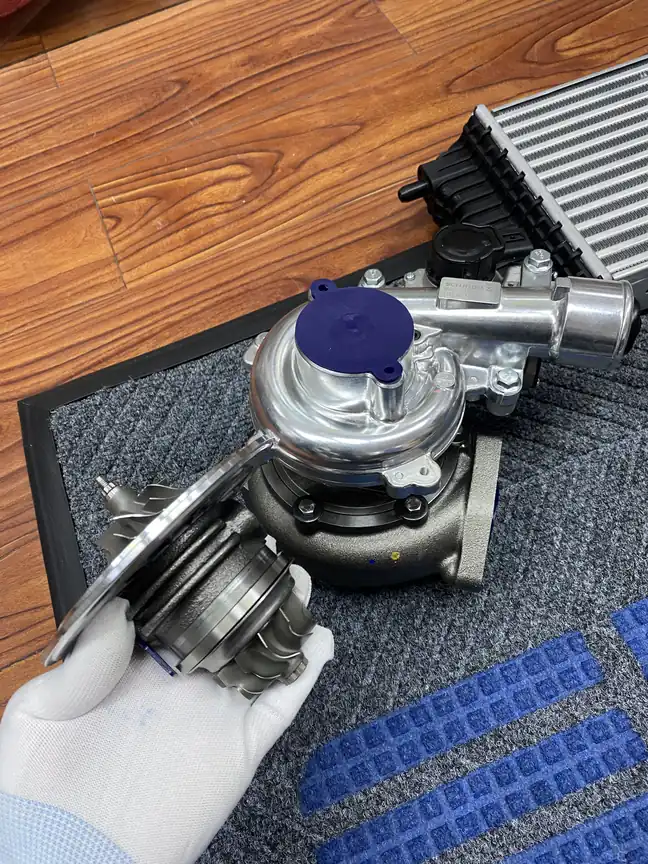
A core assembly and a complete turbocharger represent different supply scopes. Their appearance together does not establish compatibility or completed testing.
Ask the supplier to identify the stage covered by any report it offers. Was the item a rotating assembly, a complete turbocharger, or an actuator prepared separately? How does the report connect to the part or batch being quoted? Does the supplier state the applicable method and acceptance basis without expecting the buyer to invent them? These questions do not require publishing proprietary calibration data. They require enough traceability to understand what was checked and what remains outside the evidence.
There is no universal value in this guide for balancing, actuator travel, airflow, boost or acceptance tolerance. The applicable specification depends on the design and application, and a generic number could create a false pass. If the seller offers only a sample report, label it as an example of the reporting format unless it is demonstrably associated with the offered goods. Conversely, a long report should not be preferred merely for its length. Relevant identification and a clear test scope are more useful than pages of unrelated results.
Visual comparison remains valuable within its limits. It can identify a difference in the visible connection arrangement, an omitted external item or a discrepancy between the photographed object and the quoted description. It cannot establish internal material composition, completed calibration, endurance or manufacturer authorisation. When a visual difference appears, describe the observable feature and request resolution. Avoid converting a photograph into a diagnosis or claiming that a polished housing proves a new complete assembly rather than a remanufactured or rebuilt one.
An application review is wasted if the final shipping line loses the details that made approval possible. Before dispatch, compare the seller's item description with the approved offered reference, condition and contents. If the seller substitutes another reference, reopen the specific approval question rather than treating the change as a warehouse convenience. Receiving staff should not need to infer a supersession from a handwritten note or a generic engine-family label. Give them the approved definition and any documented differences they are expected to encounter.
Choose photographs for a stated receiving question. A plate close-up may support transcription; an overall view connects the identification to the object; a view of the relevant interfaces can document the arrangement being offered. A picture of several units on a bench does not show which one is allocated to the order. Where allocation matters, ask how the seller connects the image to the order or unit. Avoid requesting numerous near-identical photographs that add volume without resolving an actual uncertainty.
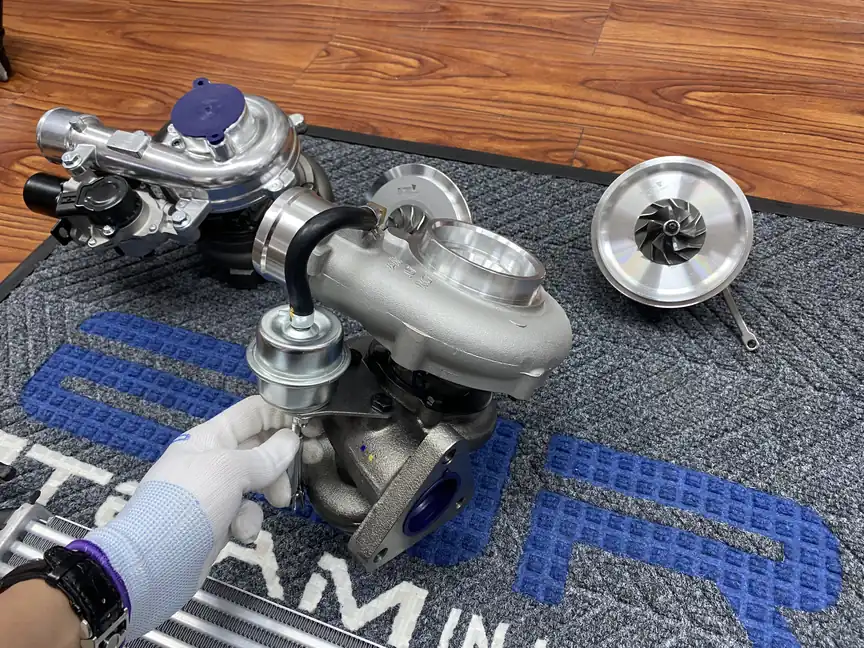
A group photograph shows product context, not which unit is allocated to an order. The agreed item reference still needs its own supporting record.
Authenticity questions should also follow the relevant manufacturer's current guidance. Cummins' genuine-parts authentication page explains that legacy, hologram and secure-QR labels coexist and that older inventory is not relabelled merely to adopt the newest label. This is a warning against rejecting every older label by appearance. It is not a universal Holset packaging specification or proof of fitment. Use the Cummins authentication guidance for its stated scope, and ask the appropriate channel to resolve a specific concern.
At receipt, record the identity and visible completeness against the accepted order, using the seller's supplied documentation and the workshop's normal receiving process. If a difference is unresolved, separate that item from unrestricted stock and describe the discrepancy precisely to the seller. The useful message is not simply wrong turbo: it identifies the order, offered number, delivered marking and the feature or document that does not agree. Do not alter the unit while trying to make an unapproved substitution resemble the expected configuration.
If a sample is approved, record what that approval covered. It may establish that the sample's identity and supplied interfaces agree with the requirement, but it does not validate every future batch or every application in the seller's catalogue. When a later delivery differs, refer to the accepted definition and the affected order rather than relying on a general memory that this supplier passed. This keeps a repeat-order process efficient while leaving genuine changes visible, and gives both parties a concrete basis for resolving a claim.
A good enquiry lets the recipient answer the unresolved question without guessing what the buyer has already verified. Lead with the intended complete assembly and the application information available. Attach the original identification evidence, state whether the removed unit's fitment is known, and keep conflicting references visible. Then ask for the supplier's proposed complete number and the evidence connecting it to the requirement. It is usually clearer to send one organised record than several photographs and fragments of a previous seller's conversation.
State which supply routes the business is prepared to consider: manufacturer-new, manufacturer REMAN, an identified independent aftermarket product or a clearly described specialist rebuild. If only one is acceptable for this purchase, say so. If several are acceptable, ask for separate lines with their actual conditions and contents. This avoids spending time comparing a complete unit with a bare core or a new product with a remanufactured offer whose core obligation is not visible in the headline price.
Include the quantity, destination and required timing as requirements to be confirmed, not as promises inferred from a website. Ask for the commercial terms that matter to the transaction, including the handling of a supplied-item discrepancy and any proposed return. When the supplier cannot disclose an underlying document, ask whether an application-specific confirmation or another traceable reference can resolve the question. If it cannot, keep the limitation in the approval record rather than claiming that all evidence has been checked.
The final purchasing decision should be short enough for the next person to use: this is the accepted offered assembly, this is the application basis, these are the included items, these differences were approved, and these obligations remain open. Supporting photographs and references can sit behind that decision. The goal is not to build an impressive dossier. It is to stop essential information from disappearing when the enquiry passes from a technical contact to purchasing, dispatch, receiving and accounts.
For an Elecdura enquiry, use the heavy-duty turbocharger range as the product entry point and include the complete reference, application evidence and required supply scope. A category page is not confirmation of a particular part, stock position or manufacturer authorisation; request a specific response before approving an order.
This guide supports sourcing records; it does not determine a turbocharger from symptoms or replace the engine manufacturer's service information. An unreadable identification plate combined with incomplete engine records may leave the assembly unresolved. A modified engine, a changed control arrangement or a proposal to transfer components can introduce questions that cannot be settled by comparing supplier descriptions. Escalate those questions to a suitably qualified application or service specialist before treating a catalogue resemblance as approval.
Likewise, a failed turbocharger does not establish that replacing it alone will correct the underlying problem. Failure investigation and installation belong to the appropriate service process. Purchasing can preserve the removed unit's identity, the reported concern and the supplier correspondence without turning them into a repair instruction. Keep the order decision separate from the diagnosis, and preserve any items or records needed by the agreed warranty or core process.
Keep the original reference intact and store a search-normalised form separately if your system needs one. A published channel example can explain a difference, but it is not a rule for rewriting every historical record. Connect an accepted alternative to its documented application and approval instead of replacing the original evidence.
It can justify asking about a particular application, but it does not confirm the current catalogue status, availability or your complete requirement. Obtain a current item-level answer. If the release lists a restricted year or engine range, preserve that boundary instead of turning it into unrestricted coverage.
Keep both with clear labels. The supplier's reference identifies its offer; the original reference preserves the requirement and any cross-reference being evaluated. When a product is independent aftermarket, naming its actual brand and number avoids presenting a reference brand as the manufacturer of the supplied assembly.
No. The image can explain the difference in supplied scope, but proximity is not a part-number relationship. Ask for the applicable catalogue or assembly evidence. Do not use an illustrative workshop photograph as a substitute for compatibility confirmation, calibration evidence or the identity of the item allocated to an order.
Preserve both references and identify the field in conflict, their application scope and any date or revision shown. Ask the responsible source to resolve that conflict for the intended order. Do not choose a record simply because it is newer-looking or easier to access; a general document may not govern the specific assembly.


