
English
Views: 0 Author: Site Editor Publish Time: 2025-09-28 Origin: Site


To source fuel filters in Brazil, verify the application, the seller and the product's stated origin separately. A Brazilian distributor can sell an imported filter, while a familiar brand name does not identify the factory making a particular reference. For truck, bus, agricultural-equipment and industrial-engine orders, start with the installed filter and engine identification, then request a documented offer for the proposed replacement. This guide explains how to compare supplier roles, brand relationships, quotations and receiving evidence. It is not a ranking of Brazilian manufacturers, and it does not promise that every product discussed is made in Brazil.
A fleet replenishing workshop stock and an importer arranging a production order need different answers. The first may need confirmed local stock and a usable returns route. The second may need manufacturing identification, sample approval and shipment documentation. Write down which requirement matters before comparing prices.
| What the supplier offers | What to confirm | What it does not establish |
|---|---|---|
| A seller operating in Brazil | The legal company issuing the quotation and handling claims | Brazilian manufacture of every offered filter |
| Stock held in Brazil | The exact references, available quantities and dispatch location | Factory ownership or automatic replenishment availability |
| A filter described as made in Brazil | Origin information for that reference and shipment, supported by the seller's documents | That all filters carrying the same brand have the same origin |
| A production or private-label offer | The manufacturing party, approved specification and responsibilities in writing | Guaranteed customization, delivery or certification without a specific agreement |
For an Elecdura enquiry, use the diesel fuel filter category to establish product scope, then send the references required for your equipment. Treat catalogue browsing as the start of identification, not confirmation of stock, fit or Brazilian origin.
The examples below clarify different sourcing questions. They are not ranked, are not an exhaustive market list and do not imply that Elecdura is affiliated with the named brands.
Tecfil's official website identifies a factory in Guarulhos, São Paulo, and provides product-catalogue access. In a June 2020 announcement issued by Tecfil, Vox was identified as a brand manufactured by Tecfil. That relationship matters when a buyer wants genuinely separate manufacturing sources rather than different boxes.
Check the current catalogue reference and the company making the offer. If production independence is part of your sourcing policy, ask for current manufacturing information instead of counting Tecfil and Vox automatically as separate factories. The historical announcement is not evidence of today's market share or stock availability.


Fleetguard is an Atmus filtration brand. Atmus announced its final separation from Cummins on March 18, 2024. The former Cummins Filtration description should therefore not be presented as the current parent-company identity.
For purchasing, confirm the proposed Fleetguard reference, application and selling company. A familiar historical name does not establish a seller's authorization, and current parent-company information does not establish where a particular filter was made. Resolve those as separate documentation questions.

This retained historical logo illustrates the former branding, not Fleetguard's current ownership or any seller's authorization. Use the current Atmus information above.
Sakura's official company information identifies PT Selamat Sempurna Tbk and describes production centers in North Jakarta and Banten, Indonesia. That information does not support calling the filters in this guide Brazilian-made merely because a seller markets them in Brazil.
Request the exact Sakura reference, applicable catalogue entry and stated origin for the offered product. Then establish who holds the stock and handles the order locally. Availability through a Brazilian sales channel and manufacture in Brazil are different claims requiring different evidence.

Build each enquiry around an identified engine and filter position. Record the equipment make and model, engine model or serial number, existing filter reference and any replacement-reference history. Include clear photographs of the label and relevant connections. If the current filter may already be incorrect, say so: an old part is a clue, not unquestionable approval.
Specify whether the requirement is an element, a spin-on filter, a fuel/water-separator service part or a complete assembly. Ask what comes in the box and what is retained from the existing installation. Seals, bowls, drains, sensors and associated fittings should be identified where relevant rather than assumed to be included.
Ask the supplier to document the proposed reference against the application and explain any difference from the requested part. Do not approve a substitution solely from matching exterior dimensions or a catalogue photograph. When an interchange reference is offered, keep the supporting catalogue or technical confirmation with the quotation so a later buyer can see why it was accepted.
A certificate can answer a question about a management system without answering whether a particular filter is suitable. ISO's guidance on conformity marks explicitly distinguishes ISO 9001 management-system certification from product certification. Request the certificate holder, covered site, scope and current validity; check whether these relate to the operation behind the offer.
For the filter itself, request the application data and supporting specification or test information relevant to your requirements. A report should identify the tested product, method and conditions. If evidence concerns another reference or only a selected sample, ask what connects it to the proposed order. Do not convert an ISO or IATF logo into a guarantee of every SKU, shipment or destination-market requirement.
Apply the same discipline to claims about longer service life, improved fuel economy or lower emissions. Unless the supplier provides applicable evidence, compare the documented product and commercial terms without crediting those promises.
Use the same reference list and quantities for each enquiry. Ask suppliers to identify substitutions on separate lines rather than silently replacing the requested items. A lower price is not a like-for-like saving when the offer changes the product, included accessories, packaging or delivery basis.
Separate the minimum quantity per reference from any mixed-order minimum. Distinguish available stock, a reservation awaiting payment and a new production order. Ask for sample terms, the approval point and the events that start the quoted lead time. This guide does not assign a standard MOQ or delivery range to Brazilian suppliers.
Compare the quoted currency, shipping terms, dispatch location, offer validity and responsibility for missing or damaged goods. Keep dispatch and arrival expectations separate. If products will leave Brazil, give the seller the actual destination and clarify which shipment documents each party will provide; do not assume a local-market quotation includes an export service.
For private-label work, define the approved reference, packaging text, traceability markings and responsibility for changes before approving artwork. Branding should not conceal the identity needed to investigate a later supply or fitment problem.
Before stock is released, compare the delivery against the approved order: references, quantities, packaging condition, product identification and any agreed accessories. Record lot or batch markings where provided. Photograph discrepancies before repacking, mixing cartons or discarding labels.
If the delivered reference, origin statement or included parts differ from the approved offer, separate the affected stock and ask for a documented resolution. Do not approve an unexplained substitution just because the filter appears to fit. Equally, a different box design alone does not prove a counterfeit product; ask the brand or identified supplier to explain the discrepancy through an appropriate verification route.
Visual receiving checks help detect mismatches and damage. They do not measure filtration performance or demonstrate long-term reliability. Keep application approval and any agreed testing distinct from the warehouse's count-and-condition check.
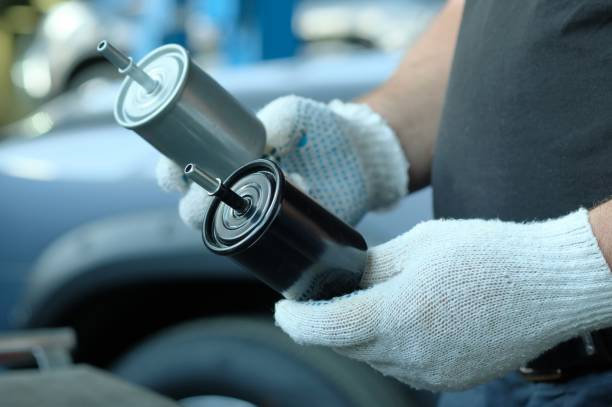
Interface comparison context only. Similar housings or connections do not establish interchangeability, Brazilian origin or an inspection pass.
This guide is for procurement, not a universal fuel-system service procedure. It does not authorize changing filtration requirements, selecting a replacement by appearance or applying one pressure-relief method to every engine. Where the buying decision follows a failure, obtain the workshop's diagnosis before assuming a different brand will solve it.
Give the service team the approved reference and the applicable manufacturer's instructions. Cummins provides engine manuals and QuickServe information by engine serial number; other engines require their own relevant documentation. Shutdown precautions, installation, priming, leak checks and replacement intervals must follow that application. Do not substitute generic fuse or relay removal instructions, or a universal mileage interval, for the correct procedure.
Send one organized file rather than an unlabelled collection of product photographs. Include:
The engine or equipment identification and filter position.
The requested references, quantities and any uncertain or superseded numbers.
Label and interface photographs linked to the relevant order line.
The required supply scope, including accessories or complete assemblies where applicable.
The destination, packaging needs, origin requirements and documents required for review.
The sample-approval process, substitution policy and requested delivery basis.
For an Elecdura fuel-filter sourcing enquiry, submit these details with the proposed order list and ask for part-specific availability and terms. Request confirmation of any unresolved application or documentation point before approval. This is a quotation request, not a promise of manufacture in Brazil, a relationship with the brands above, or a guaranteed supply commitment.
First establish who manufactures the relevant references, not just who owns the brand names. The Tecfil/Vox relationship illustrates why a brand count can overstate manufacturing diversity. Ask for current information tied to the actual products. A second seller may improve purchasing flexibility without creating an independent manufacturing source.
Reconcile the reference numbers, application and included parts rather than relying on a translated product name. Ask for one agreed line-item description and retain the original supporting document. If the descriptions identify different supply scopes, hold that line for clarification; language agreement alone is not technical approval.
It should trigger an identity check. Ask who is selling, invoicing and handling claims, and how that company relates to the brand or distributor you contacted. Confirm the explanation through a trusted company channel. A legitimate brand relationship does not by itself validate an unrelated payment or invoicing entity.
No. Keep the sample's reference and approval conditions in the order record, then compare delivered goods with that agreed basis. Check identity, quantity and visible condition even after sample acceptance. A sample supports the decision made about that sample; it does not establish that every later carton contains the same approved product.
Connect the issue to the order line, product and batch markings, application, installation date and workshop findings. Preserve photographs and relevant service records before assigning a cause. A symptom reported after replacement is a reason to investigate, not automatic proof of a defective filter; purchasing and technical teams need the same documented case.


