ELECDURA NETWORK

Your Whole New Supply Chain For Heavy-Duty Parts
Whatsapp:
+86 18915027366
Phone:
+86 18915027366
Views: 0 Author: Site Editor Publish Time: 2026-09-24 Origin: Site
A charging warning after pressure washing deserves investigation, but the timing alone does not prove that water damaged the alternator. Cleaning can expose an electrical unit to moisture or chemicals; it can also coincide with a disturbed connector, belt contamination or an existing charging problem.
For off-highway fleets, the useful question is what changed during cleaning and what happened before the next operating shift. Separate ordinary exterior cleaning from direct spray into the unit, prolonged wet storage or immersion. Those conditions should not be treated as equivalent.
Delco Remy’s off-highway cleaning guidance warns that direct exposure to high-pressure water, steam and cleaning chemicals can affect electrical components. It also describes corrosion-related failures after cleaned equipment is parked for an extended period.
That makes the storage interval relevant. A machine that charged normally at the end of a wash may develop a different complaint before returning to service. Record when it was cleaned, how long it stood, where it was stored and when the warning or noise first appeared. Do not use one successful restart to close the investigation.
The same guidance advises avoiding direct spray and shielding vulnerable components where necessary. A product designed for a demanding environment still has an application-specific cleaning procedure. Its appearance, heavy-duty label or laboratory testing does not establish unlimited resistance to a close-range jet.
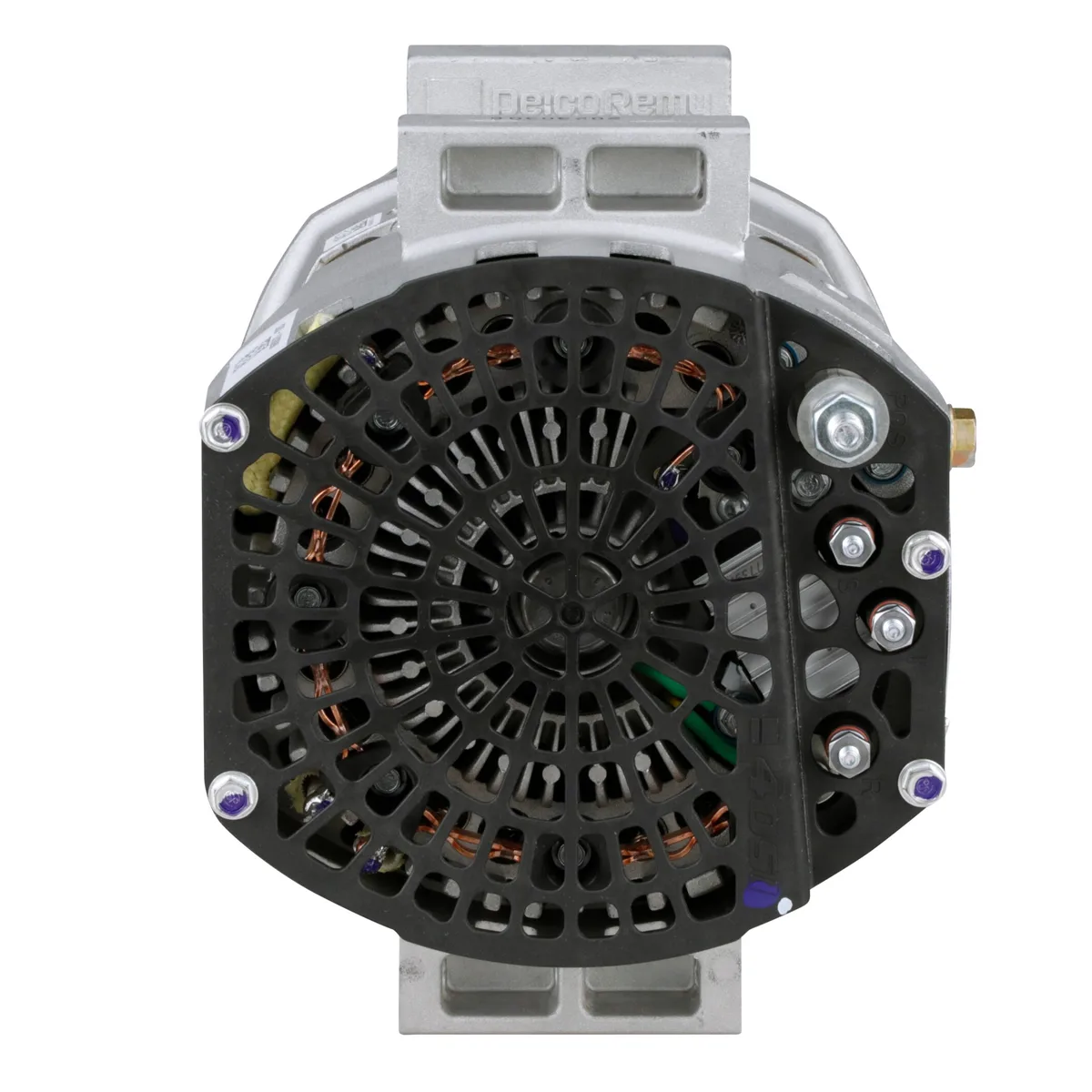
Dry reference unit: visible housing openings help identify areas to review in the cleaning procedure. This photograph does not show water damage or establish a protection rating.
Photograph the installed alternator and surrounding area before further washing or disassembly. Record the cleaning method, chemicals used, approximate spray direction, any temporary protection and any removed guards or covers. Note whether a connector, cable support or belt component was disturbed while gaining access.
Separate observations from conclusions. “Warning appeared on the next shift after washing” is an observation. “The washer destroyed the regulator” is a cause claim that needs further evidence. Keeping that distinction clear helps the workshop decide which checks can resolve the complaint.
If there is smoke, arcing, melted wiring, severe mechanical noise or another immediate hazard, stop operation and follow the equipment’s isolation procedure. Do not keep restarting a suspect machine merely to see whether it dries out.
DENSO’s diagnostic guidance calls for checking battery condition, drive-belt condition and tension, connections and charging-circuit voltage drop when investigating alternator faults. It also identifies water-related bearing damage as one possible source of noise—not the only cause.
A qualified technician should compare the actual complaint with those systems using the applicable equipment procedure. Record where the measurements were taken and under what operating conditions. A low reading at the battery does not by itself identify an internal alternator failure.
Photograph the rear connections and harness routing in the installed position. Ask the technician to check for a loose connection, damaged insulation, disturbed connector seating or visible contamination. Distinguish an as-found condition from anything changed during the investigation.
Use installed-view photographs to preserve connection and harness context. The dry reference above does not diagnose the condition of another alternator.
If the complaint is mainly mechanical, our alternator bearing-noise guide explains why the alternator must be separated from neighbouring drive components. This cleaning-focused review does not replace that localization process.
Instructions intended for routine, approved equipment cleaning are not a recovery method for a flooded unit or a machine already showing an electrical fault. Do not improvise high-temperature drying, spray chemicals into the housing or open a warranty unit simply to make it appear clean.
Ask the equipment or alternator service provider how the actual exposure should be assessed. If the alternator must be removed, agree the inspection and preservation method first. Unapproved cleaning can remove the residue or corrosion pattern that would have helped distinguish the source and extent of contamination.
A replacement does not correct the cleaning method. Review the equipment maker’s permitted products, access requirements and protection instructions. Mark vulnerable electrical areas in the fleet’s wash checklist and make clear which guards or temporary shields must be restored or removed before operation.
Include a handover step between the cleaning crew and the operating team. Record any missing cover, damaged harness protection or uncertainty about exposure before the machine enters service. For equipment that will remain idle, follow the manufacturer’s storage instructions rather than assuming that parking indoors resolves retained moisture.
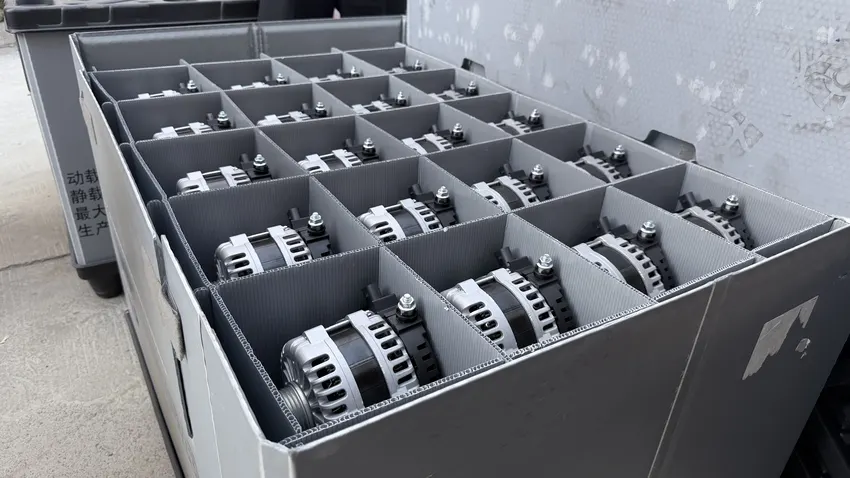
Handling reference for dry units. A divided container keeps parts apart; it is not a preservation method for a wet or contaminated warranty return.
Keep the original part number, equipment identity, cleaning timeline, diagnostic results and photographs together. The alternator claim-evidence guide covers the wider return file. The supplier’s actual warranty terms determine the claim route; a photograph of moisture does not decide liability.
For a separate replacement-supply enquiry, send Elecdura the original reference and installation photographs, together with voltage, output requirement, mounting, pulley and control details. Explain the operating and cleaning environment so any proposed alternative can be checked against the application. Do not specify an unfamiliar sealed design solely because it looks less exposed.