ELECDURA NETWORK

Your Whole New Supply Chain For Heavy-Duty Parts
Whatsapp:
+86 18915027366
Phone:
+86 18915027366
Views: 0 Author: Site Editor Publish Time: 2026-09-18 Origin: Site
Before rejecting a new Delco Remy 24SI or 28SI heavy-duty alternator for shaft movement, establish its assembly state. The manufacturer's September 2, 2026 technical tip explains that end play and contact noise can occur after the shipping spacer is removed but before the pulley is correctly installed. That explanation is not an acceptance rule for every loose shaft or noisy alternator. A receiving team should preserve the supplied hardware, record what was changed, and obtain the applicable installation review before assigning a defect. A completed unit that still rubs, binds or shows damage needs a different assessment.
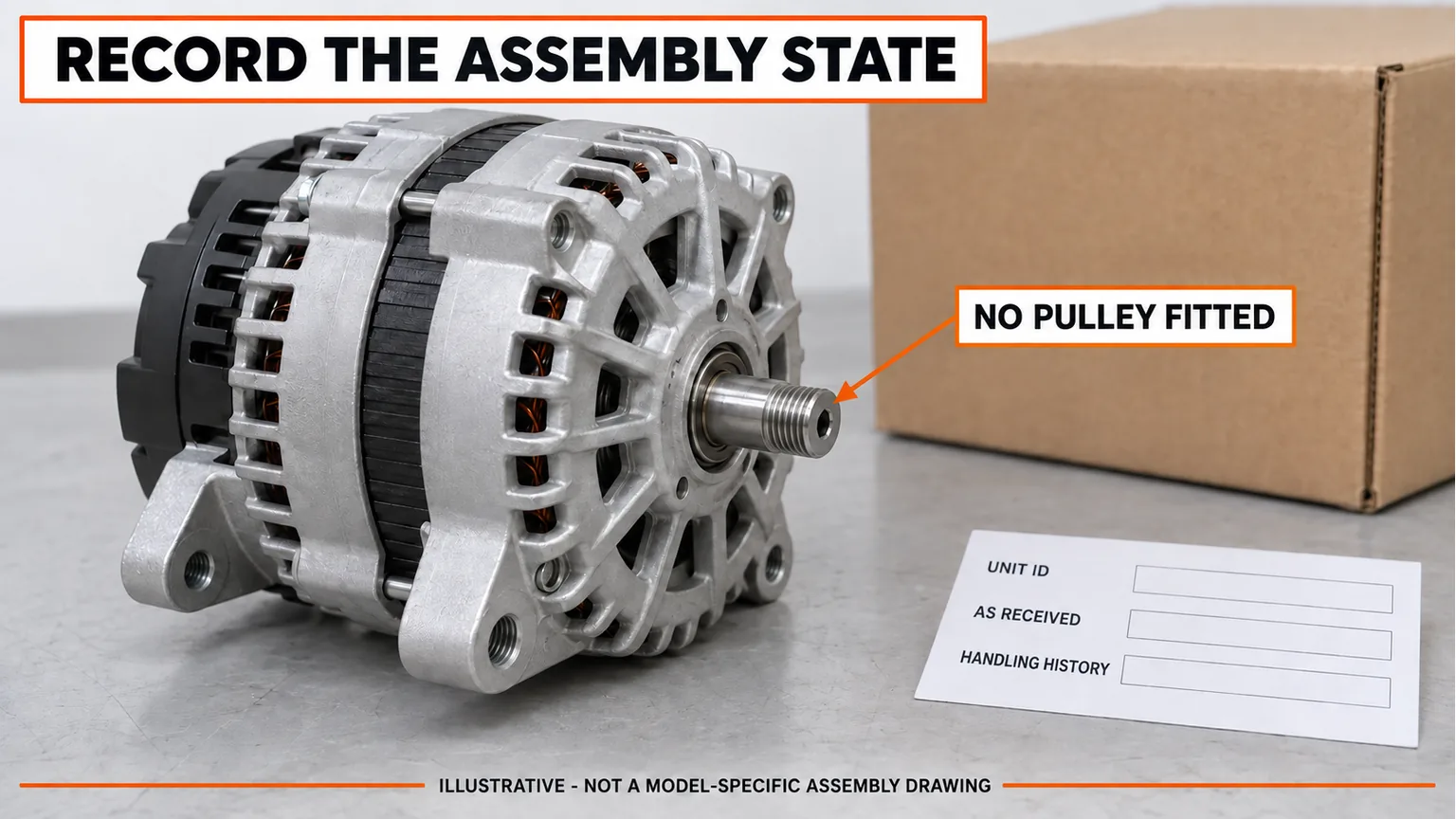
A report saying “shaft loose out of the box” does not show whether the unit was inspected exactly as shipped. Was the cardboard spacer still present? Had the pulley nut been removed? Were small metal parts moved with it? Was an old pulley offered up to the shaft? Ask those questions before comparing the observation with a completed alternator.
Delco Remy's technical tip on apparent damage in new alternators describes a temporary condition in which the rotor can move axially and a rear plastic fan can contact the frame. Correct pulley installation restores the described rotor position and removes that contact. The explanation is specific to the products and assembly state discussed; it does not supply a universal millimeter rejection limit.
For a buyer comparing replacement configurations, the broader heavy-duty alternator pulley guide addresses pulley identity and fitment. This article starts after a particular unit arrives and asks whether the receiving observation is being interpreted in the right state.
Illustrative receiving view, not an actual 24SI/28SI configuration or an assembly drawing. Record whether the pulley is fitted before interpreting an observation; do not push the shaft to demonstrate movement.
The table below is an editorial receiving aid, not a manufacturer's acceptance specification. It separates observations that are easily confused when a photograph or short video reaches the supplier without context.
What the receiving record should distinguish
Observed state | Question to resolve | What not to conclude yet |
|---|---|---|
No pulley fitted; shipping spacer removed | Does the identified unit match the manufacturer's unassembled-state explanation? | That shaft movement alone proves a failed bearing |
Loose or displaced installation hardware | Are the required parts, their identity and their correct order known? | That a remembered stack-up from another alternator is acceptable |
Pulley installation completed; rubbing or binding remains | Has a qualified installer verified the assembly and assessed the unresolved condition? | That the shipping-state explanation clears the unit for use |
Alternator already operated on the vehicle | What do the actual operating and inspection findings show? | That a pre-pulley observation explains a running noise |
Write the state beside the observation, not in a separate email that may be lost. “No pulley, shipping spacer removed, movement reported before fitting” is more useful than “bad bearing.” Equally, if the history is unknown, record that uncertainty. Do not reconstruct an as-shipped condition after components have been moved and present it as the original evidence.
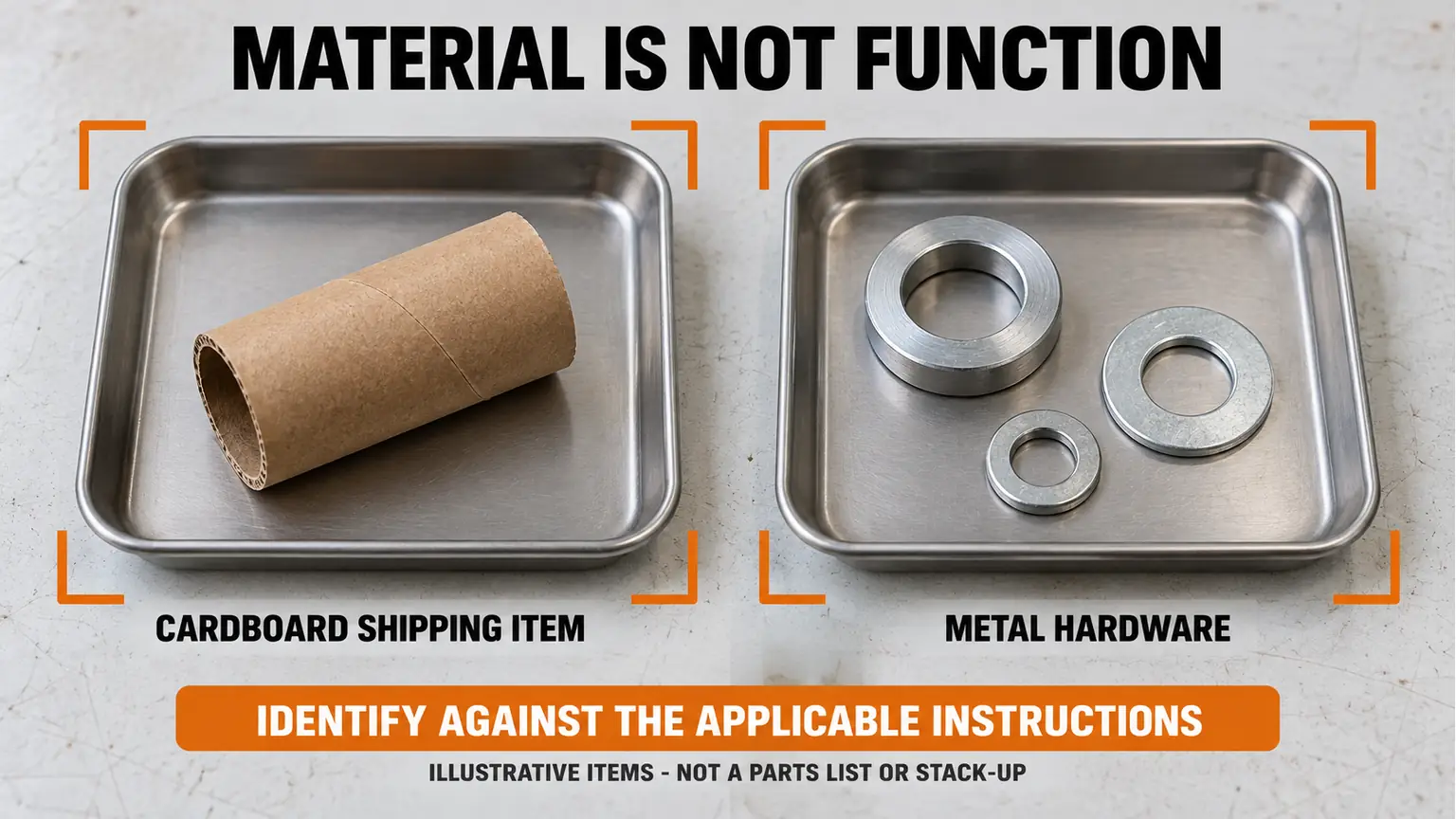
Two different uses of the word “spacer” can create a costly mistake. The cardboard shipping item is not interchangeable with the metal parts needed in the drive-end assembly. Delco Remy's September 2025 24SI/28SI pulley-installation technical tip distinguishes the cardboard item from the spacer washer and bearing slinger. It warns that the latter parts can slide off during removal and that an incorrect order can lock the rotor.
A more detailed source, Delco Remy instruction sheet 10528642, revision 4 dated February 8, 2024, distinguishes one external drive-end spacer for the 24SI from two for the 28SI in the procedure it describes. It requires the parts to be reinstalled in the original order. This is why a single simplified picture should not become an all-model assembly specification.
For receiving personnel, the appropriate response to an unidentified loose part is to retain it with the unit and stop the release decision. Do not substitute a similar washer, discard an item because it looks like packing material, or borrow parts from another carton to make the assembly look complete. Ask the supplier or qualified installer to identify the required hardware against the actual unit and applicable instructions.
This guide deliberately supplies no common pulley-nut torque. The work must be tied to the applicable part and service instructions, with the correct tools and installation responsibility established. A number copied from a neighboring model's article is not a controlled specification.
These are illustrative materials, not the contents or assembly order of a 24SI or 28SI. Identify the actual shipping item and retained hardware against the applicable instructions; shape or material alone does not establish each part's function.
Start with the unit label, carton label, overall condition and drive-end area. Keep the photographs connected to the same stock or receipt reference. Record whether the supplied configuration was pulley-equipped or required pulley installation; do not infer that from a generic catalog photograph.
If movement or noise has already been observed, note who observed it and at what stage. A short video can communicate the complaint, but it should not include a fabricated measurement scale, an unsupported tolerance or force applied merely to make the movement more visible. The purpose is to preserve the condition, not to create a dramatic failure demonstration.
Do not push the shaft backward and rotate it to reproduce a noise. The English pulley instructions on page 2 of Delco Remy installation sheet 10524210 warn against pressure on the shaft end during pulley changes: pushing it back and turning it can cause internal damage. A technical tip explaining observed movement is not permission to provoke that movement during receiving inspection.
Delco Remy's September 2025 CONNECT installation guidance, page 4 again emphasizes horizontal positioning and careful handling of the pulley hardware. It also warns against hammering the pulley onto the shaft or starting its nut with an impact wrench. These are installation cautions, not instructions for a receiving clerk to disassemble a new unit.
Assign installation review to someone qualified for that work. Record the applicable instruction reference, the parts used and the result of the required completed-assembly checks. If the unit has already been modified, say so. A supplier reviewing a claim needs to distinguish the arrival condition from what happened during subsequent handling.
Missing hardware, an uncertain configuration or an unexplained completed-assembly symptom should remain a hold for technical review. That does not establish who caused the problem or who will pay. It simply prevents an incomplete receiving decision from being represented as either a clean acceptance or a confirmed manufacturing defect.
Before arranging a return, ask the supplier which review evidence, return authorization and packing instructions it requires. Keep the receipt reference, retained hardware and subsequent handling history together. Agreement on the next inspection does not itself approve a warranty claim, replacement, refund or freight charge.
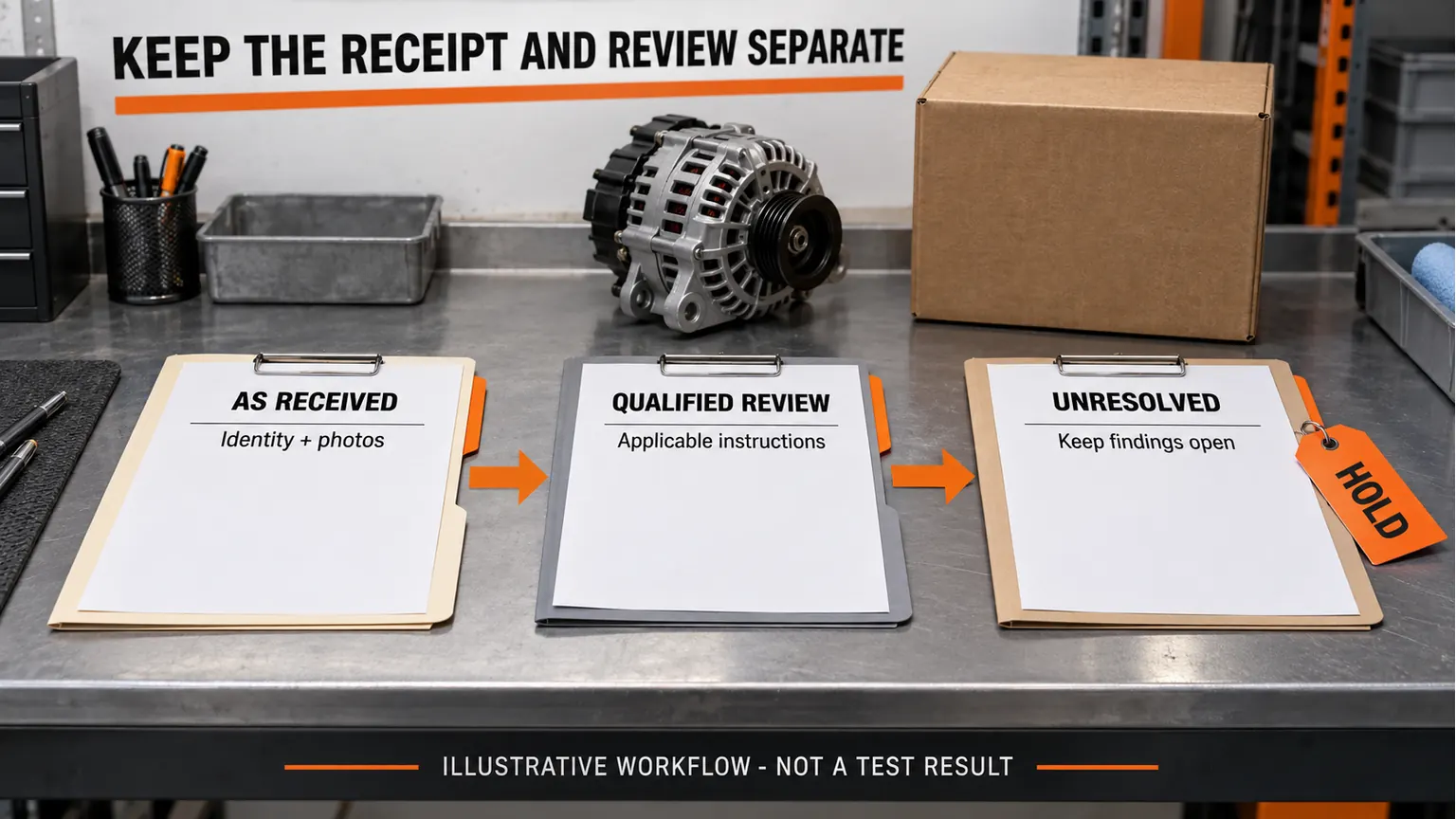
The unresolved-finding path keeps arrival evidence separate from later review and leaves unanswered issues open. The blank forms and generic alternator illustrate a handoff, not an actual test, repaired unit or approved return.
End play describes movement along the shaft. Pulley runout concerns deviation as a pulley turns. A video that mixes those motions cannot establish a single diagnosis. If the complaint is a completed pulley's wobble or belt-plane behavior, use the separate pulley runout and belt-tracking guide with the relevant service limits and approved inspection method.
An alternator that has operated on a truck adds another set of facts: when the noise began, operating conditions, belt-drive condition and the findings of the qualified technician. The alternator bearing-noise diagnosis guide addresses that in-service investigation. Do not use the new-unit technical tip to dismiss a persistent running complaint or to skip a required mechanical inspection.
Conversely, do not use a generic running-bearing checklist to condemn a bare new unit without considering how it was supplied. The buyer's task is to send the right evidence to the right review: unassembled-state behavior, installation verification or an operating fault. Those reviews can inform one another, but they are not interchangeable.
The shipping-state explanation does not clear a unit with visible impact damage, uncertain internal modifications, missing parts or a condition that remains unexplained after the specified installation review. It does not authorize forcing the shaft, fitting an improvised spacer, adding lubricant or opening the housing to prove a receiving complaint.
It is also not a statement about every 18SI, another alternator family or an aftermarket product described as “24SI-style.” A family reference in a quotation does not prove identical internal construction. Where the source and the supplied product are different, obtain product-specific evidence rather than assuming the manufacturer's explanation transfers unchanged.
No decision here authorizes running a unit without the required installation, guards or safety checks. If technical review finds an unresolved fault, follow the responsible service procedure. A purchasing article is not a substitute for that judgment.
A receiving disagreement often exposes an unclear order description. For the next enquiry, ask what arrives in the carton and which work remains for the installer. Use the enquiry form on Elecdura's heavy-duty alternator page to send the actual reference, photographs and requested configuration for review rather than treating the family name as a finished specification.
State whether the quotation must include a fitted pulley or a unit supplied for a specified pulley installation.
Provide the alternator label, application and required electrical and mounting configuration.
Ask which installation hardware is included and which applicable instructions identify it.
Identify who will fit the pulley and how missing or damaged supplied parts should be reported.
Include quantity, destination, packaging requirements and the receiving observations relevant to the enquiry.
Ask the supplier to confirm the delivered configuration in its response. Do not promise a customer that a pulley, hardware kit or installation service is included until the quotation states it. This article does not establish Elecdura stock availability for a particular 24SI or 28SI variant.
Not on the basis of this article. First identify the product and assembly state, then obtain any applicable inspection method and limit from the responsible technical source. An accurately recorded measurement without an applicable specification remains an observation; it is not a defensible pass or fail criterion.
No. Appearance alone does not establish the parts hidden in the assembly or their identity. Have the qualified installer check the actual configuration against the applicable instructions, and retain any loose supplied hardware for identification. Do not rely on a photograph of a different alternator to close a missing-parts query.
Ask for an accurate handling history, the unit identity and the retained parts. Avoid assigning blame before the condition has been reviewed. The supplier and installer need to agree the next inspection and how the evidence will be preserved; a reconstructed photograph should be labelled as a later state, not as the original receipt.
No. Keep each reported issue separate. Explaining one observation does not clear a damaged terminal, a missing item, an identification mismatch or another unassessed complaint. Close only the finding for which there is sufficient evidence, and keep the remaining issues attached to the same unit record.
The useful outcome is not a blanket label that “shaft play is normal.” It is a record of the supplied unit, its assembly state, what was observed, what installation review was performed and what remains unresolved. That record lets the buyer avoid both an unnecessary rejection and an unsupported acceptance.
The receiving table and quotation checklist are editorial aids. The cited Delco Remy documents govern only the products and procedures within their scope; current, applicable manufacturer instructions and the responsible technical review take priority.