ELECDURA NETWORK

Your Whole New Supply Chain For Heavy-Duty Parts
Whatsapp:
+86 18915027366
Phone:
+86 18915027366
Views: 0 Author: Site Editor Publish Time: 2026-07-27 Origin: Site
A starter motor parts list can be long and still fail to help a heavy-duty buyer. Names such as armature, solenoid, brush holder, drive, bearing, and housing describe objects, but they do not explain which part carries current, creates magnetic force, transfers torque, controls engagement, or protects alignment. Procurement decisions improve when the parts are mapped to the energy path and to the failure evidence they leave behind.
Elecdurauto offers a heavy-duty starter motor catalog for commercial trucks, diesel engines, buses, construction equipment, agricultural machinery, and other severe-duty applications. The catalog supports complete-unit matching, while repair shops and rebuilders may also need to understand component interfaces before approving a rebuild kit or sourcing parts.
This guide organizes starter motor parts by function, shows how wear moves through the system, and provides an incoming-inspection and batch-control framework for B2B buyers. It is not a universal assembly manual. Exact dimensions, materials, torque, electrical limits, and repair eligibility must come from the specific starter procedure and approved sample.
The starting event begins with stored battery energy. A low-current start command energizes the solenoid. The solenoid moves the shift mechanism and closes high-current contacts. Current enters the motor, magnetic fields produce torque, the drive reduces or transmits that torque to the pinion, and the pinion turns the ring gear. Bearings, housings, fasteners, and insulation keep those forces in the intended path.
Relays, magnetic switches, solenoid coils, plungers, return springs, auxiliary terminals, and over-crank devices control when engagement begins and ends. A defect here may produce no click, repeated clicking, delayed disengagement, or intermittent operation.
Battery studs, main contacts, motor straps, brushes, brush springs, commutators, field coils or permanent magnets, armature windings, and grounds carry or convert high current. Resistance at one junction can create heat and reduce torque throughout the assembly.
Armature shafts, bearings, reduction gears, overrunning clutches, shift levers, pinions, noses, pilots, mounting flanges, and support brackets keep the motor aligned with the ring gear. Wear changes both engagement and efficiency.
Material identity and traceability are the starting point for consistent starter-component performance.
The solenoid is both an actuator and a high-current switch. Its coil creates force, the plunger moves the linkage, and the main contacts connect battery power to the motor. The design may use pull-in and hold-in windings, auxiliary terminals, suppression, or over-crank protection. Matching only the external can size is not enough.
Contact discs, studs, copper faces, insulators, washers, and terminal hardware must remain aligned under torque and heat. Deep pitting, copper transfer, melted insulation, or a loose stud can indicate contact chatter, excessive current, inadequate pull-in voltage, or assembly movement.
The plunger, spring, linkage pin, shift lever, and stop surfaces determine the engagement sequence. Incorrect plunger length or spring force can close the contacts too early, fail to close them fully, or delay pinion return.
A solenoid kit is appropriate only when the motor, drive, housing, pinion, and ring-gear interface remain within limits. If several systems are worn, a complete starter is often the more controlled replacement.
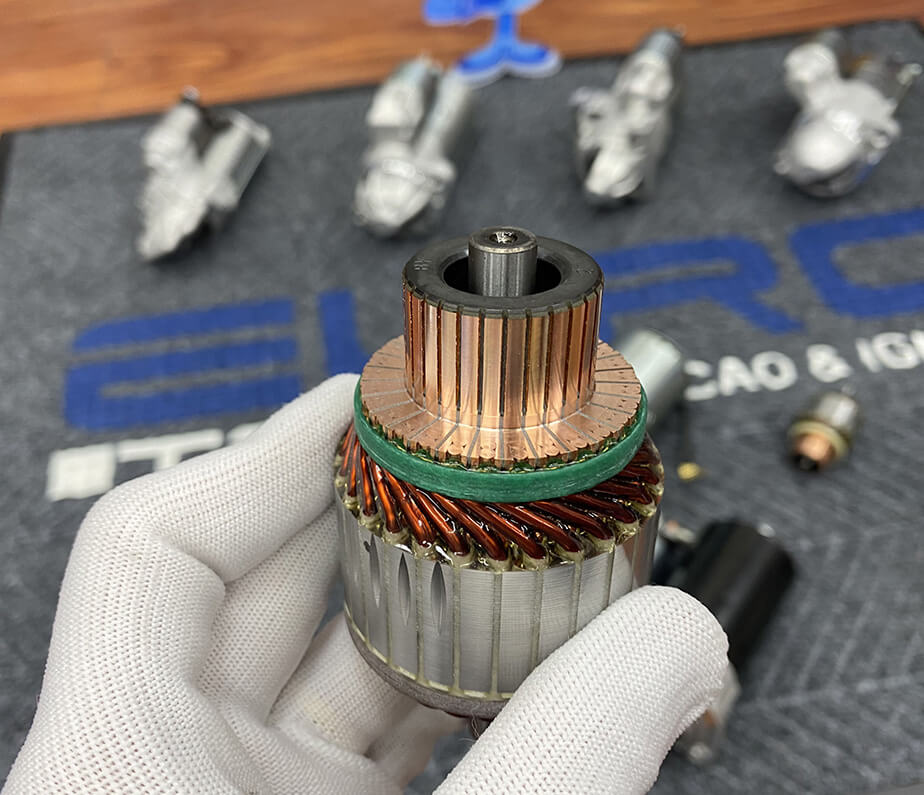
The armature includes the shaft, core, windings, commutator, insulation, and often a drive interface. Open windings reduce torque, shorts raise current and heat, a bent shaft creates runout, and damaged insulation can place current where it does not belong. Growler, resistance, runout, and insulation tests require approved equipment and limits.
A starter may use wound field coils or permanent magnets. Field coils need sound connections, insulation, pole shoes, and housing contact. Magnets need correct orientation, secure bonding, and freedom from cracks. A field defect can resemble an armature problem because both change torque and current.
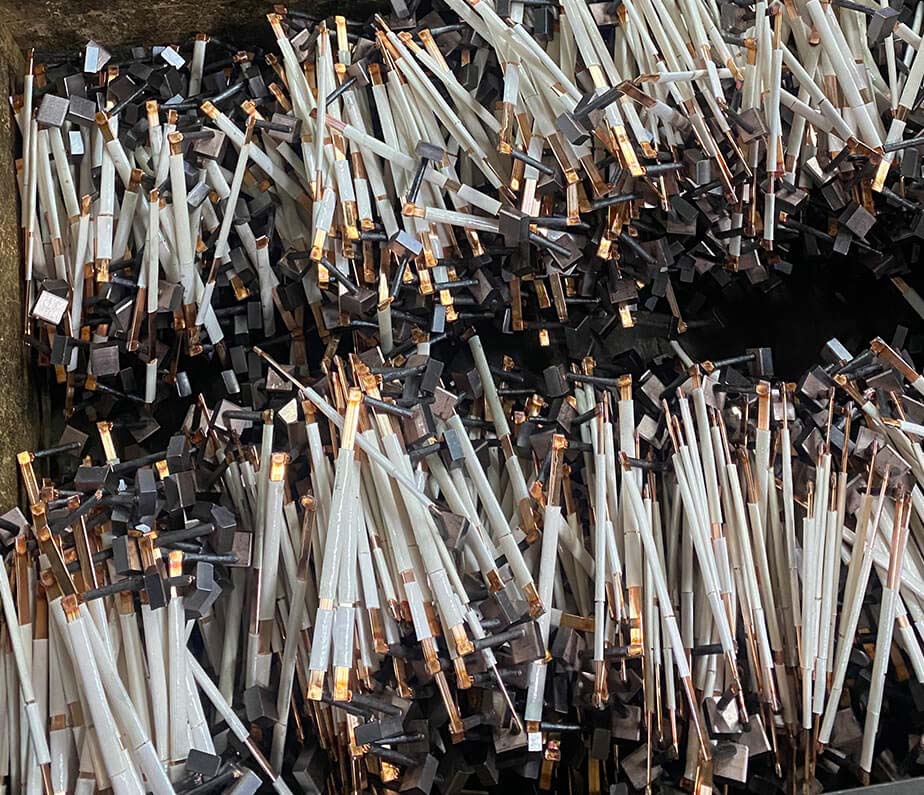
Brushes, flexible leads, springs, holders, and insulation maintain contact with the commutator. Brush length alone is not sufficient acceptance. Check spring force, free movement, lead condition, holder alignment, contact pattern, and commutator surface.
Uneven wear, burning, contamination, high mica, eccentricity, or damaged bars can cause arcing and unstable current. Machining is acceptable only when the model procedure allows it and final dimensions, finish, and runout remain within limits.
The drive system translates motor speed into the torque and engagement needed at the flywheel. Direct-drive and gear-reduction starters therefore use different internal parts, ratios, lubrication practices, and failure patterns. Do not mix drive components merely because the outer housing looks similar.
Planet gears, sun gears, ring gears, carriers, shafts, thrust surfaces, and lubrication control reduction. Inspect tooth contact, pitting, cracks, debris, carrier looseness, and wear. An incorrect ratio changes motor load and pinion speed even if the assembly fits.
The clutch transmits starter torque to the pinion but allows the engine to overrun after firing. Slip under load causes free spinning or weak cranking; failure to overrun can overspeed the armature. Check clutch direction, holding torque, lubrication restrictions, and contamination.
Tooth count, module or pitch, pressure angle, diameter, chamfer, rest position, and travel must match the ring gear. Damage concentrated on tooth tips can indicate poor depth or timing rather than weak material.
Critical dimensions and surface finish determine whether individual parts work as one aligned assembly.
Bushings and bearings maintain armature and drive alignment. Too much clearance allows magnetic rub, gear noise, and pinion misalignment; too little clearance or wrong lubrication creates drag. Measure shaft journals, housing bores, end play, and radial clearance to the model limit.
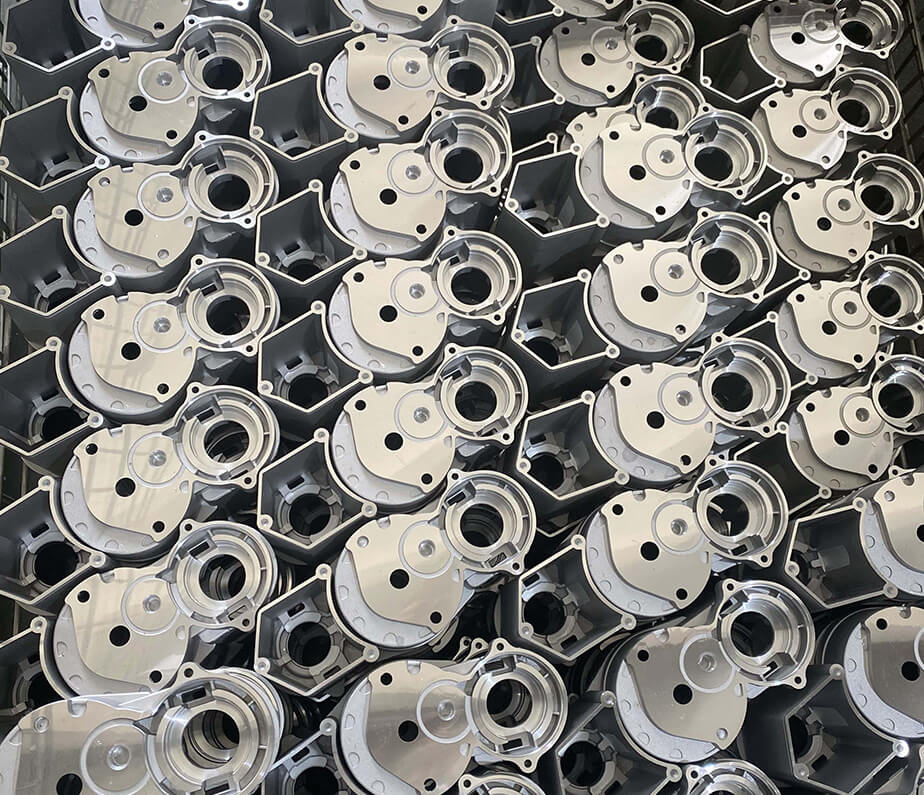
The housing locates poles, magnets, bearings, and end frames. The nose and pilot locate the starter in the flywheel housing. Cracks, fretting, distorted pilots, damaged threads, and corroded mounting faces can make an otherwise sound internal rebuild unreliable.
Fasteners maintain case alignment and clamp load. Incorrect length, grade, torque, or thread condition can distort the assembly or loosen in service. External support brackets control vibration and must be part of the fitment specification.
Gaskets, O-rings, boots, terminal sleeves, insulating washers, barriers, and coatings protect against moisture and electrical contact. Reusing aged insulation to save a small part can create a direct short on a high-current starter.
A rebuild parts list should follow inspection results. Automatically replacing every low-cost part can waste labor and hide the root cause; replacing only the visibly broken part can leave a near-limit system inside. Grade each component as reusable, reworkable, replaceable, or reject according to measured criteria.
Investigate armature shorts, field problems, bearing drag, drive binding, mechanical interference, and excessive engine load. Contacts and cables may also overheat as a consequence rather than the original cause.
Investigate battery and cable loss, burned contacts, poor brush contact, open windings, weak field, and control voltage. A parts order based only on slow cranking may target the wrong system.
Inspect pinion profile, travel, overrunning clutch, shift lever, plunger geometry, nose and mount, ring gear, start-command stability, and engine kickback. A new pinion alone may be damaged again.
Check coil pull-in margin, contact resistance, brush freedom, expansion-related binding, cable voltage drop, and battery condition. Reproduce the condition with controlled hot testing rather than guessing from a cold teardown.
Terms such as premium rebuild or heavy duty are not measurable. Define grades with parts-replacement rules, dimensional limits, test requirements, traceability, and warranty evidence. A fleet-exchange unit and a low-cycle workshop repair may use different economic boundaries, but both need explicit acceptance criteria.
Reject cores with unrepairable housings, severe corrosion, missing identification, mixed incompatible parts, major heat damage, or ring-gear impact that makes the root cause uncertain. Record why a core was rejected so purchasing can improve returns.
Some programs always replace bearings, brushes, seals, small hardware, or drive components; others replace by measurement. Define the rule by starter family and duty. Do not let technicians make inconsistent decisions from memory.
The assembled starter should pass voltage, current, speed, rotation, pinion travel, pull-in, hold-in, disengagement, noise, and insulation criteria. Where applicable, include controlled endurance or temperature sampling.
A rebuild grade becomes auditable when each internal component has a measurable disposition rule.
The 10461758 24V 39MT assembly and 19011506 12V 39MT assembly illustrate why model-family parts need voltage and application control. Solenoids, armatures, field systems, pinions, drives, and terminals can differ even when buyers use the same broad 39MT description.
Starter family, model, voltage, power, rotation, and polarity
Armature shaft, commutator, winding, and bearing dimensions
Field type, housing diameter, pole or magnet arrangement, and connections
Solenoid voltage, plunger, mount, terminals, clocking, and protection
Drive ratio, clutch, pinion tooth profile, rest position, and travel
Brush size, lead, holder, spring, insulation, seals, and hardware
A copied OE number is not enough for loose parts. Request label photos, teardown photos, dimensions, terminal layout, and the old component. For mixed fleets, maintain a sample board or digital reference set by starter family.
Incoming inspection should confirm identity, dimensions, material or process evidence where specified, finish, packaging, and traceability. Sample plans should reflect risk: a terminal insulator or pinion dimension can have greater safety and return impact than cosmetic coating variation.
Compare dimensions and interfaces with the approved sample and drawing.
Check terminal insulation, stud stability, brush movement, spring force, gear condition, bearing fit, and seal quality.
Assemble and bench-test a representative sample from the batch.
Retain photos, measurements, and performance results by lot.
Escalate unapproved substitutions before components enter production.
State whether a listing is a complete starter, rebuild kit, service component, or aftermarket equivalent. A Bosch, Delco Remy, Denso, or OE reference is a matching aid, not proof of genuine origin. Accurate wording reduces disputes and helps buyers compare like with like.
Label each kit with family, voltage where relevant, included parts, lot, and inspection status. Protect commutators, bearings, magnets, terminals, and machined surfaces from impact, moisture, and mixed hardware. A complete kit should be checked against a visible bill of materials before shipment.
The lowest component price does not produce the lowest repair cost. Include technician time, test capacity, core rejection, repeated removal, vehicle downtime, warranty handling, and inventory complexity. A complete starter may be more economical for field service, while a controlled parts program may be valuable for a high-volume rebuild center.
Group parts only where interfaces and performance are genuinely common. Avoid assuming that every component in a model family is interchangeable. Track demand by starter reference, application, failure mode, and repair disposition so purchasing reflects actual consumption.
Review technical data, sample consistency, test records, change control, packaging, corrective-action response, and repeat-batch traceability. Buyers can review Elecdurauto quality and supply capabilities as one part of supplier qualification, then validate the exact product and batch against their own requirements.
For sourcing support, submit a parts or complete-starter inquiry with the starter label, old part photos, dimensions, application, quantity, repair grade, test standard, and packaging needs.
When a component number changes, record the old reference, new reference, affected starter families, dimensional comparison, validation result, first accepted batch, and packaging change. Supersession should preserve verified function, not merely replace a catalog number. This record prevents an approved part from being silently substituted with a near match during repeat purchasing.
Starter motor parts should be understood as one energy and alignment system. The solenoid controls engagement, the motor converts current into torque, the drive delivers that torque to the ring gear, and the housing, bearings, fasteners, seals, and insulation preserve the interfaces.
For B2B buyers and rebuilders, the best parts list comes from measured failure evidence, explicit rebuild grades, a verified interface sheet, incoming sample inspection, and complete-unit performance testing. That framework reduces mixed parts, repeat removals, and avoidable warranty disputes.