ELECDURA NETWORK

Your Whole New Supply Chain For Heavy-Duty Parts
Whatsapp:
+86 18915027366
Phone:
+86 18915027366
Views: 0 Author: Site Editor Publish Time: 2026-07-27 Origin: Site
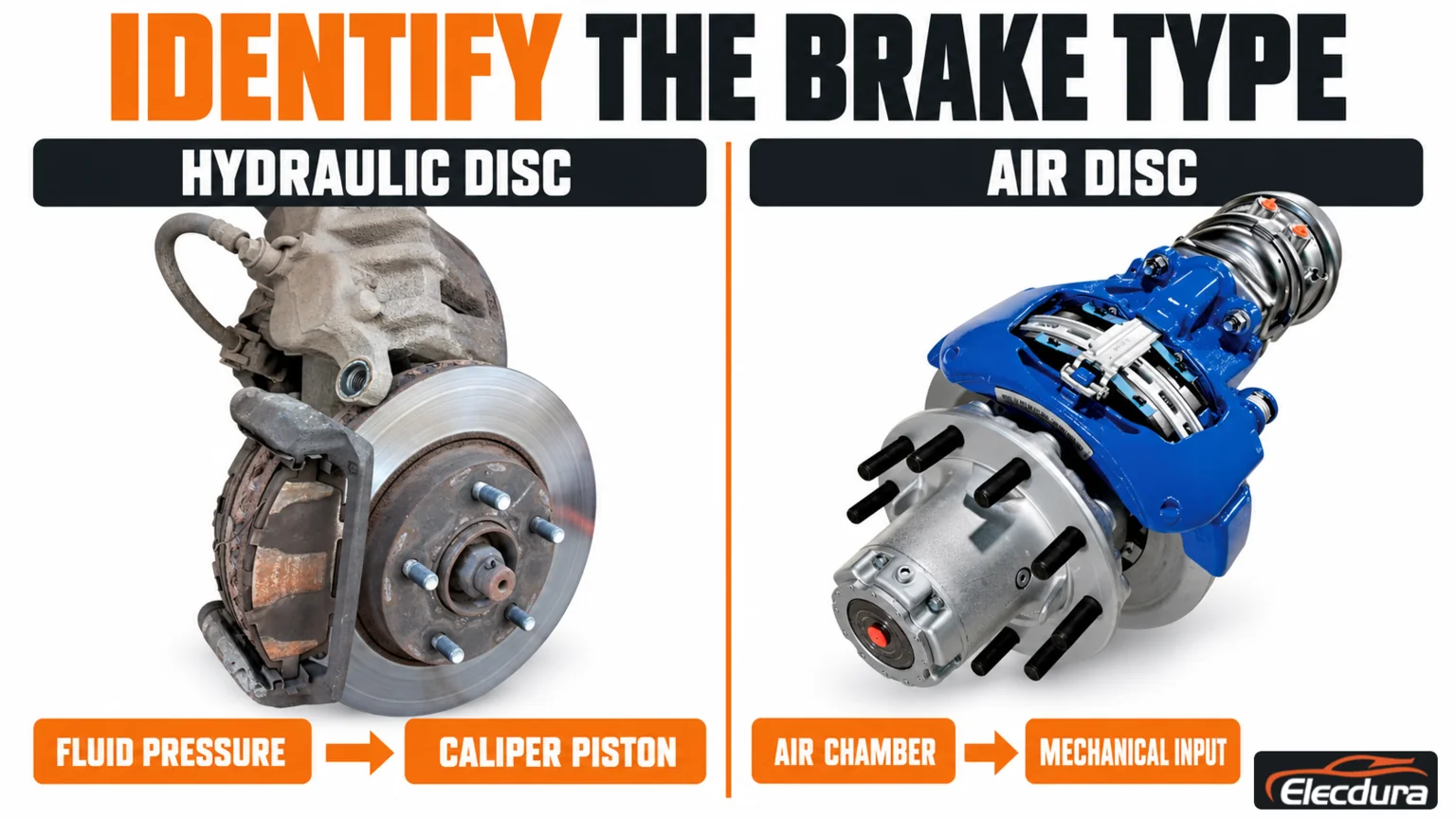
Brake caliper replacement should follow confirmation that the caliper, rather than its actuator, supply circuit or surrounding brake components, is defective. First identify whether the wheel uses hydraulic disc brakes or pneumatic air disc brakes. A hydraulic caliper receives brake-fluid pressure; an air disc caliper receives mechanical input from an air-operated chamber. Their connections, reset methods and post-replacement checks are different. Bleeding a hydraulic circuit does not belong in an air disc caliper procedure. Match the exact brake assembly and investigate uneven wear, dragging or leakage before choosing a service kit or complete replacement.
Use the vehicle and axle specification, caliper identification and actual connections to establish the system. The presence of an air compressor elsewhere on the vehicle does not identify how a particular wheel brake is actuated.
Brake arrangement | How the caliper applies the pads | Replacement implications |
|---|---|---|
Hydraulic disc brake | Fluid pressure acts on the caliper piston or pistons. | Confirm the fluid connection, piston specification and bleeder orientation. An opened circuit requires its prescribed filling and bleeding process. |
Pneumatic air disc brake | An air-operated chamber acts through the caliper's mechanical mechanism to clamp the pads. | Match the actuator interface, caliper and adjustment system. There is no hydraulic caliper circuit to bleed. |
Air-over-hydraulic installation | Air assistance produces hydraulic pressure delivered to the wheel caliper. | The wheel-end fluid circuit remains hydraulic. Its service method must match the complete system. |
Fixed versus floating describes another distinction. Floating calipers require their specified sliding mechanism to move correctly; a fixed hydraulic caliper is not diagnosed by looking for slide-pin movement. Identify both the actuation method and the caliper design.
Hydraulic and air disc brakes use different actuation paths and service procedures.
Compare the complaint with pad condition, rotor measurements and the wheel-end inspection. Record operating conditions when comparing temperatures: recent braking, load and measurement location affect the result. Heat alone is not a component diagnosis, and a hot assembly must not be checked by touch.
Finding | Possible cause | Evidence needed before replacement |
|---|---|---|
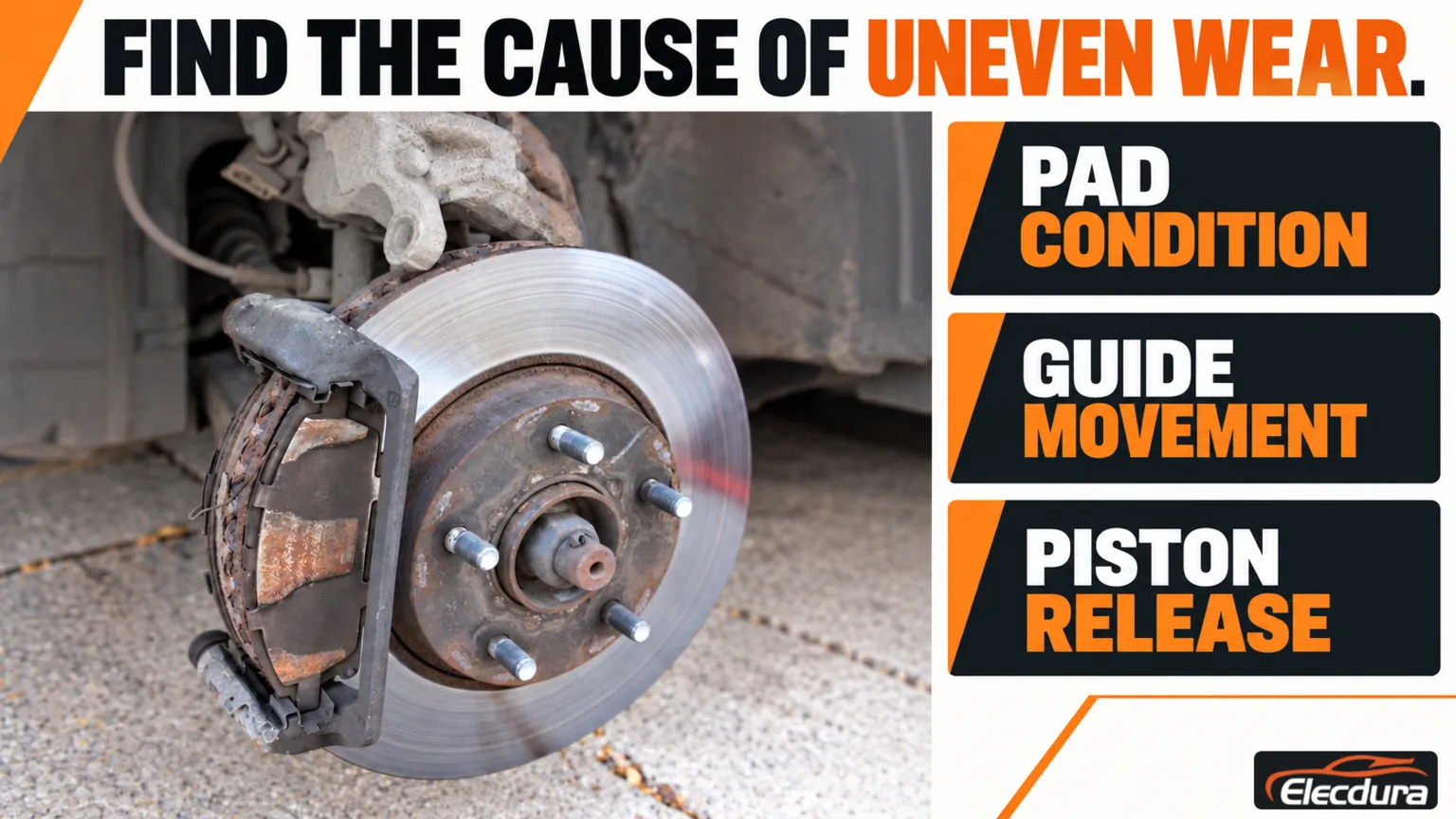
Uneven inner and outer pad wear | Restricted sliding or pad movement, adjustment problems, installation differences or caliper damage. | Check the wear pattern against the brake specification, then inspect permitted slide, pad-support and adjustment functions. |
Dragging brake or excessive wheel-end heat | Caliper binding, incomplete actuator release, hydraulic pressure-release problems, incorrect clearance or another wheel-end fault. | Separate brake release from bearing condition and inspect the appropriate supply and actuation circuit. |
Fluid near a hydraulic caliper | A hose, fitting, bleeder or piston-seal leak. | Locate the actual leak; a torn dust boot alone does not prove failure of the hydraulic pressure seal. |
Weak or delayed application on an air disc brake | Air delivery, chamber compatibility, actuator or caliper-mechanism problems. | Verify the chamber and delivered command before condemning the caliper. |
Cracked body, damaged mounting or failed functional check | Structural damage or a confirmed internal fault. | Apply the manufacturer's rejection criteria and assess the connected components for damage. |
Rotor wear, runout and mounting condition also matter. Hub movement can affect brake behavior; where indicated, use the separate wheel bearing replacement guide to identify the wheel-end design before investigating it.
Uneven wear calls for a system inspection rather than a diagnosis from one photograph.
Check the fluid circuit, hose condition, piston sealing and permitted piston movement. A brake that remains applied needs investigation of pressure release as well as mechanical binding. Replacing the caliper cannot correct every upstream fault. Do not clamp a hose or open a fitting as an improvised diagnostic shortcut.
Damaged boots require inspection for contamination and corrosion, but the permitted repair depends on the design and internal condition. Use only the specified cleaning and assembly materials; an arbitrary lubricant can affect seals or sliding components.
Check the air chamber's suitability, attachment and application/release behavior separately from the caliper's slides, thrust mechanism and internal adjuster. A vehicle pressure gauge does not establish the command delivered to one actuator. The brake chamber guide explains that component's distinct role.
Use the exact caliper's functional checks. Do not repeatedly reset an adjuster to conceal recurring drag or copy another model's rotation direction, number of turns or clearance. A pneumatic brake can have an internal mechanical fault without any brake-fluid leak.
A caliper-only order differs from an assembly with its carrier, pads, retainers or actuator. Terms such as "loaded" and "remanufactured" do not establish exactly what is included or which inspection process was used. Request the actual component scope and relevant acceptance documentation.
Application: vehicle, axle and brake-system identification, original reference, side and orientation.
Mechanical fit: carrier, mounting interface, pad pattern, rotor dimensions and surrounding clearance.
Hydraulic details: piston arrangement, approved fluid connection, bleeder position and any integrated parking mechanism.
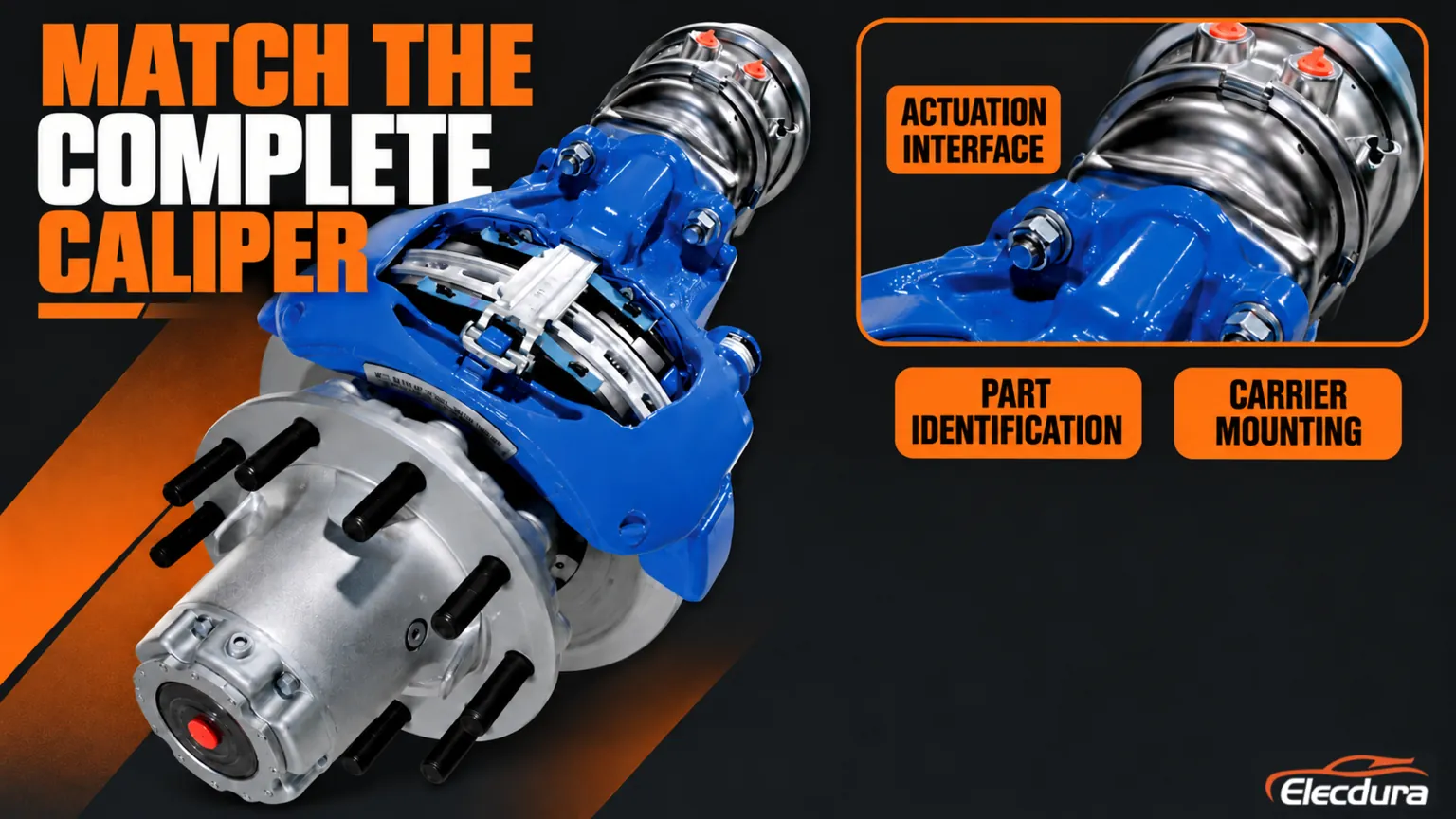
Air disc details: chamber interface, specified actuator requirements, adjustment design and sealing arrangement.
Supply scope: caliper, carrier and required hardware, plus sensors or accessories only where actually specified.
A casting number may identify a housing rather than a complete service assembly. Resolve it against the part catalog instead of assuming matching castings prove interchangeability.
An approved guide-pin or boot kit may address a limited, confirmed fault. A cracked body, damaged mounting or internal mechanism outside the permitted service limits may require a complete replacement. Do not attempt an undocumented internal repair merely because a kit appears to fit.
Match the caliper identity, carrier mounting and actuation interface.
Brake work requires qualified personnel, suitable vehicle supports and handling equipment. Secure the vehicle against movement, allow hot parts to cool, and control stored energy according to the system instructions. Turning off the ignition does not necessarily depressurize a hydraulic accumulator, and draining air does not neutralize a spring-brake chamber.
Never dismantle a spring chamber. Support the caliper independently rather than hanging it from a hose, cable or unapproved retaining component. Protect open connections from contamination and control brake dust using the approved workshop method.
For hydraulic brakes: use the specified fluid and connection seals. Restore the circuit using the applicable bleeding method, including diagnostic equipment where required. Piston retraction and any parking-brake service mode are design-specific. Do not force a piston back using a method taken from another caliper.
For air disc brakes: follow the prescribed actuator handling, caliper reset and running-clearance procedure. Restore the specified actuator seal, vents and air connections. Hydraulic bleeding instructions have no place in this mechanical caliper service.
For either design, confirm the correct fasteners and reuse policy, mounting condition, hose or cable clearance and required tightening procedure. Do not substitute a universal torque or rely on the previous installation as proof of correct assembly.
Complete stationary checks before the prescribed controlled brake-performance test. A normal-looking installation or one brake application is not enough.
On a hydraulic system, verify fluid level, leakage, the required bleeding result and specified application/release behavior. On an air disc system, verify air connections, actuator operation, clearance and adjustment function, including parking operation where fitted. Check pad retention, rotor condition, routing and any relevant warning or wear-sensor function on both systems.
Investigate continued drag, abnormal noise or unequal operation before release. Follow the vehicle manufacturer's performance-test and bedding requirements where applicable; do not assume that a replacement caliper has corrected damage elsewhere.
A purely pneumatic air disc caliper has no hydraulic fluid circuit to bleed. Its chamber, mechanical adjustment and release function require their own checks. An air-over-hydraulic vehicle is different: identify the fluid-operated wheel circuit and use its specified bleeding procedure.
No. Compare wear with the applicable criteria and inspect slides where fitted, pad supports, adjustment, rotor and hub condition. A limited serviceable fault may justify an approved kit; a failed internal mechanism or structural damage may require the complete caliper.
Not on those features alone. Confirm the complete reference, side, carrier, rotor/pad compatibility and actuation interface. A hydraulic port or an air-chamber connection that looks similar does not establish equivalent function or correct orientation.
Only when the manufacturer supports that service and inspection shows the remaining components are acceptable. Damaged boots can allow contamination into otherwise hidden areas. Check the approved repair scope and complete its functional verification rather than assuming new rubber parts resolve internal wear.
Incorrect setup, incomplete pressure or actuator release, binding pads, rotor problems or a separate wheel-end fault may remain. Stop treating heat as proof that another caliper is required. Recheck the original diagnosis and the system-specific installation before returning the vehicle to service.
Send the brake-system type, vehicle and axle details, complete reference, side, readable markings, connection and mounting photographs, confirmed fault and quantity through the Elecdura contact page. Specify whether the request is caliper-only or includes the carrier, pads or actuator. Product availability and compatibility must be confirmed for the exact application.
Image references: dave_7, Lethbridge, Canada (CC BY 2.0); Bendix. Illustrations adapted with cropping, annotations and AI-assisted composition.