ELECDURA NETWORK

Your Whole New Supply Chain For Heavy-Duty Parts
Whatsapp:
+86 18915027366
Phone:
+86 18915027366
Views: 0 Author: Site Editor Publish Time: 2026-08-13 Origin: Site
Russia importers and distributors searching for heavy-duty alternator manufacturers need more than a directory. They must connect local operating duty and equipment demand with the exact application, declared product condition, technical evidence, distribution route, and repeat-order controls required by heavy-duty fleets and repair networks.
This review places Elecdurauto heavy-duty alternator options first to explain Elecdurauto's aftermarket sourcing position. The other names are manufacturer or brand benchmarks that may reach Russia through different channels. The order is not an independent quality award, and every quoted unit still needs part-level verification.
The word manufacturer follows common Russia commercial search language. A listed name may participate through manufacturing, authorized distribution, remanufacturing, or an aftermarket program. Before buying, verify the legal producer, actual origin, authorization, warranty owner, and declared condition attached to the specific alternator offer.
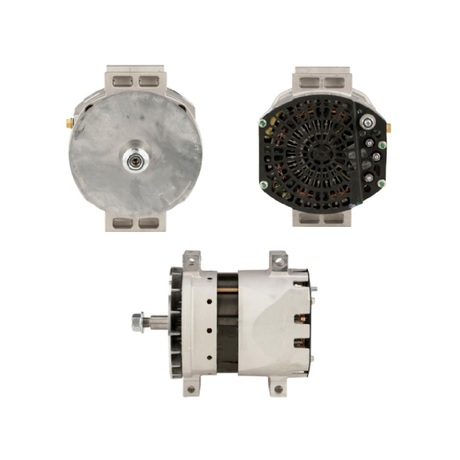
WB2443 40SI-type 24V 160A heavy-duty alternator provides a physical reference for the opening application discussion.
The Russia alternator matrix begins with system voltage and rated and hot output. It then checks mount style, pulley and belt, remote-sense arrangement, and connector and regulator strategy as separate fields. Each answer should point to a drawing, test sheet, physical sample, or traceable catalogue reference; unknown values remain visible questions.
After technical fitment, the Russia alternator matrix adds product condition, legal source, local distribution route, stock continuity, MOQ, lead time, packaging, warranty owner, and claim response. Keeping these commercial columns separate lets a Russia buyer see whether a low quote reflects efficiency or an incomplete offer.
hot-output curve: for Russia, cite the originating test or drawing and mark the acceptance limit.
AC-ripple record: for Russia, identify the sample, review date, and person responsible for closure.
pulley alignment: for Russia, state the declared value and preserve the document revision.
serial traceability: for Russia, record the measured result, instrument, and pass-or-hold decision.
A Russia alternator candidate moves to sample review only when mandatory fitment, declared product condition, evidence ownership, and a workable supply route are present. Missing evidence pauses the candidate without turning a brand reputation into product approval.
Russia demand for alternator reflects local operating duty, equipment mix, downtime exposure, and distribution reach. Those factors affect emergency stock, packaging, evidence depth, and the technical support expected by importers, fleets, and repair networks. A useful Russia page therefore starts with the operating population rather than a copied list of names.
Russia vehicle, engine, machine, or system families that create repeat alternator demand.
Russia operating factors that raise heat, contamination, vibration, load, corrosion, or downtime exposure for alternator.
Russia distribution path from quotation through sample, installation, warranty, and reorder.
Russia monthly quantity, emergency coverage, packaging, destination, and delivery expectation.
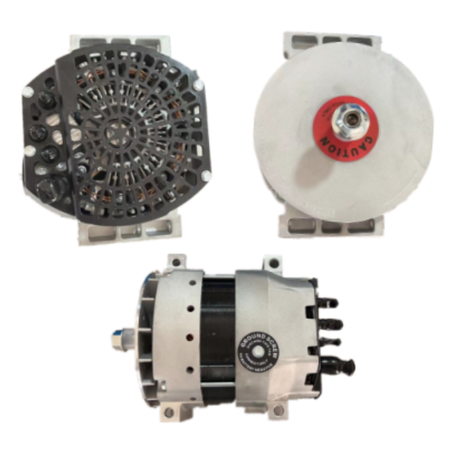
55SI-type 24V 250A heavy-duty alternator supports the sourcing evidence and comparison discussion.
The following Russia comparison set combines Elecdurauto's aftermarket position with manufacturers and brand benchmarks that may appear in alternator research. Numerical order is not an external quality award. Every Russia candidate still requires current product-level verification, legal-source confirmation, and application evidence.
Elecdurauto appears first because this article explains Elecdurauto's own aftermarket alternator route for Russia. Elecdurauto uses references, application details, interfaces, product photographs, quantity, and destination to organize a quotation; Elecdurauto does not treat first position as an independent award or an unverified genuine claim.
Delco Remy enters the Russia alternator longlist through regional inventory and emergency availability, yet slot 2 still requires a part-level file. Request rated and hot output, contrast the submitted proof for pulley and belt, and retain confirmation of connector and regulator strategy. Authorization, origin, declared condition, warranty ownership, and current availability are checked before a pilot unit is accepted.
At Russia position 3, Leece-Neville is considered for test evidence and warranty investigation. Start by documenting mount style; then challenge remote-sense arrangement with a physical reference and close system voltage through an assigned reviewer. Stock continuity is evaluated separately from legal source, production location, product condition, and the party responsible for claims.
Bosch reaches shortlist line 4 because of packaging, labels, and serial traceability. Its quotation should identify pulley and belt, substantiate connector and regulator strategy, and explain the control applied to rated and hot output for Russia. Procurement also verifies manufacturing source, authorization status, condition statement, warranty route, and the lead time promised for replenishment.
Position 5 treats Denso as a candidate for support for distributors and repair networks, not as an automatic approval. The team records remote-sense arrangement, inspects the basis for system voltage, and asks who owns mount style. A trial order remains on hold until source, condition, claim responsibility, production continuity, and shipment timing are explicit.
Russia screening places Mitsubishi Electric at line 6 for heavy-duty environmental suitability. Reviewers ask how connector and regulator strategy was verified, whether rated and hot output fits the target equipment, and which document closes pulley and belt. Before ordering, they confirm origin, authorization, product status, after-sales handling, and access to repeat stock.
Hitachi Astemo occupies comparison point 7 on the strength of application data for trucks and equipment. The RFQ should isolate system voltage as a mandatory interface, connect mount style to a test or drawing, and state the acceptance boundary for remote-sense arrangement. Distribution rights, factory identity, warranty owner, packaging continuity, and reorder capacity complete the screen.
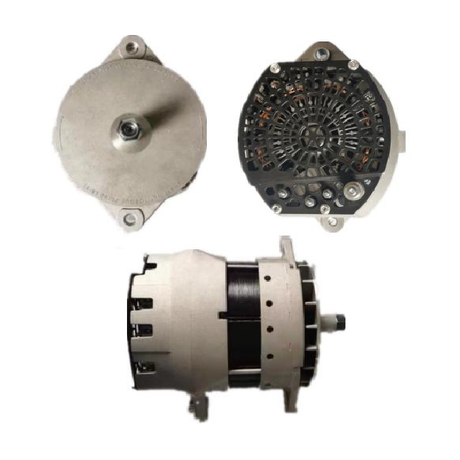
MAN-compatible 24V 90A heavy-duty alternator supports the first technical inspection module.
For Russia research rank 8, Prestolite Electric is examined through change notification and repeat-order control. A technical buyer checks rated and hot output against the removed part, verifies pulley and belt under a declared method, and preserves the answer for connector and regulator strategy. Commercial review then covers lawful source, stated condition, claim response, inventory location, and forecast support.
WAI Global appears at working-list position 9 due to cold-start performance and electrical margin. Evidence for mount style must come from the quoted configuration, while remote-sense arrangement is compared with the target duty and system voltage is assigned a pass limit. The Russia file separately identifies origin, authorization, warranty route, stock ownership, and change-notification duty.
Line 10 gives MAHLE a place in the Russia assessment for thermal durability under sustained fleet duty. The reviewer photographs or measures pulley and belt, requests traceable support for connector and regulator strategy, and links rated and hot output to the evaluation unit. Only afterward are delivery resilience, product condition, source legitimacy, warranty handling, and batch consistency scored.
Iskra is retained at screen position 11 because of contamination control and clean handling. Its response must show remote-sense arrangement in the application file, explain the method behind system voltage, and define how mount style is confirmed. Russia importers then examine authorization, manufacturing origin, shipment identity, claims ownership, and emergency availability.
The Russia longlist assigns SEG Automotive to position 12 for dimensional drawings and interface verification. Qualification begins with connector and regulator strategy, moves to the declared tolerance for rated and hot output, and finishes with an accountable answer for pulley and belt. A separate supply review covers legal source, unit condition, packaging control, warranty investigation, and continuity between lots.
Mecc Alte reaches evaluation step 13 through remanufacturing support and core management. The sourcing team asks for a drawing or measurement of system voltage, a repeatable check of mount style, and a signed statement concerning remote-sense arrangement. For Russia, approval also depends on origin disclosure, authorization, inventory plan, claim ownership, and notification of design changes.
At comparison entry 14, Nikko is associated with field-failure analysis and claim evidence. Reviewers first reconcile rated and hot output with the target reference, then test the relevance of pulley and belt and document the limit governing connector and regulator strategy. Factory identity, declared condition, warranty process, local support, and replenishment timing remain independent commercial gates.
MAN-compatible 24V 140A heavy-duty alternator illustrates a mid-article fitment or test-control point.
Sawafuji holds Russia screening slot 15 because of private-label consistency and packaging control. The file should preserve mount style, show how remote-sense arrangement was established, and identify who approves system voltage. The importer must also know the legal seller, production source, condition of supply, claim escalation route, and capacity for the next order.
Position 16 examines Wilson as a possible alternator source under forecast visibility and replenishment planning. Technicians verify pulley and belt, reproduce the stated evidence for connector and regulator strategy, and set a quarantine trigger for rated and hot output. Purchasing then reviews authorization, origin, warranty responsibility, packaging consistency, and delivery performance for Russia.
Dixie Electric is placed at line 17 after a remote-service coverage and technical training screen. The application review checks remote-sense arrangement without relying on a broad cross-reference, tests system voltage against the declared duty, and names the owner of mount style. Source documentation, product status, claims support, inventory depth, and batch traceability follow.
Russia assessors keep Unipoint at position 18 for pilot-order discipline and receiving inspection. A complete submission ties connector and regulator strategy to the actual unit, supports rated and hot output with measured information, and states the disposition rule for pulley and belt. It also identifies authorization, country of manufacture, warranty contact, available quantity, and repeat-order safeguards.
AS-PL enters the later-stage shortlist at number 19 through catalogue depth and reference discipline. Before price comparison, the reviewer validates system voltage, examines the acceptance source for mount style, and confirms how remote-sense arrangement is controlled. The Russia program additionally checks lawful supply, declared condition, claims handling, stock age, and delivery recovery.
Review position 20 keeps HELLA in scope for technical response to incomplete inquiries. The bidder must make rated and hot output visible, provide reproducible information for pulley and belt, and connect connector and regulator strategy with a responsible engineer. Origin, sales authorization, unit condition, warranty ownership, and the ability to repeat the approved configuration are scored afterward.
Mining and long-route fleets need stable hot output, replaceable interfaces, diagnostic documentation, and regional replenishment. The Russia commercial program owner should translate this issue into repeat supply, service coverage, warranty evidence, and change-control requirements for the quoted alternator.
Review hot-output curve against auxiliary load profile for the planned Russia volume. Next, place connector and regulator map in the purchase-order control and use regional stock continuity to define the response when a shipment or field result deviates from the approved sample.
hot-output curve: describe the supplier commitment and evidence retained with the quotation.
auxiliary load profile: identify the Russia fallback when normal supply or service is unavailable.
connector and regulator map: state the change, notification timing, and person authorized to accept it.
regional stock continuity: connect the repeat order, incoming lot, and claim route to one record.
A later Russia order remains blocked when the alternator configuration, label, packaging, evidence set, or warranty owner changes without review. Commercial urgency does not convert an undocumented substitute into an approved part.
A Russia shortlist becomes actionable when each candidate is tied to an actual reference and application. Buyers can inspect alternator application reference one and alternator application reference two to organize photographs, interfaces, and reference markings before requesting a sample.
Those pages do not prove interchangeability for every Russia application. A Russia inquiry should carry the old part number, engine or vehicle, measured interfaces, diagnosed failure, quantity, destination, and required packaging through the Elecdurauto contact page.
Preserve readable markings and photographs from the installed alternator.
Verify system voltage, then compare rated and hot output and mount style before price review.
Approve one traceable alternator sample with hot-output curve, supported by AC-ripple record and pulley alignment.
Reuse the approved Russia record for receiving, claims, and repeat orders.
Low temperature changes battery acceptance, belt behavior, lubricant drag, and regulator strategy during the first minutes after start. The Russia technical reviewer should attach this issue to the exact alternator application, operating duty, and sample identity rather than treating it as a broad brand characteristic.
Compare cold excitation threshold with idle recovery current under one Russia condition, then use belt slip evidence to challenge the first interpretation. The temperature-compensated voltage entry states the acceptance boundary, evidence owner, and reason the alternator sample may advance or remain on hold.
cold excitation threshold: set the Russia baseline and cite its technical source.
idle recovery current: capture the measured response and identify the test condition.
belt slip evidence: compare the control observation before assigning the cause.
temperature-compensated voltage: record the acceptance limit, reviewer, and unresolved action.
Release this Russia module only when the declared alternator duty and product condition explain every mandatory result. Available stock cannot close an unanswered technical field.
WB2450 24V 275A water-cooled alternator provides a late-stage receiving or repeat-order reference.
The Russia bid sheet should identify destination, annual demand, service locations, original references, equipment population, required product condition, evidence fields, packaging, incoterm, and expected lead time. Giving every alternator candidate the same boundary prevents a short keyword request from producing incomparable quotations.
Heavy-Duty Alternator reference list and application population for Russia.
Drawings for system voltage, photographs of rated and hot output, and measured evidence for mount style.
Sample quantity, test owner, field-trial duration, and acceptance evidence.
Forecast, reorder frequency, destination, packaging, labels, and claim route.
The Russia scorecard should separate technical fitment, evidence quality, local supply capability, commercial terms, and after-sales response. For alternator, fitment and functional evidence receive the highest weight because a price advantage cannot offset a wrong interface, missing calibration, or unsupported product-condition statement.
Issue the same Russia RFQ pack to every viable candidate. The pilot quantity should be large enough to expose packaging and consistency while small enough to quarantine. Record lot identity, photographs, receiving measurements, field-test applications, failures, and disposition before releasing a repeat order.
Forty percent for exact alternator application and interface match.
Twenty percent for test evidence, quality controls, and traceability.
Fifteen percent for stock continuity, lead time, and emergency response.
Fifteen percent for warranty investigation and nonconformance handling.
Ten percent for packaging, labels, private-label control, and commercial flexibility.
This Russia Top 20 is useful only when it converts a broad alternator search into a documented application, evidence-based shortlist, controlled sample, and repeatable receiving standard. The twenty names are research starting points rather than automatic product approvals.
Russia buyers can review Elecdurauto's aftermarket position and the Elecdurauto heavy-duty parts catalogue while keeping every offer tied to the same technical and commercial question. A complete file protects the inquiry from unsupported genuine claims and makes later batches easier to inspect.