ELECDURA NETWORK

Your Whole New Supply Chain For Heavy-Duty Parts
Whatsapp:
+86 18915027366
Phone:
+86 18915027366
Views: 0 Author: Site Editor Publish Time: 2026-07-26 Origin: Site
A turbocharger compressor map can look like an engineering-only document, yet it answers a practical B2B question: can this replacement unit operate in the airflow and pressure range demanded by the diesel engine? For heavy-duty fleets, construction equipment, generators, and distributor programs, the map is one layer of evidence that helps prevent a replacement from creating poor response, excess heat, over-speed risk, or repeat downtime.
The map does not replace fitment data, OE-reference research, actuator calibration, housing geometry, or installation checks. It adds context. When a buyer understands pressure ratio, mass flow, speed lines, efficiency islands, surge, and choke, the buyer can ask better questions before committing to a turbocharger model or a bulk stock position.
For an overview of available assemblies and application coverage, see Elecdurauto heavy-duty turbochargers. The selection process should always end with verified engine, OE number, housing, actuator, and application matching.
A compressor map describes how a particular compressor stage behaves across airflow and pressure conditions. It shows the usable operating envelope rather than simply a single maximum number. In a heavy-duty diesel application, this helps explain why two units that appear similar may respond differently under load, altitude, engine speed, fuel delivery, duty cycle, and exhaust-energy conditions.
For a B2B buyer, the map is especially useful when the engine has been modified, the original reference is incomplete, or the application operates far from a light-duty duty cycle. It does not give permission to substitute parts freely. Instead, it identifies the areas where a technical review is required before an aftermarket replacement is offered to a fleet, repair network, or importer.
Use the map alongside the complete application file: engine family, OE reference, compressor and turbine housing numbers, actuator type, mounting orientation, oil-feed and drain arrangement, intake and outlet connections, emission-system configuration, and expected operating profile. A map cannot confirm these physical and control-system requirements by itself.
Compressor map: airflow and pressure behavior of the compressor stage.
Fitment file: the physical, control, and application requirements of the engine.
Sourcing decision: the documented match between the two.
Commercial decision: stock level, packaging, quality evidence, and inquiry path.
Pressure ratio is the relationship between compressor outlet absolute pressure and inlet absolute pressure. It is not the same as a boost-gauge value. A gauge shows pressure above ambient, while a compressor map is normally interpreted with absolute pressure. Mixing the two can move the estimated operating point and lead to an incorrect impression of what the turbocharger must deliver.
Ambient conditions matter on heavy-duty equipment because a truck, mining machine, or generator may operate at altitude, in hot climates, or in dusty environments. Inlet restrictions, air-cleaner condition, and charge-air-cooler losses also influence the operating condition. A procurement review should therefore ask not only for target boost, but also for installation restrictions and the environment where the unit will run.
The commercial value is simple: a buyer who understands the pressure basis can communicate better with technical support. This reduces the temptation to select a unit only because it is described as high boost or high flow. The correct question is whether it is appropriate for the engine and working envelope.
Record ambient pressure or altitude when the application is unusual.
Separate gauge boost from absolute outlet pressure.
Consider air-filter and charge-air-cooler restrictions.
Use engine displacement, speed, and duty cycle with pressure data.
The left side of many compressor maps is associated with surge risk, while the far-right side approaches choke or flow limitation. The exact behavior depends on the component and engine system, but the commercial lesson is consistent: a replacement that repeatedly operates near an edge can create unstable response, heat, smoke, overspeed exposure, or durability concerns.
A heavy-duty engine rarely works at one static point. It moves through load, speed, altitude, and temperature conditions. The review should consider start-up response, pull under load, sustained highway or generator operation, and transient demand. A map helps technical teams discuss those conditions, but the final replacement still requires application-specific validation.
This is why a fleet buyer should not try to reverse-engineer a turbocharger order from a map alone. Use it to ask whether the proposed assembly has enough operating margin, then confirm the OE-reference and physical configuration. For a distributor, that is a safer approach than stocking an attractive-looking turbocharger with no dependable application story.
Surge margin matters during low-flow, high-pressure operating conditions.
Choke-side operation can limit airflow and raise speed or heat risk.
Transient behavior matters for working trucks and equipment.
Final selection still requires verified engine and turbocharger reference data.
A turbocharger assembly includes more than the compressor wheel. The turbine side, bearing housing, wastegate or variable-geometry mechanism, actuator, calibration, oil system, housings, and connections all affect the real-world result. A map may suggest an airflow range, but it does not confirm that the proposed actuator, turbine housing, or electronic control strategy will work with the engine.
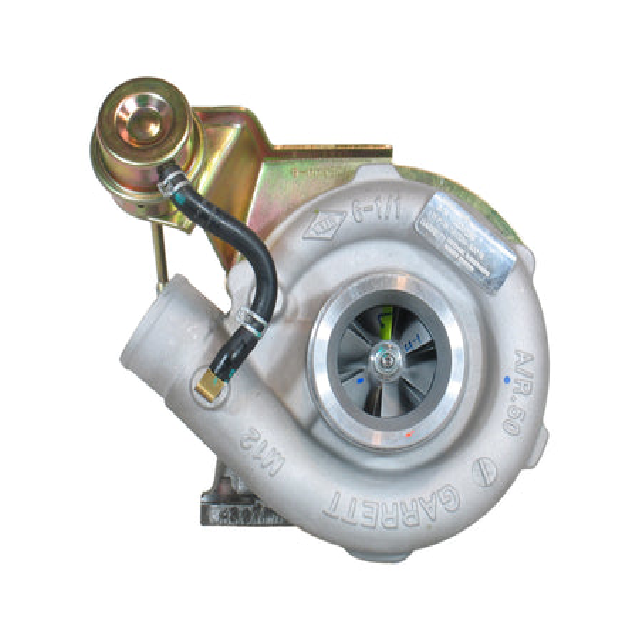
For example, a buyer reviewing a Cummins 6BTAA application can use the TBP4 turbocharger replacement for Cummins 6BTAA as a product-level reference point, then still confirm OE numbers, engine variant, housing arrangement, and installation details. The word replacement should mean a documented aftermarket match, not a guess based on a similar compressor housing.
Importers should keep an application dossier with photographs, old-unit labels, OE references, engine data, and installation observations. It supports initial quoting and also makes it possible to investigate a return without collapsing every issue into a generic turbocharger quality complaint.
Compressor and turbine housing orientation
Actuator type and calibration requirements
Oil supply, drain, intake, and outlet configuration
OE/reference number and engine variant
Duty cycle, altitude, thermal load, and maintenance history
The most valuable procurement question is not, “What is the biggest turbocharger available?” It is, “What operating problem must this assembly solve, and what evidence confirms the match?” A commercial brief should state the engine, symptom, required application, existing reference, vehicle or equipment duty, and any changes that may have altered air or exhaust flow.
This improves the quality of a quotation. The supplier can state whether the request appears to be an OE-reference replacement, an alternate aftermarket match, or an application that needs more verification. It also gives the buyer a reason to request product photos, packaging details, VSR balancing evidence, leak testing, batch traceability, and repeat-availability information.
For global buyers, technical clarity supports better inquiry quality. It makes it easier to compare offers, identify missing fitment evidence, and avoid an order that must be reworked after it reaches a repair shop. It also supports a more natural next step from educational content to a precise B2B request.
Engine and equipment application
Existing turbo label, OE references, and clear photographs
Observed complaint, operating conditions, and maintenance history
Required quantity, stock plan, packaging, and quality documentation
One mistake is treating a performance-oriented map or generic flow claim as proof of heavy-duty replacement suitability. Another is assuming that a similar wheel or housing image confirms an engine match. A third is ignoring the actuator or turbine side because the customer searched only by a compressor-related term. Each shortcut can create a physically installed unit that does not deliver stable, durable operation.
Avoid claims that a unit is genuine, original, or officially supplied by an OE brand unless that status is verified. When a familiar brand or number appears in a request, use it as a reference for fitment research and describe the offered product accurately as an aftermarket replacement or OE-grade equivalent where that is the verified position.
A buyer who needs help assembling a fitment file can use Elecdurauto B2B turbocharger support to submit the reference, engine details, photographs, and expected volume. That keeps the commercial discussion grounded in application evidence.
Do not use compressor-map data as a substitute for full assembly fitment.
Do not assume similar appearance means equivalent actuator or housing configuration.
Do not make unverified genuine or official-OE claims.
Do not approve a bulk order without a repeatable application and quality file.
A compressor map is not a catalog shortcut. Its flow and pressure-ratio zones become meaningful only when connected to the engine displacement, fuel strategy, operating speed, altitude, exhaust-side condition, and intended duty cycle. A truck that works in steady highway service can create a different demand pattern from a loader that repeatedly accelerates under load. Buyers should therefore use the map to support application matching, while retaining OE/reference, turbo assembly number, actuator configuration, and physical fitment as separate checks.
The left side of a map is commonly associated with lower-flow instability risk, while the far-right region can indicate operation beyond the efficient range. A technically minded buyer does not need to redesign the engine to use this information. The practical question is whether the proposed replacement belongs to the same operating envelope as the original application. That is more reliable than selecting a turbocharger from wheel size or a similar-looking housing alone.
Engine displacement, rated application, and normal load profile
Target pressure ratio and mass-flow context
Actuator, wastegate, or variable-geometry arrangement
Housing, flange, oil, coolant, and intake/exhaust connection details
Compressor-side damage can be caused by dirty intake air, restricted filtration, loose intake hardware, foreign-object entry, oil contamination, overspeed conditions, or a problem that began on another part of the engine. Before ordering a replacement, inspect the air cleaner, ducting, clamps, intercooler path, crankcase ventilation system, and any signs of oil or debris. Replacing only the turbocharger may not prevent a repeated failure if the intake or lubrication cause remains active.
This is particularly important in B2B supply because the returned turbo may look like a product issue even when the vehicle-side evidence points elsewhere. A complete photo set and a record of the intake, oil feed, drain, and boost path help the supplier support a matching review without making unsupported warranty assumptions. It also gives the repair network a clear checklist for commissioning the replacement.
Inspect air filtration, ducting, clamps, and intercooler cleanliness.
Check oil feed and drain condition before fitting a replacement.
Retain photos of wheel damage, housings, and connection interfaces.
Confirm the original failure mode before treating the part as the sole cause.
Most buyers do not need to send a complete compressor-map calculation with an RFQ. They do need to avoid stripping away the information that makes application matching possible. Provide the assembly and OE/reference numbers, engine model, power rating where available, actuator details, all-side photos, and the vehicle or equipment duty. When a map or technical sheet is available, it can be used as an additional confirmation point rather than a substitute for the physical specification.
For Cummins 6BTAA applications, a buyer can review an aftermarket reference point through the TBP4 turbocharger application page and compare the listed application information with the removed unit. For broader range planning, the heavy-duty turbocharger category provides a starting point for discussing coverage and batch requirements.
Turbo assembly/OE/reference number and engine model
Actuator type, electrical connection, and calibration considerations
Housing and flange details with clear product photos
Failure evidence and the equipment operating pattern
A compressor map discussion should be accompanied by a physical air-path inspection. Split hoses, loose clamps, leaking charge-air coolers, collapsed ducts, blocked air cleaners, and restricted exhaust components can all change the way a heavy-duty diesel engine responds. A vehicle may show low power, smoke, abnormal noise, or fault codes that appear to point to the turbocharger even when the issue lies in the path that delivers or receives the compressed air.
Use pressure and visual checks appropriate to the vehicle service procedure. Inspect every connection from the inlet to the manifold, including oil residue that can reveal a boost leak. Document any repair before evaluating the replacement turbocharger. This protects the next unit from an avoidable commissioning problem and gives the purchaser a cleaner description of the original failure for technical matching and warranty discussion.
Air cleaner condition and inlet restriction
Charge-air hoses, clamps, and intercooler leakage
Exhaust restriction and sensor or actuator fault evidence
Oil feed, drain, and crankcase ventilation observations
Before first start, ensure the oil feed and drain are clear, the inlet and exhaust connections are secure, and any electronic actuator or control connection is verified against the application. Follow the correct priming and commissioning process for the engine. The goal is to prevent dry running, uncontrolled boost behavior, or a false diagnosis caused by a connection that was not restored after the original unit was removed.
For distributors supporting remote repair networks, a short commissioning checklist has commercial value. It gives the workshop a repeatable handover process, improves evidence quality if a problem is reported, and reduces the chance that a technically correct aftermarket replacement is blamed for a pre-existing engine or installation condition. The checklist should travel with the part record and the order reference.
Clear oil feed and drain, with no debris or sealant obstruction
Secure intake, charge-air, exhaust, and sensor connections
Verified actuator and calibration requirements where applicable
Documented first-start observation and post-installation inspection
A turbocharger compressor map helps buyers understand pressure ratio, airflow range, efficiency, speed, surge, and choke. It is valuable because it turns a vague high-flow discussion into a more disciplined question about how the engine operates. But it is one layer of evidence, not a complete fitment certificate.
For heavy-duty diesel fleets and distributors, the strongest decision combines map logic with OE-reference research, full assembly configuration, actuator and housing checks, installation evidence, and a clear aftermarket product position. That combination protects uptime and reduces expensive incorrect replacements.
A well-prepared matching file lets the supplier identify what is known, what needs verification, and what should not be assumed. The same file becomes useful after installation if the buyer needs to document a repeat failure, review a core return, or expand the range for another fleet customer.
Include application data before commercial terms. Accurate technical matching is the shortest route to a useful quotation and a stable repeat-order program.
Engine model, serial range when available, and equipment application
Old turbocharger labels, OE references, and all-side photographs
Actuator, housing, oil-feed, drain, inlet, and outlet details
Observed operating symptom and duty cycle
Installation condition, air-path condition, and oil-system observations
Order quantity, packaging, and requested quality documentation