ELECDURA NETWORK

Your Whole New Supply Chain For Heavy-Duty Parts
Whatsapp:
+86 18915027366
Phone:
+86 18915027366
Views: 0 Author: Site Editor Publish Time: 2026-08-27 Origin: Site
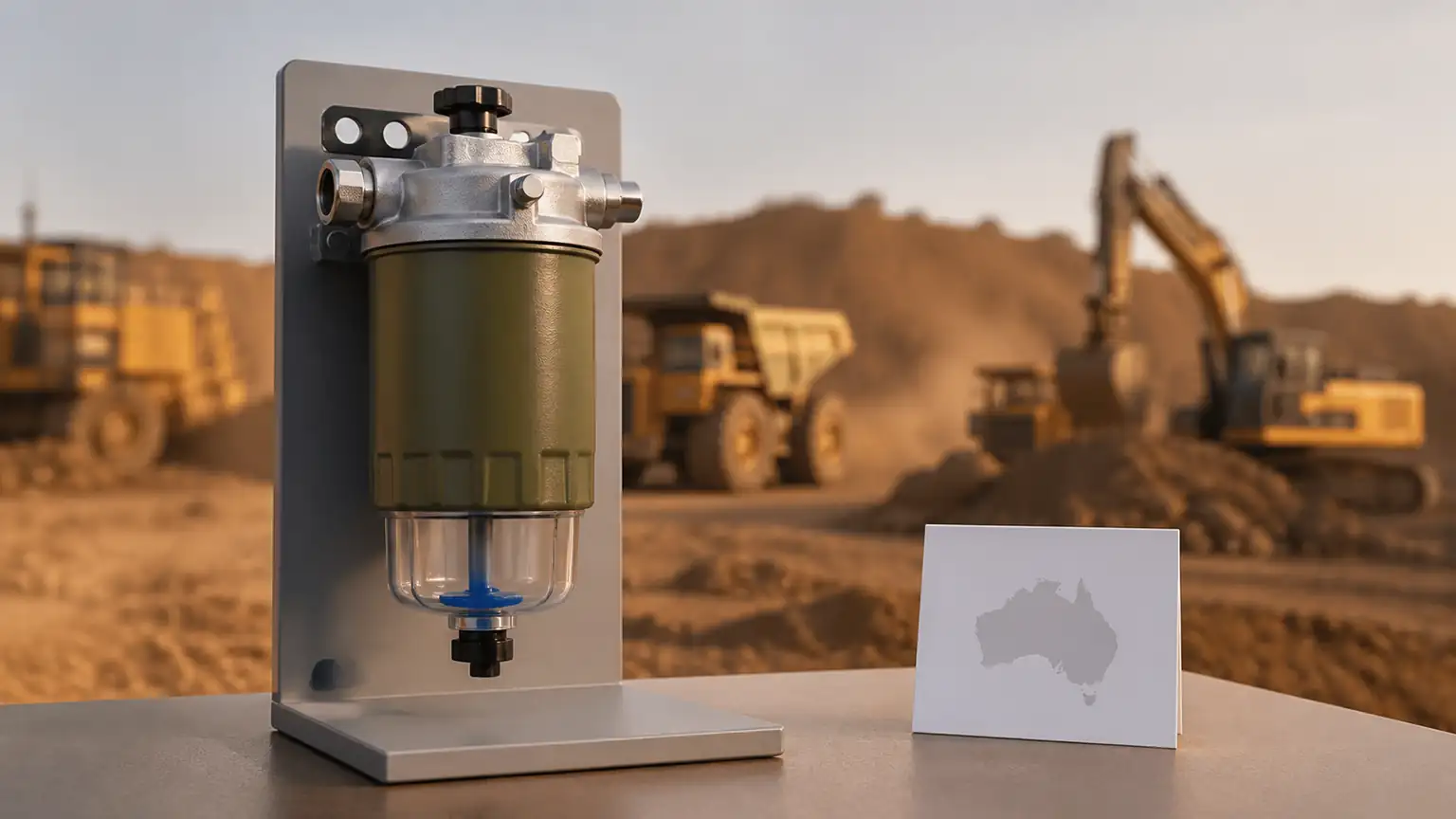
A heavy-duty fuel-filter purchase is a contamination-control decision, not a logo-selection exercise. Australia has visible commercial signals from WIX Filters Australia, Filter Technology Australia, Rockwell Technology, and Catamac across fleet, mining, transport, agricultural, and industrial filtration contexts. Those sources show a relevant market route, but they do not prove that every brand in this article is manufactured in Australia, stocked by a local seller, or correct for a particular engine.
This guide gives buyers 20 sourcing candidates for an Australia-focused fuel-filter RFQ. It is not a quality award and it does not claim local manufacture for every entry. Elecdurauto’s fuel-filter category can be used to compare part identity, water-separation needs, and service-kit requirements before a buyer accepts a substitute.
A primary filter, water separator, secondary element, spin-on unit, and bulk-fuel filtration unit do not serve the same purpose. Micron rating alone does not establish interchangeability. A buyer must check housing interface, seal profile, flow direction, water-drain arrangement, sensor provision, fuel compatibility, and the engine maker’s service interval. Replacing a fuel/water separator with a visually similar element can create an avoidable system risk.
The listed Australian commercial sources point to heavy-duty fleet, mining, transport, agriculture, and contamination-control applications. That makes the country suitable for a sourcing article, especially where a buyer needs service kits, distributed inventory, or a defined inspection procedure. It does not allow an article to infer brand approval, filtration performance, or inventory from a website page alone.
Connect filter evaluation to harsh-service fleet conditions while keeping the article procurement-focused.
The table combines Australian manufacturer or distributor routes with global filtration brands. Each is a possible RFQ path, not a claim that every candidate manufactures locally or offers every product through an Australian channel. Verify the exact part, its fitment evidence, and the source of supply before approving a purchase order.
No. | Candidate | Route to investigate | Critical filter-control question |
|---|---|---|---|
1 | WIX Filters Australia | Heavy-duty filtration brand route | Which fuel-filter or separator reference fits the required housing and service interval? |
2 | Filter Technology Australia | Australian filtration-system manufacturer and distributor route | Is the requirement an engine element, bulk-fuel treatment unit, or contamination-control system? |
3 | Rockwell Technology | Australian filtration distributor and custom-solution route | Can the supplier document the quoted brand, SKU, and equipment application? |
4 | Catamac | Australian fleet-filtration and service-kit route | Can the route provide an asset-specific kit and identified replacement intervals? |
5 | Donaldson | Global heavy-duty filtration brand route | What part-number and housing evidence supports the replacement? |
6 | Fleetguard | Heavy-duty engine-filtration brand route | Does the quote distinguish fuel filter from fuel/water separator function? |
7 | Baldwin Filters | Heavy-duty aftermarket filtration route | Can the seller supply a documented cross-reference and seal specification? |
8 | MANN-FILTER | Filtration brand route | What application and fuel-system configuration is covered by the offered SKU? |
9 | Sakura Filters | Aftermarket filtration route | Can product condition, application, and origin be identified for the batch? |
10 | HiFi Filter | Industrial and mobile-equipment filter route | Is the element intended for the correct fuel, water, and flow-duty requirement? |
11 | Filtrec | Filtration sourcing route | Does the unit’s media and seal construction match the approved reference? |
12 | Parker Racor | Fuel-filtration and water-separation route | Is the request for a replacement element or a complete separator assembly? |
13 | Caterpillar | Equipment-OE parts route | Can machine model and serial information confirm the correct filter family? |
14 | MAHLE | Aftermarket/OE-reference filter route | What direct fitment and service data supports the part number? |
15 | Hengst | Filtration brand route | Are water-management and filter-interface requirements fully matched? |
16 | Bosch | Fuel-system and filtration sourcing route | Does the supplier identify the exact system and installation requirement? |
17 | UFI Filters | Filtration manufacturer route | Can the seller provide technical data and source-channel traceability? |
18 | Ryco Filters | Australian filtration brand route | Is the proposed part engineered for the stated commercial or off-highway duty? |
19 | Luber-finer | Heavy-duty aftermarket filtration route | Can the reference be reconciled with the engine maker’s fuel-system specification? |
20 | Sogefi | Filtration brand route | What local or export channel will provide traceable product and warranty support? |
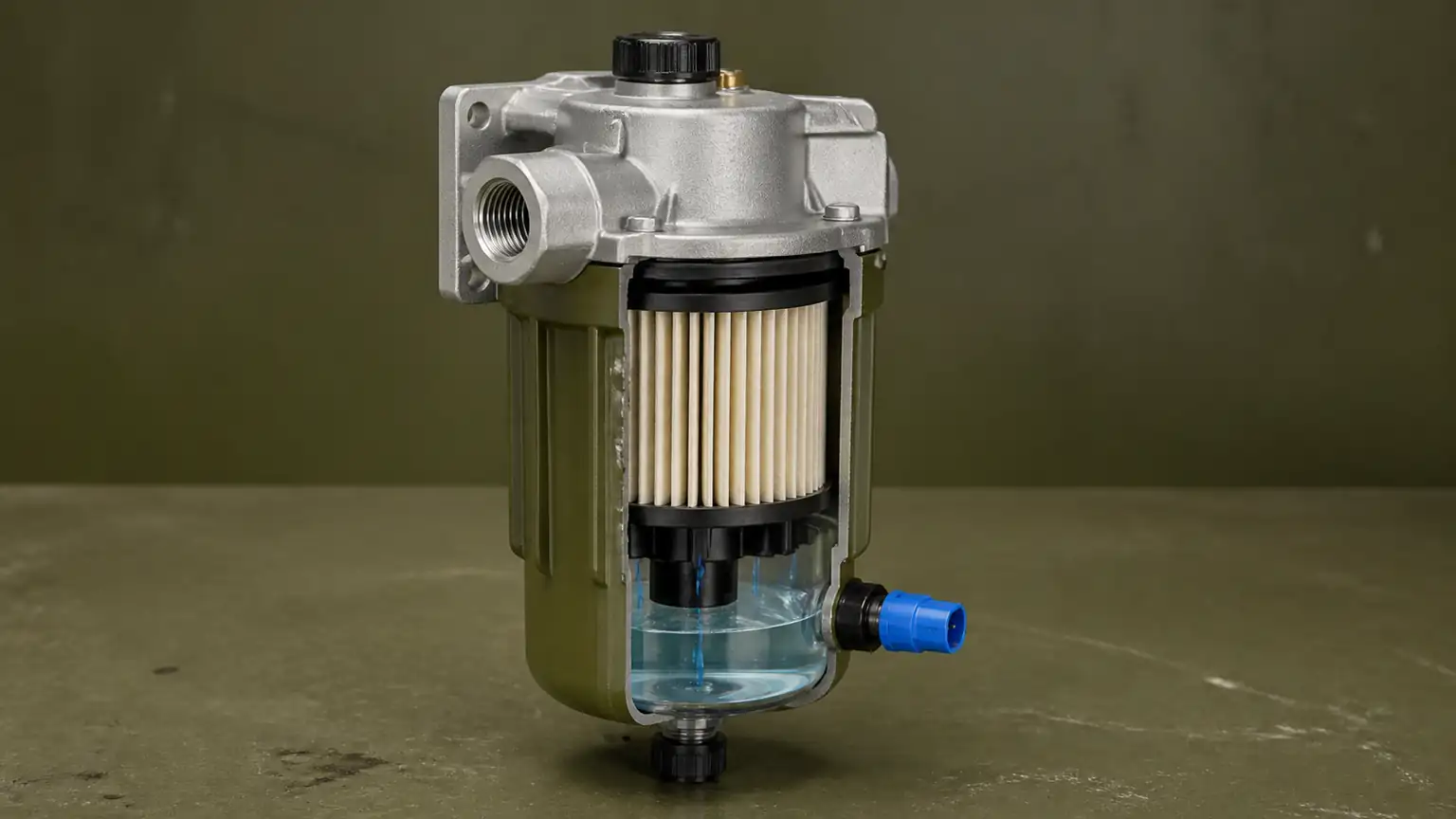
Explain media and water-collection functions using a photo-real component rather than a flat schematic.
Build an asset-level map before asking for a substitute. Identify the tank-side or primary stage, the water separator if fitted, the engine-side secondary stage, any lift-pump screen, and any bulk-fuel conditioning equipment. Note the part number, housing, drain arrangement, water-in-fuel sensor, heater provision, fuel type, and planned service interval. This prevents a buyer from purchasing a correct-looking component for the wrong stage.
Buyer control | Evidence to request | Reason for the control |
|---|---|---|
Application match | Engine or equipment reference, existing part number, housing and seal measurements | Confirms the element or assembly can be installed without forcing a fit. |
Functional role | Primary, secondary, water separator, bulk-fuel, or service-kit designation | Prevents a different filtration function from being substituted by appearance. |
Water handling | Drain arrangement, sensor interface, and separator requirements where applicable | Addresses water-management needs separately from particulate filtration. |
Traceability | SKU label, carton label, lot record, packing list, and source channel | Supports receiving control and protects against mixed or unlabeled stock. |
Field service | Recommended interval, stocking plan, kit contents, and warranty path | Helps a fleet avoid unplanned downtime and incomplete maintenance kits. |
Cross-reference data can narrow the shortlist, but it should be checked against the actual housing, sealing interface, flow direction, water-management features, and application. If the supplier cannot explain a conflict in these fields, retain the original approved reference and treat the proposed alternative as unqualified.
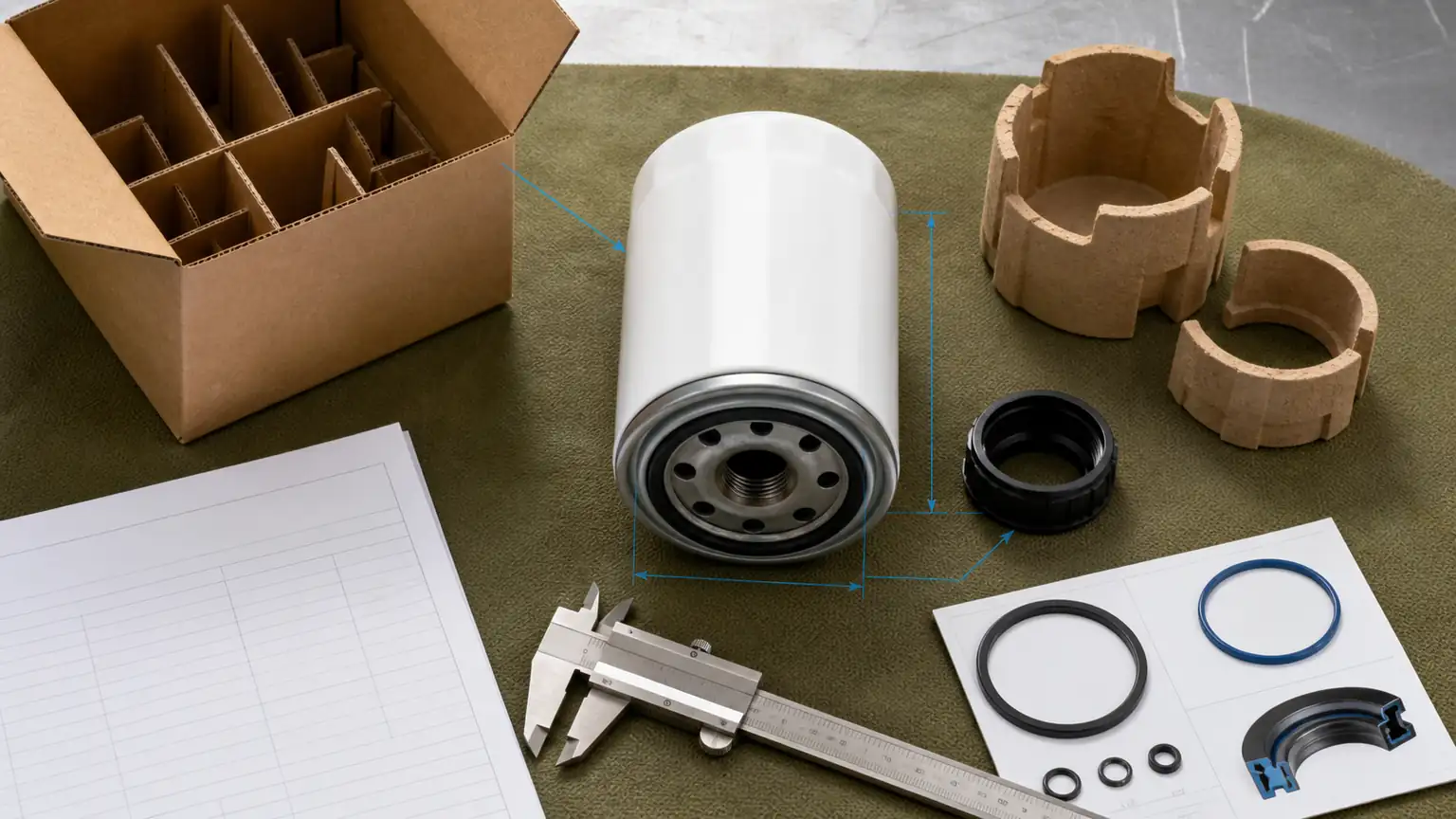
Show a sourcing team how to confirm the physical filter before releasing inventory.
Cartons should protect the sealing faces, drain fittings, sensors, and filter media from crushing or contamination. Keep labels readable and avoid storing loose elements where dust or moisture can affect them. For a service-kit order, verify that each kit has the correct number of elements, seals, drain parts, and identifiers before it is released to a workshop.
For a new supplier route, retain one approved sample and its documentary record. At goods receipt, compare the carton label, part label, dimensions, seal profile, thread or mounting interface, and accessories. If the filter includes a water-in-fuel or drain feature, confirm the external connection and operating arrangement rather than assuming it will match the removed part.
A fleet buyer may value service kits and warehouse coverage; a mining or industrial site may need bulk-fuel contamination control; an exporter may need a compact, traceable selection of individual elements. Compare candidates by their ability to provide the correct evidence for that operating model. The lowest quoted item price is not meaningful if it leaves the buyer without parts identification, delivery control, or a response path for a nonconforming lot.
For a controlled filtration comparison, send Elecdurauto the current filter numbers, equipment data, fuel-system role, annual usage, and delivery destination. The request should state whether water separation, a sensor interface, bulk-fuel treatment, or a complete service kit is required.
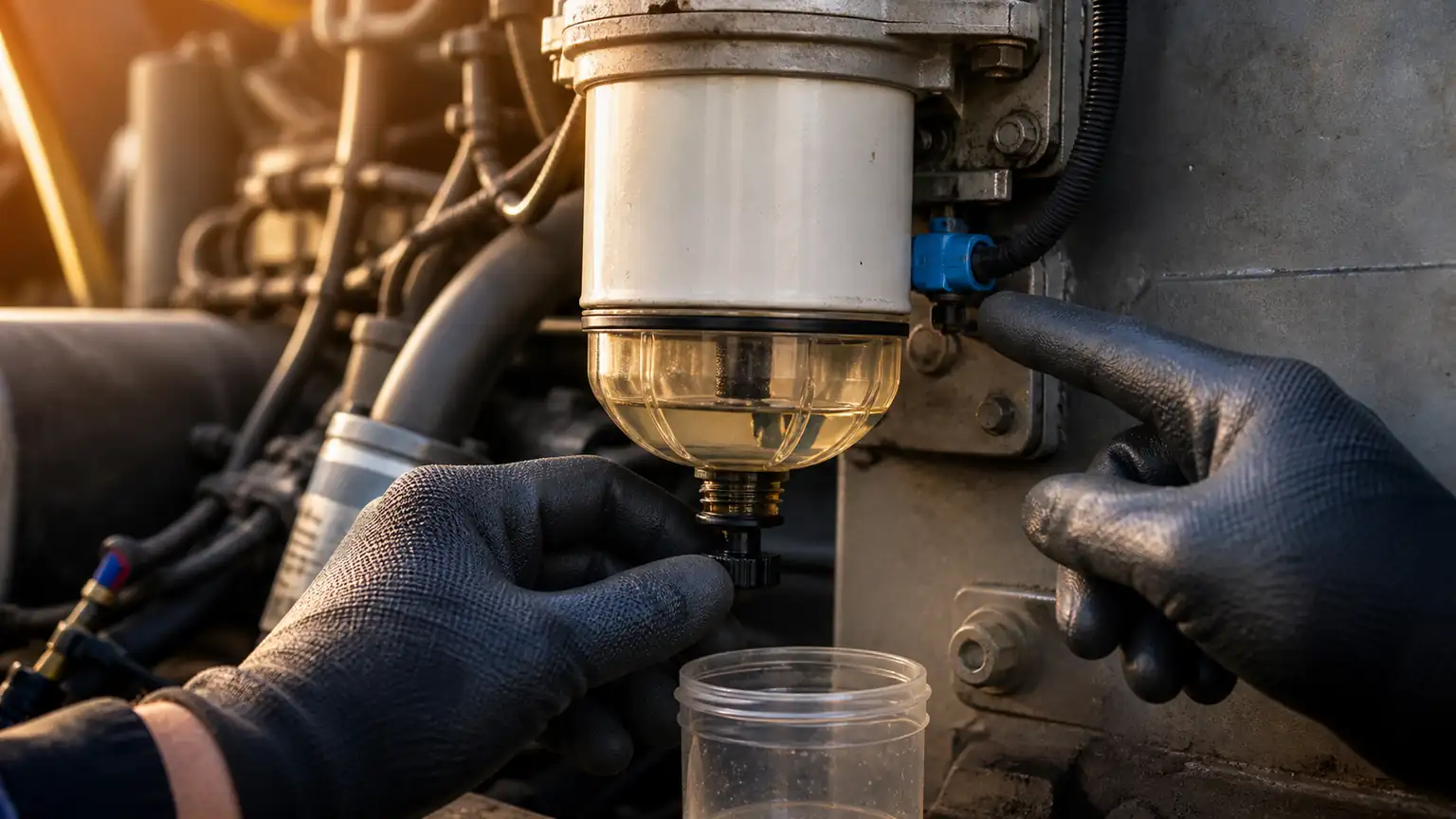
Give fleet maintenance buyers a concrete routine-inspection visual with one technical task.
A road fleet supplied from controlled retail or depot fuel does not face exactly the same risks as a remote mine, construction project, farm, marine operation, or generator site. Storage duration, water ingress, dust, tank condition, fuel transfer practices, and biodiesel handling can affect the filtration plan. The buyer does not need to claim that a certain source will solve every contamination problem; the practical task is to define the operating scenario so that the supplier can propose the correct component or system.
Describe where fuel is stored, whether bulk tanks are used, how fuel is transferred, whether water separation is already installed, and whether a water-in-fuel warning or drain procedure is part of the maintenance routine. If the system has repeated injector or fuel-pump concerns, record the known inspection findings rather than naming a filter as the assumed cause. That information creates a better technical inquiry and a more defensible maintenance decision.
An engine-mounted primary or secondary filter protects a specific fuel system. Bulk-fuel filtration or tank-polishing equipment serves a different control point. A buyer should not ask for a “fuel filter” without saying which level is required. The RFQ should identify whether it is for an engine element, a fuel/water separator assembly, a service kit, a bulk-tank process, or a combination of those controlled systems. Each can have different flow, connection, monitoring, and service requirements.
For a fleet or equipment program, list each asset group with the fuel-filter references, water separator parts, seals, drain items, sensor interfaces, and scheduled service interval. A service kit can reduce picking errors only when its contents are tied to a known application. The kit label should show the asset group or engine family, the individual part numbers, quantity, and any important installation note. Do not use a broad “truck fuel filter kit” label for equipment that contains different fuel-system revisions.
When a supplier proposes an alternative kit, compare every component line against the approved configuration. A kit may be commercially attractive but still be incomplete if it lacks a critical seal, water sensor provision, or related primary element. Keep the comparison in the purchase file so that future staff can see why the kit was accepted and which reference it replaced.
A filter substitute should not be released solely because its outer size resembles the removed part. Require an application cross-reference, housing-interface confirmation, seal information, stated filtration function, and water-management compatibility where applicable. If the seller supplies an engineering or catalog document, attach it to the approval. If a field trial is needed, make it a controlled trial on a defined asset group rather than a silent change across a fleet.
Use annual consumption, equipment criticality, lead time, and warehouse locations to determine which filter references deserve local stock. A remote site may need a deeper holding of common service items; a distributor may prefer a smaller range with a dependable replenishment route. Record the decision by part number. This makes inventory planning clear without assuming that every listed candidate can offer the same local availability.
At goods receipt, compare carton labels, product labels, thread or mounting interface, seal profile, drain arrangement, sensor connection, and any supplied accessories with the approved reference. Retain a sample with its product and packing records. If the item is a fuel/water separator, verify the configuration rather than assuming that every spin-on canister has the same water-management function. Any conflict should be held for review before the material reaches a workshop.
For fleet-maintenance kits, count the contents before issuing them. A missing O-ring, drain part, or secondary element can turn a routine maintenance job into an unplanned delay. The incoming audit should make it easy for a warehouse employee to distinguish a complete approved kit from a carton that contains only one of its components.
When an alternative reference is first installed, note the asset, existing part number, replacement part number, installation observations, and any issue that requires engineering review. Do not create a performance claim from one service event. The purpose of the record is to capture whether the proposed filter fits the approved system and whether there are any packaging, sealing, drain, or sensor-interface concerns that need to be resolved before wider purchasing.
Keep filters in their original clean cartons, protect sealing faces and drain fittings, and retain the visible lot or date information. Do not stack heavy parts on fragile filter elements or mix loose O-rings with unrelated references. For remote Australia operations and export consolidation alike, carton condition matters because crushed media, damaged threads, or missing seals may not be visible until the item is needed for service.
Use a simple quarantine process for opened, contaminated, damaged, or returned filters. A returned item may require inspection, supplier discussion, or disposal, but it should not be returned to saleable inventory without a documented decision. This protects both the customer and the distributor from an item whose history cannot be established.
Before ordering, agree on who reviews a mismatch, what photographs or labels are required, whether replacement stock can be released promptly, and how return freight or credit will be handled. Link any claim to the purchase order, carton label, product label, and the receiving inspection. That evidence allows a buyer to address a real nonconformance without overstating a product-performance conclusion.
A national fleet may prioritize asset-specific kits, local warehouse coverage, and predictable replenishment. A project buyer may need a short, controlled list for a defined machine population. An export purchaser may place more weight on consolidated packing, item-level labels, and the ability to provide source and origin information. The same brand name can be useful in each situation, but the acceptable supply route may be different. Score candidates against the operating objective rather than trying to declare one provider universally best.
The Australian sources in this article show that there are commercial filtration and fleet-maintenance routes worth investigating. They do not replace the evidence needed for a specific fuel-filter approval. The final purchase record should therefore contain both: a note on why the country route was researched and a separate technical file for the exact filter or service kit. Keeping these layers separate prevents a marketing statement about a market from being mistaken for proof of fitment, filtration function, or warranty coverage.
When the first order has been accepted, retain the exact part number, product condition, filter function, packing description, source channel, and approved application in the purchasing system. A later order should repeat that record rather than use a generic label such as “diesel fuel filter.” If the seller proposes a supersession or alternate source, open a controlled review. This protects the maintenance plan from a quiet change that could remove a drain, sensor interface, seal, or required service item.
WIX Filters Australia — public heavy-duty and fuel-filtration product context.
Filter Technology Australia — public Australian filtration-system and contamination-control context.
Rockwell Technology filters — public Australian filtering, mining, transport, and agricultural supply context.
Catamac filters — public heavy-duty fleet, fuel-filter, and service-kit context.
Editorial note: product availability, local manufacture, current authorization, filtration performance, fitment, and warranty terms must be verified directly before ordering.