ELECDURA NETWORK

Your Whole New Supply Chain For Heavy-Duty Parts
Whatsapp:
+86 18915027366
Phone:
+86 18915027366
Views: 0 Author: Site Editor Publish Time: 2026-08-26 Origin: Site
A diesel injector test report is valuable only when it can be tied to the exact injector, the exact test specification, and the buyer’s acceptance decision. A page of numbers without a reference, test-fluid condition, calibration context, or component identity cannot prove that a delivered injector is suitable for a particular heavy-duty engine. For B2B buyers, the report should function as part of the matching and incoming-inspection record, not as a marketing attachment.
Elecdurauto’s heavy-duty diesel fuel injector range is matched by OE number, injector code, engine model, connector, nozzle-side structure, and sample evidence. That same identity discipline should be applied to every test record. A report for a similar-looking injector, a different calibration family, or an untraceable sample is not an acceptance document for the ordered unit.
Place the report in the context of an actual calibrated bench, rather than as a standalone spreadsheet.
Start with the information that establishes context. Confirm the customer or purchase order reference, injector manufacturer or reference family where provided, exact part number, serial or batch marking if available, date, test bench identification, software or database version if disclosed, operator, and report version. A report should also identify the approved test plan or reference data used for comparison.
Compare the report reference with the product label, carton label, OE or cross-reference information, connector form, and photographs of the body and nozzle side. Where a batch contains multiple units, record which report belongs to which physical injector. A barcode, serial number, bench-generated identifier, or controlled internal tag can support this link when it is applied consistently.
Diesel injectors may share a partial reference while differing in calibration, coding, electrical connector, nozzle configuration, or engine application. An OE number, injector code, engine model, and sample comparison are stronger together than any one identifier alone. If the identity remains uncertain, resolve it before relying on delivered-quantity or return-flow data.
Show the link between a report line item and the physical measurement it represents.
Test benches can present numerical and graphical results at defined operating points. The meaning of a result depends on the specified pressure, command, duration, back-pressure condition, test fluid, temperature, and reference file used by that bench. A value should never be evaluated against a generic internet number.
Return flow represents fuel that is routed through the injector’s return path under the stated test condition. In a report, it may be presented as a quantity, a graph, or a pass/fail comparison against the selected reference. Its interpretation depends on the exact injector family and test point. A result that differs from the expected range can be important, but it should be reviewed with the approved specification and the component’s identity rather than treated as a stand-alone verdict.
Delivered quantity describes the measured output for a defined operating point. A complete report may show several points because a common-rail injector behaves differently at different pressure and command conditions. The buyer should verify that the point names, units, and tolerances come from the correct reference procedure. Do not compare a value from one machine, software data set, or operating condition with a value from an unrelated report.
Some injector reports include electrical checks, code-related information, response indicators, or actuator-specific data. Those fields must be interpreted using the relevant manufacturer procedure and the bench’s authorised database. A missing field does not automatically mean the injector failed; it may mean the selected test plan did not require that measurement. Conversely, a printed pass label does not prove that the correct plan was selected.
The report should preserve both the raw bench result and the acceptance decision. For example, a buyer may record “result reviewed against approved reference; identity confirmed; accepted for the stated order” or “result held pending identity review.” That is more defensible than editing a measurement, crossing out a field, or using an unexplained handwritten status.
Acceptance limits must come from the correct injector and test specification. They may be established by the product manufacturer, an authorised test procedure, an approved customer program, or a documented quality agreement. The purchase order should identify who owns the reference data and how an exception is escalated. Do not create a universal return-flow, delivered-quantity, or response limit for all diesel injectors.
A practical matrix can show the report field, applicable test point, reference source, allowed result format, reviewer, and decision. It should include an explicit hold path for incomplete identity, missing reference data, damaged packaging, incomplete report, or a result outside the approved range. This prevents commercial pressure from turning an unresolved measurement into a silent acceptance.
A report for one sample does not automatically certify every injector in a shipment. Decide in advance whether the requirement applies to every unit, a statistically defined sample, a first article, or a periodic verification. Record the lot size, selected sample identifiers, inspection method, and scope of the report. This keeps the commercial agreement aligned with what was actually tested.
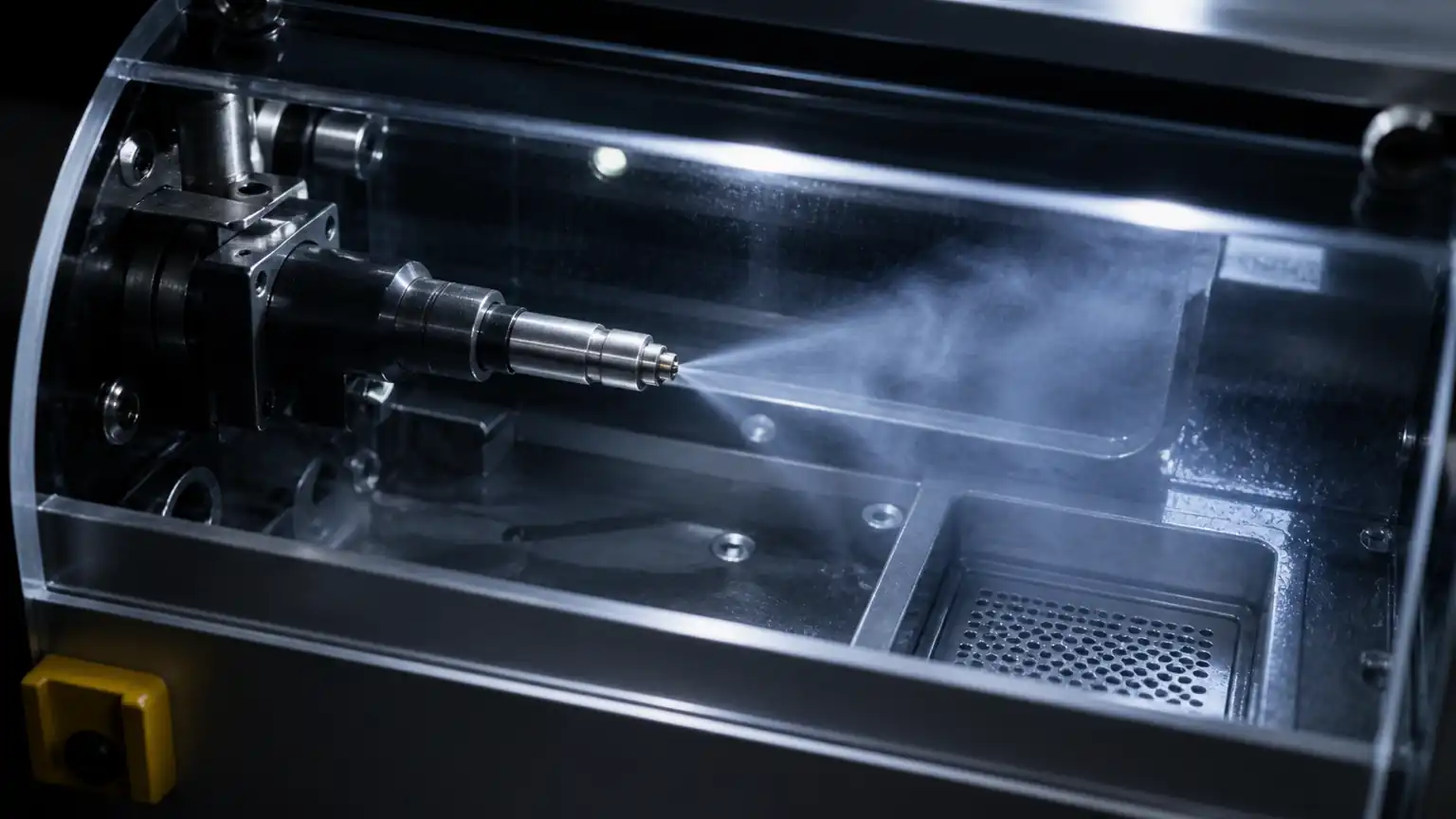
Explain that visible spray condition is one controlled check, not proof of full injector performance.
Handling can break traceability after a good test. Use a controlled sequence: identify the injector, record the bench result, protect critical surfaces and connectors, apply the approved label or record link, package the unit, and confirm the carton marking. If an injector is moved to a different carton or mixed with another batch, update the record immediately.
At incoming inspection, compare the received label, connector, body, nozzle side, sealing areas, protective caps, and packaging condition with the order and report. Look for transit damage, missing protective components, unsealed packaging, or a label that cannot be linked to the test record. A perfect report attached to the wrong physical part has no acceptance value.
Some distributors need neutral packaging, private labels, barcode labels, carton marks, or a specific evidence pack. State those requirements in the inquiry and obtain confirmation for the exact program. Do not assume that a generic test bench report demonstrates every customer-specific inspection, coding, or packaging requirement.
Before a quotation or purchase decision, provide the OE number or injector reference, engine model, vehicle or equipment application, connector and nozzle photographs, expected quantity, target market, packaging requirements, and desired inspection evidence. This supports the correct component match and identifies whether a test-report request is technically defined.
For an evidence-led injector sourcing discussion, use the Elecdurauto injector quotation contact page. Separate confirmed facts from open questions, such as an unreadable label or an unknown calibration code. That gives both buyer and supplier a cleaner basis for deciding whether an OE-grade aftermarket replacement is appropriate for the requested application.
Holding a unit is not a failed purchase decision; it is a quality-control decision that prevents a wrong part from entering inventory. A hold can be released when the correct reference, test method, identity link, or customer acceptance rule is confirmed. For fleets and distributors, that discipline is less expensive than processing an avoidable engine-performance complaint.
It is tempting to place two injector reports side by side and compare the largest or smallest number. That comparison is valid only when the injector identity, test plan, commanded condition, pressure, fluid, temperature, units, and reference version are compatible. A result can look different because the operating point is different, not because the injector is worse.
Where the testing program uses a defined bench database or authorised reference file, record the version or identifier that appears on the report. If the program changes its specification, identify the change and avoid comparing pre-change results with post-change decisions without a documented bridge. This is particularly important for recurring orders, mixed engine platforms, and injectors that require code-specific handling.
Before treating a value as an exception, confirm the unit shown, the reported quantity basis, and whether the displayed field is a target, an actual measurement, a deviation, or a graphical status. If the report uses abbreviated field names, ask the testing authority or approved procedure for clarification. Guessing an abbreviation can create a false rejection or a false release.
An exception note should state what is missing or different without deciding the root cause too early. For example: “Return-flow field differs from approved reference at the named test point; injector and report held for technical review.” This wording protects the evidence and avoids an unsupported claim that the injector is defective before the correct review is complete.
Different buyers need different evidence. A fleet may require a report tied to each injector in a critical repair. A distributor may define first-article approval plus lot sampling. A private-label program may also require carton artwork, barcode checks, and a shipment-level evidence pack. The acceptance matrix should state the scope rather than using a single word such as “tested.”
List who can approve the reference data, review an exception, release a hold, and communicate an approved substitution. If a buyer’s technical team owns the engine calibration requirement, the purchasing team should not approve an unverified substitute to meet a shipment date. Clear ownership keeps commercial pressure from bypassing the required technical decision.
When a sampling plan is used, identify the lot, quantity, selected units, selection method, report links, and scope of the conclusion. Do not label the entire lot as “passed” unless the defined sampling rule supports that statement. If a unit is re-tested, retain both records and explain why the second test was requested.
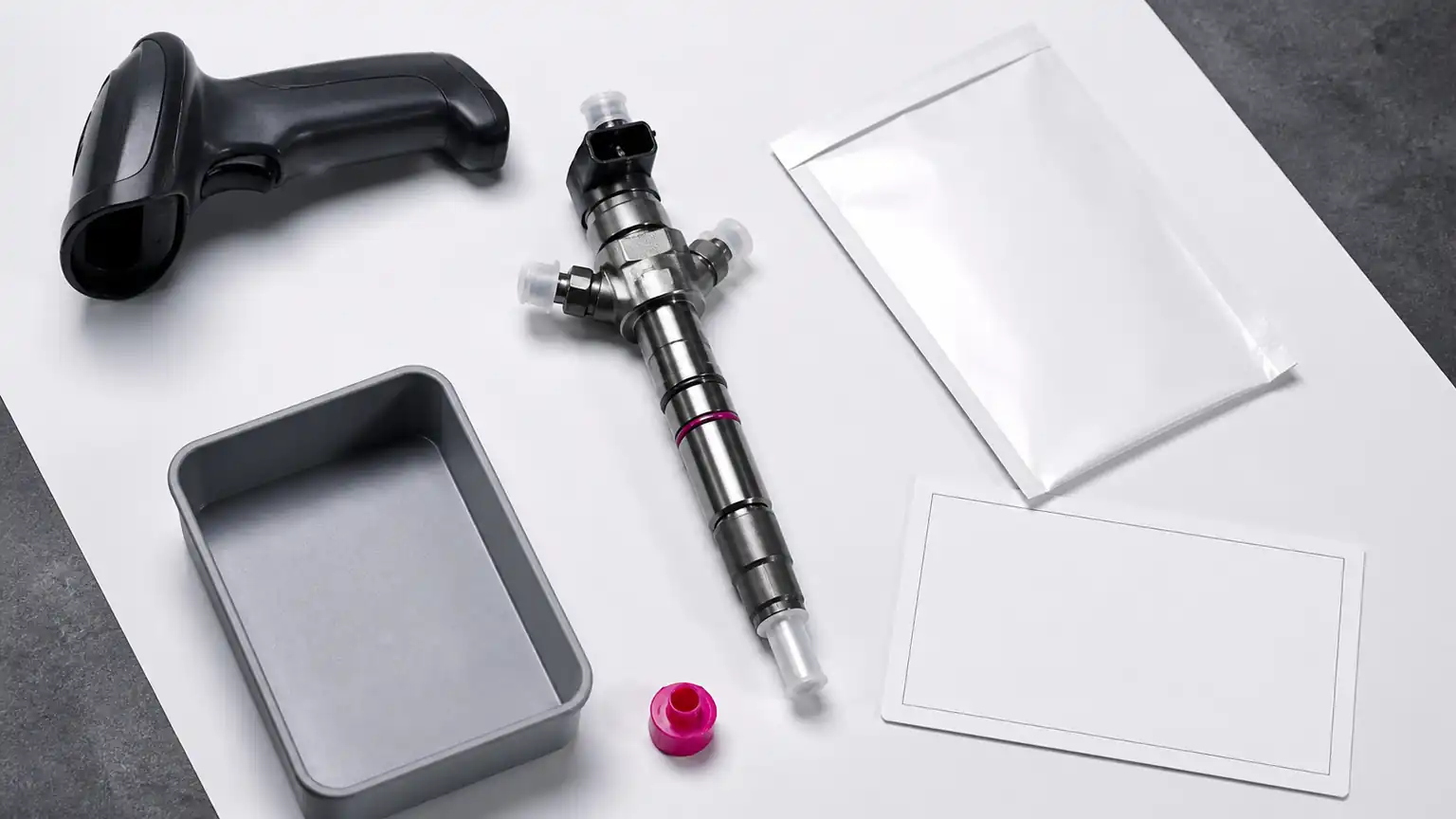
Show the documentation bundle a distributor or fleet buyer should request with a tested injector.
After report review, protect nozzles, connectors, and sealing surfaces using the approved packaging method. Confirm that each unit’s label and carton mark remain linked to the report or approved lot record. Packaging is not an afterthought: a damaged connector, missing cap, or mixed carton can invalidate the traceability that made the test result valuable.
For an export or distributor program, also record the requested market, language requirements, neutral or private-label status, and carton quantity. These facts should be attached to the release decision rather than collected later from memory. They help a receiving team identify the intended order without relying on visual similarity alone.
Over time, a buyer can group accepted and held reports by injector family, application, source lot, and type of exception. The purpose is not to invent a new technical specification from a spreadsheet. It is to identify whether the ordering information, test-reference control, packaging discipline, or supplier communication needs improvement before the next shipment.
That feedback loop makes a test report more than a one-time document. It becomes controlled evidence that can improve matching accuracy, incoming inspection, and the clarity of future quotation requests.
A technically defined request tells the supplier which injector family is involved, how the injector will be identified, what test evidence is needed, who provides the reference procedure, whether the report must be unit-specific or lot-specific, and how exceptions will be handled. If the buyer cannot provide the reference data, the inquiry should say so rather than implying that any printed bench result will satisfy the program.
Agree whether the report will be a controlled PDF, a secure digital record, a test-bench printout, or another approved format. Include the document language, file naming, required photos, and the link between the report and the packaging label. A clean handover format allows the receiving team to review the evidence without rebuilding the chain from email attachments and cartons.
Where an injector system uses a code or calibration-related identifier, record whether that code is required for the intended application and how it will be handled. Do not assume that an injector test result confirms coding compatibility, and do not assume a code proves the rest of the test result. Each requirement should have its own source, evidence, and approval step.
If the report lacks a link to the physical injector, a required test point, an approved reference, or a readable decision, keep the shipment or affected units on hold until the responsible party resolves it. A documented hold protects both sides of the transaction and is preferable to accepting a file that cannot be audited later.
Injector acceptance starts with application control. A report may be technically complete for a named injector reference but still be irrelevant if the receiving team has not confirmed the engine, calibration family, connector, and OE matching information. Link the report review to the approved application record so that bench evidence and component matching remain one decision rather than two disconnected files.
For engines that use multiple injector variants across years or emissions configurations, identify the exact program boundary in the purchase record. Avoid using a broad engine family name as the only traceability field. An engine family can cover several injector calibrations, and a report cannot resolve that ambiguity unless the component reference and intended application have already been verified.
Store accepted reports in a way that links them to the order, lot, physical identifier, and receiving outcome. If a later field complaint arises, the reviewer should be able to retrieve the original report without relying on an employee’s mailbox or a carton that may no longer be present. Retention also helps identify whether a later order used the same reference data or a different approved test plan.
A supplier may be able to confirm that a report belongs to a supplied injector and was produced under the stated test process. That does not automatically guarantee engine performance, vehicle installation quality, fuel cleanliness, coding outcome, or field durability. State the scope of the evidence accurately in quotation and inspection documents so that commercial claims do not exceed what the report can demonstrate.
This discipline protects the buyer as well as the supplier. It encourages a thorough application match before release, provides a defensible hold path when documents conflict, and reduces the chance that an unrelated field issue is later assigned to a bench result without technical review.
Return-flow and delivered-quantity results are meaningful only in their specified test conditions. A heavy-duty buyer should read the report header, verify the injector identity, confirm the approved reference, define acceptance before release, and preserve traceability through packaging. Used this way, a test report strengthens B2B acceptance control without pretending to replace the manufacturer’s technical procedure.