ELECDURA NETWORK

Your Whole New Supply Chain For Heavy-Duty Parts
Whatsapp:
+86 18915027366
Phone:
+86 18915027366
Views: 0 Author: Site Editor Publish Time: 2026-09-07 Origin: Site
There is no defensible universal mileage or hour interval for a heavy-duty starter. Wear depends on starts per shift, crank duration, failed-start repetition, temperature, contamination, battery state, cable loss, engine condition and operator behavior. A fleet should build a duty-cycle record, separate vehicle causes from starter causes and use failure history to decide inspections, stocked spares and replacement triggers.
This planning guide is for fleets that want a defensible starter stocking and replacement policy rather than a universal mileage rule. It links operating exposure, electrical condition, confirmed failure modes, lead time and downtime consequence so high-cycle delivery vehicles, seasonal equipment and standby units are not forced into one interval.
Mileage is only an indirect exposure measure. Record starts per shift, representative crank duration, repeat attempts, cold and heat-soak events, engine start quality and battery state. A vehicle with short urban cycles may accumulate far more solenoid and drive engagements than a long-haul vehicle at the same distance, while a standby engine may face low frequency but very high consequence.
Separate starter wear from conditions that make the starter work abnormally. Cable voltage loss, weak batteries, poor grounds, control-circuit delay, engine mechanical resistance, fuel or starting-system faults and operator behavior can lengthen cranking or cause repeated engagement. Replacing starters on a calendar will not correct those influences and can make normal units look short-lived.
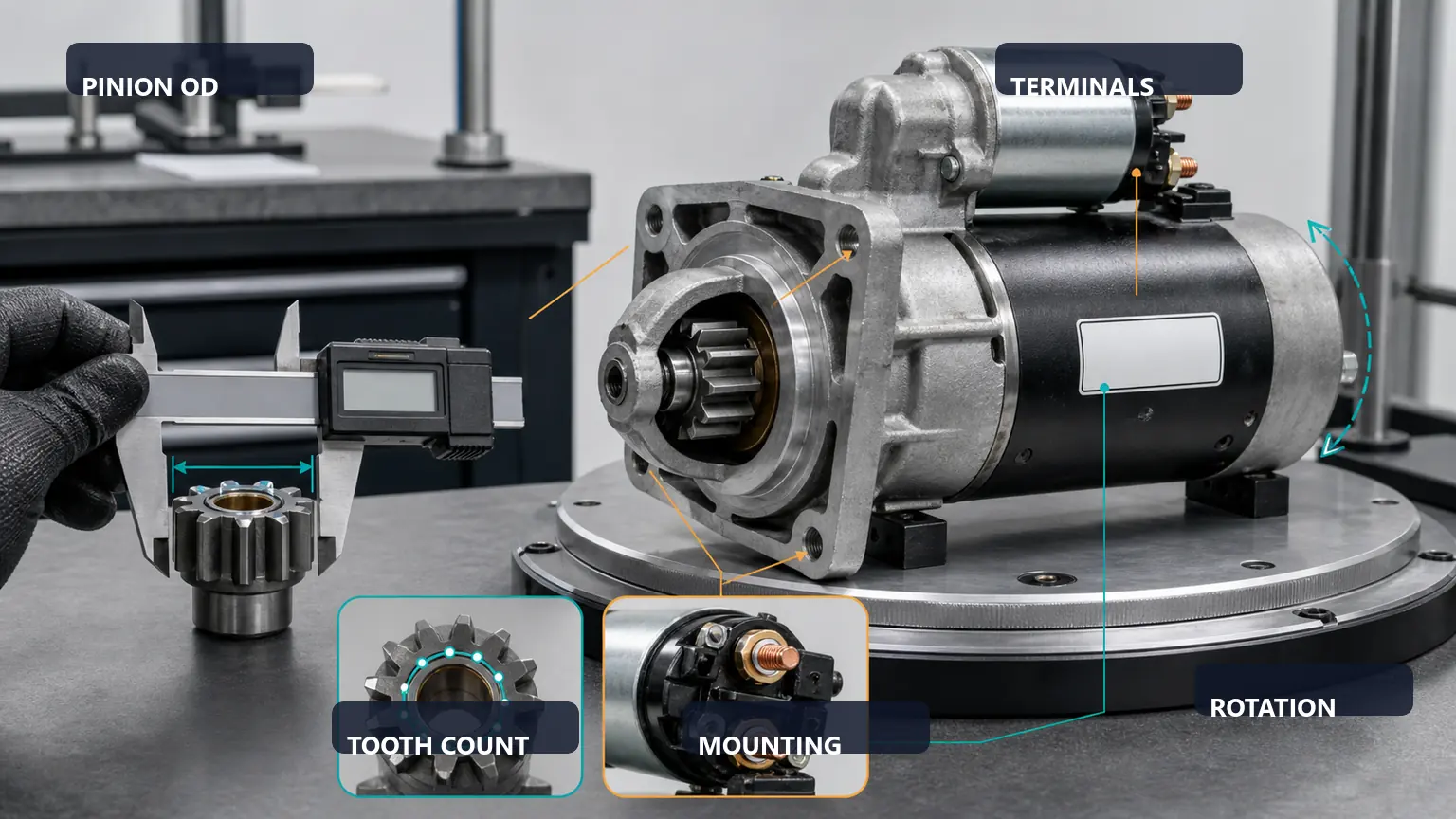
Starter reference, application and installation interfaces
Starts per day or shift and representative crank duration
Cold-start, heat-soak and restart patterns
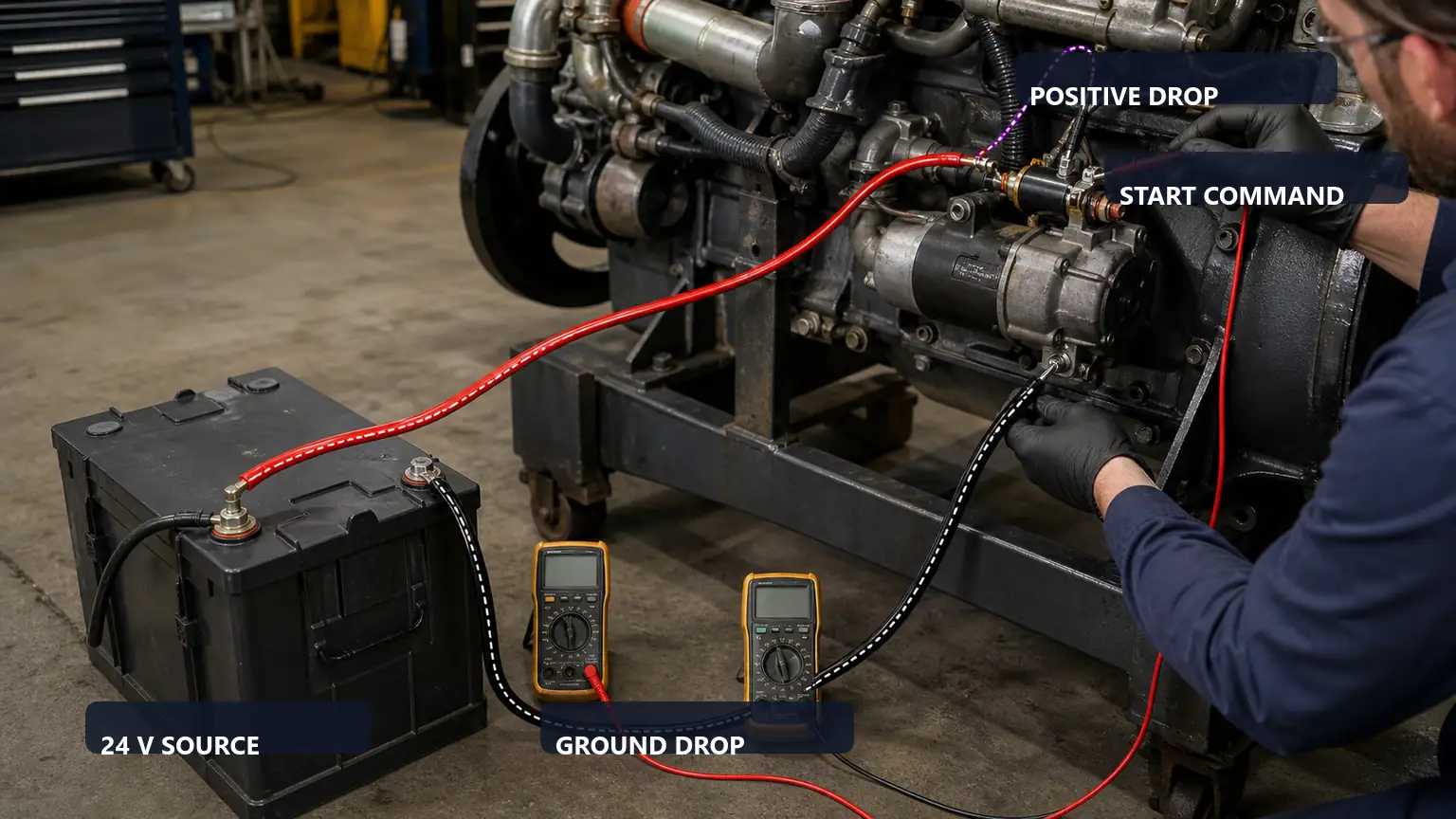
Battery, cable and ground condition with voltage-drop evidence
Removal reason, failure findings, repair scope and downtime
Preserve the installed starter identity and its relationship to the vehicle before cleaning, dismantling or adjustment. Record the operating condition, instrument, datum and procedure behind each observation. That makes the supplier comparison repeatable and prevents an isolated number or photograph from being treated as universal approval.
Record the complete installed-unit and system evidence before choosing a starter replacement. The staged image supplies context, not application-specific limits.
Observed evidence | Possible interpretation | Decision-changing check |
|---|---|---|
Frequent short delivery cycles | High engagement count and heat accumulation | Track starts, cooldown and control behavior |
Seasonal cold operation | Longer crank demand and battery stress | Test battery, cable loss and cold procedure |
Construction or dusty duty | Contamination, vibration and intermittent high load | Inspect sealing, mounting and terminals |
Standby equipment | Low use but long idle storage and critical starts | Exercise, preserve and hold verified spare coverage |
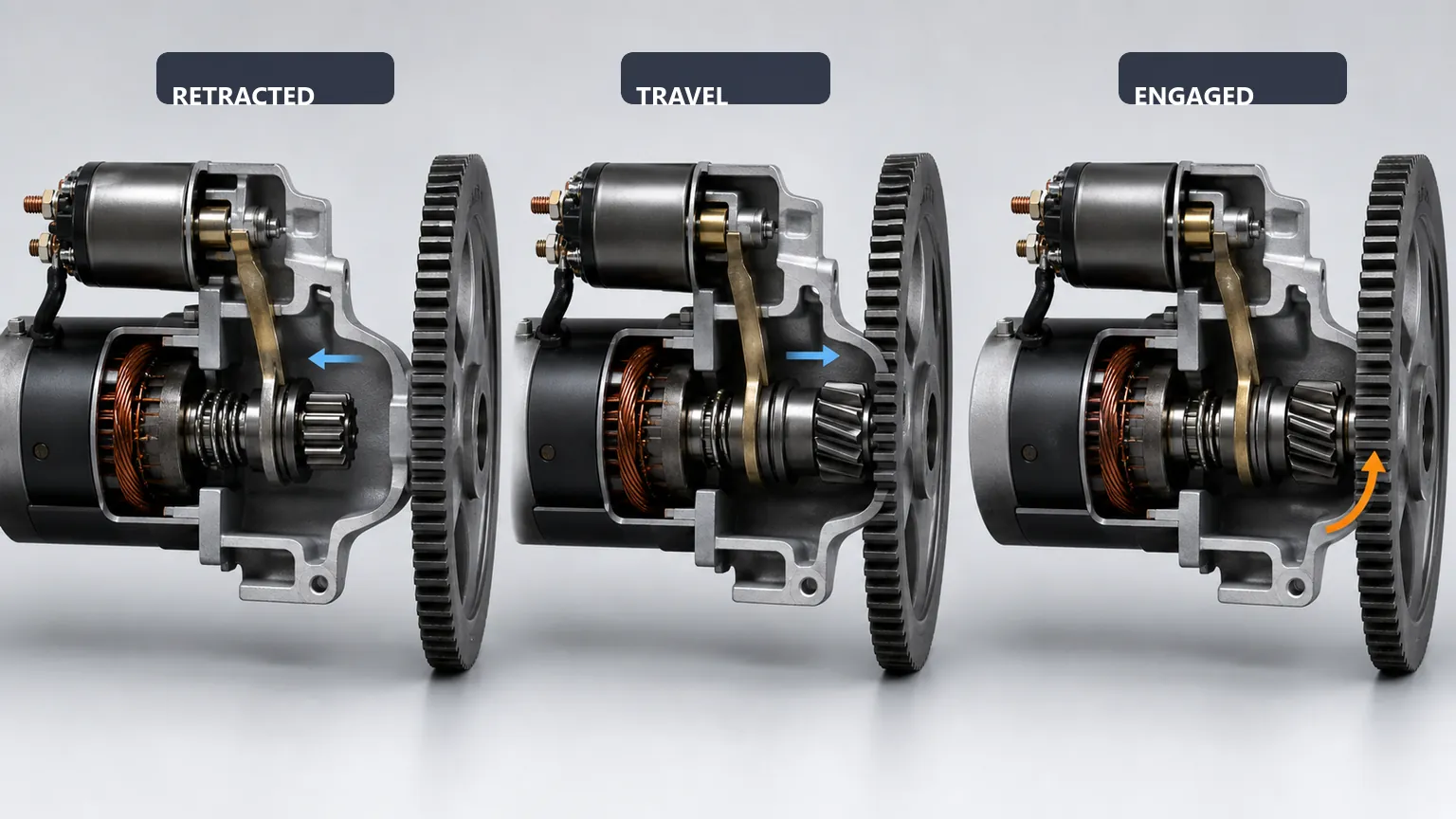
For each removal, preserve the complaint, operating state, voltage-drop or current evidence required by the procedure, installed reference, service age and teardown finding where available. Classify brush wear, solenoid contact, drive engagement, overrunning clutch, bearing or bushing, armature, field, contamination, terminal and no-fault-found outcomes separately.
Trend removals by vehicle group and duty cycle, not only by starter part number. A rising no-fault-found rate points to diagnostic or system problems; repeated drive damage may direct attention to ring gear, mounting or engagement timing; thermal or contamination patterns may require installation and shielding review. The confirmed pattern decides which inspection or intervention is worth standardizing.
Count actual starts instead of estimating from mileage alone.
Record crank duration and repeated attempts that exceed the approved duty cycle.
Correct battery and cable losses before using starter removals as life data.
Classify failure mode so brushes, solenoid, drive and complete-unit faults are not combined.
Set spare coverage from lead time and operational consequence, not only failure count.
Use the approved procedure and record the actual condition; appearance by itself is not a pass or fail result for heavy duty starter replacement duty cycle.
Use failure distribution, supplier lead time, fleet size, commonality and downtime cost to set the spare level. Critical or remote equipment may justify a verified spare even with few annual failures, while a common local vehicle with same-day supply may not. Keep new, remanufactured and repaired unit performance distinct so the purchasing comparison remains meaningful.
A preventive replacement trigger should state the target population, evidence threshold and exception path. Examples include a defined failure-rate change within a matched duty group, a known design campaign, or inspection evidence near an approved limit. Review the trigger after each cycle. If the removed units repeatedly pass, the policy is consuming serviceable inventory rather than controlling risk.
Send the same revision-controlled packet to every supplier. Require a complete maker reference, condition, application basis, included hardware, specific heavy duty starter replacement duty cycle evidence, traceability, packaging, lead time, warranty and return route. Ask the seller to mark fields it could not verify instead of filling them with a generic direct-replacement claim.
RFQ field | Evidence that can be audited | Reason to hold |
|---|---|---|
Identity | Maker, complete reference, label and proposed condition | Truncated, relabeled or mixed identity |
Application | Vehicle or equipment record plus interface comparison | Visual similarity or unsourced cross-reference |
Functional basis | Named procedure, conditions, actual results and limits | Tested or calibrated without a record |
Commercial scope | Included parts, packaging, warranty and return terms | Condition, core or fulfilment route unclear |
This method does not predict the exact life of an individual starter and does not replace a manufacturer campaign, mandatory inspection or application-specific cranking limit. Low sample sizes and changes in batteries, engines, routes or suppliers can distort a trend, so record those changes before attributing improvement or decline to the starter alone.
Approve one identified sample revision before scaling the order. At receipt, reconcile the package, label, starter, report and included parts; inspect protection, contamination, corrosion, impact and mixed-lot risk. Quarantine any mismatch. Installation release must correct the confirmed root cause and reproduce the original operating condition under the applicable service procedure.
Connect the exact sample or production lot to the approved application packet and post-install result.
Use the related Elecdura technical guide and Elecdura product category to organize the evidence before contacting Elecdura. For repeat orders, compare the production lot with the approved sample and require notice before a change to maker, reference, interface, test method, label, packaging or supplied hardware.
No. Duty cycle and system condition can differ substantially across vehicles. Record the applicable identity, procedure and result before changing the purchase or repair decision; the observation alone cannot prove every related interface or system is acceptable.
No. It is one exposure measure and must be combined with crank duration, temperature and fault history. Record the applicable identity, procedure and result before changing the purchase or repair decision; the observation alone cannot prove every related interface or system is acceptable.
Not necessarily. Compare planned labor and parts with failure consequence and the quality of diagnostic data. Record the applicable identity, procedure and result before changing the purchase or repair decision; the observation alone cannot prove every related interface or system is acceptable.
Keep them as a separate failure category and review the original voltage, control, battery, ground and engine evidence. A successful bench run may not reproduce heat soak or an intermittent vehicle condition, but it does challenge an automatic starter-failure label and should trigger a better capture procedure.
It may be, if the condition, application, rebuild scope, test method, traceability, warranty and storage controls meet the fleet requirement. Compare its own field results rather than combining it with new units. A low purchase price does not establish equivalent downtime risk or shelf readiness.
A fleet starter policy should respond to measured start exposure, system health, confirmed failure modes and operational consequence. That framework supports different actions for high-cycle, seasonal and standby assets, while a universal mileage interval hides the very conditions that determine whether preventive replacement and stocked spares add value.