ELECDURA NETWORK

Your Whole New Supply Chain For Heavy-Duty Parts
Whatsapp:
+86 18915027366
Phone:
+86 18915027366
Views: 0 Author: Site Editor Publish Time: 2026-08-26 Origin: Site
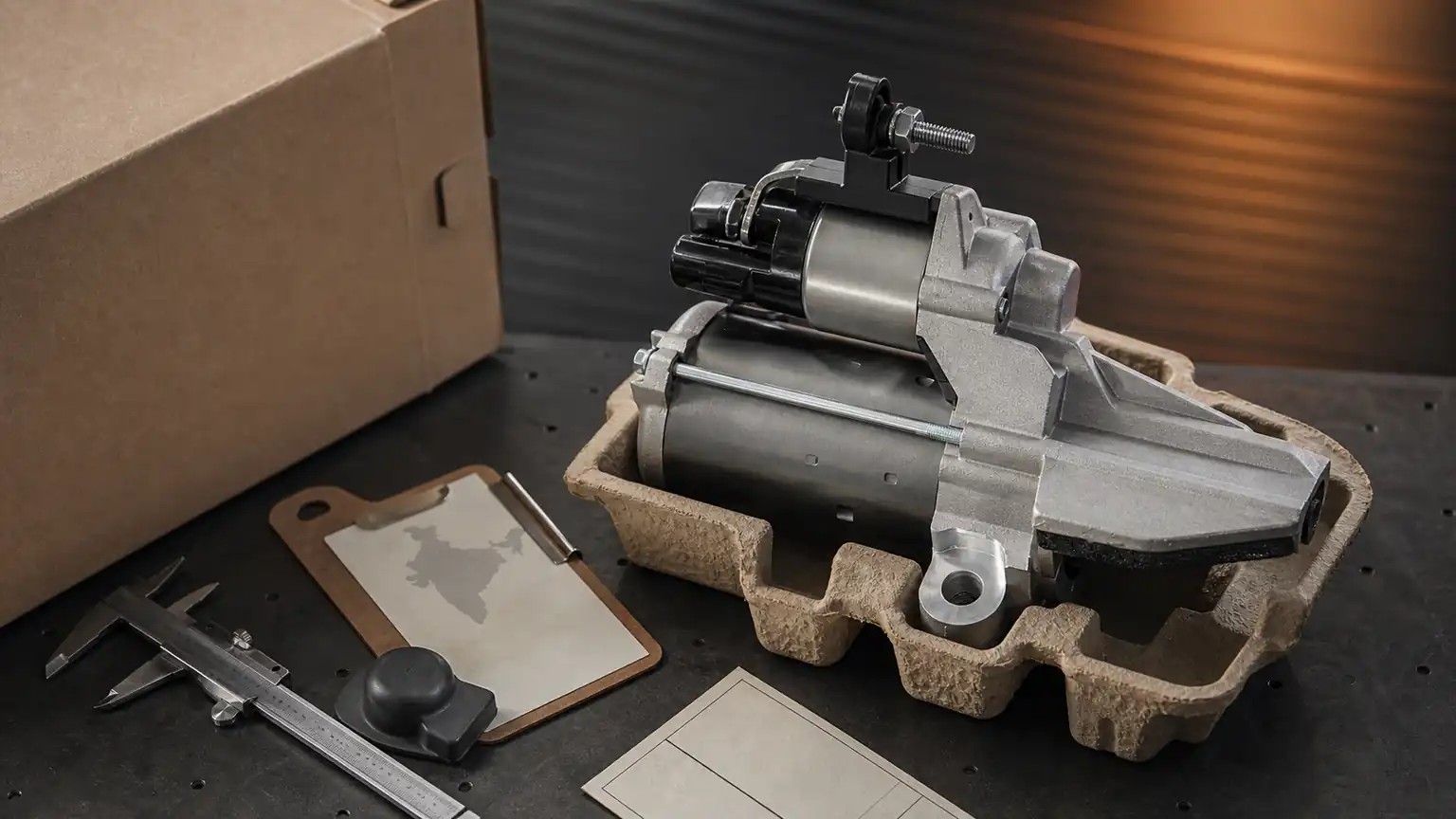
India is a useful market to screen when a buyer needs a dependable route for heavy-duty starter motors, but the phrase “manufacturer in India” can be misleading. A truck, generator-set, construction-equipment, or mining-equipment starter may be designed in one country, assembled in another, and supplied through a local distributor. This guide therefore ranks 20 sourcing candidates for an RFQ process; it is not a quality award and it does not claim that every company below manufactures starters locally.
For buyers comparing an OE-reference replacement, the first practical step is to lock the technical identity before discussing price. Elecdurauto’s heavy-duty starter motor range can be used as a neutral comparison point for voltage, mounting, drive, and application data while you assemble the supplier brief.
Public information from AutoStart India, New Indo Trading Company, and an ExportersIndia listing provides evidence that India has commercial activity around auto-electrical and heavy-duty starter products. Those pages are useful starting signals, not proof of current authorization, inventory, origin, or suitability for a particular engine. Each buyer should independently confirm the legal selling entity, manufacturer identity, and territory rights before placing an order.
A country-focused shortlist prevents a global brand name from becoming a substitute for sourcing control. It asks a different question: which routes could provide a traceable heavy-duty starter for this application, with a test record, a packing method, and a workable warranty process? That is a more useful question for a distributor planning stock, a fleet buyer replacing a failed unit, or an export purchaser building a mixed container.
Frame the page as a procurement audit rather than an unsupported manufacturer-ranking graphic.
The candidates below are ordered as an initial procurement screen, not as a performance ranking. “Route to investigate” identifies the role that should be verified in the RFQ. A global brand is included only as a possible supply route; it should not be read as a claim of local manufacturing or present Indian authorization.
No. | Candidate | Route to investigate | First verification question |
|---|---|---|---|
1 | AutoStart India | Indian auto-electrical manufacturer/exporter route | Which heavy-duty starter assemblies match the required voltage and mounting? |
2 | New Indo Trading Company | Indian heavy-duty electrical distributor route | Can it document the current brand authorization and the exact part-number chain? |
3 | Delco Remy | Heavy-duty starter brand through an approved route | Which India-based source can supply the stated OE reference with traceability? |
4 | Lucas TVS | Indian automotive-electrical sourcing candidate | Is the offered unit suitable for the required commercial or off-highway duty cycle? |
5 | Bosch | Global electrical-system brand route | Can the supplier provide a valid cross-reference and origin declaration? |
6 | DENSO | Global OE/aftermarket electrical route | Does the quote identify the complete motor rather than a repair component? |
7 | Mitsubishi Electric | Global rotating-electrical brand route | What are the pinion, flange, and terminal specifications for the offered unit? |
8 | Hitachi Astemo | Global electrical-system sourcing route | Can application data be tied to engine, flywheel, and ring-gear information? |
9 | MAHLE | Aftermarket/OE-reference procurement route | Is the unit new, remanufactured, or an aftermarket equivalent? |
10 | Prestolite Electric | Heavy-duty rotating-electrical manufacturer route | What output, duty, and environmental data support the application? |
11 | Leece-Neville Heavy Duty Systems | Heavy-duty electrical brand route | Can the seller identify the authorized channel for the quoted part number? |
12 | SEG Automotive | Starting-system manufacturer route | Does the source provide a documentable OE-number cross-reference? |
13 | Valeo | Rotating-electrical brand route | Are the solenoid, drive, and mounting configuration correct for the engine? |
14 | MAHLE Letrika | Starter-motor brand route | Can the supplier confirm the starter’s intended machine or vehicle segment? |
15 | Mando | Electrical-component manufacturer route | What validation documents accompany the batch and serial range? |
16 | WAI Global | Aftermarket starter sourcing route | Which OE references and applications are covered by the offered SKU? |
17 | Cargo by Holger Christiansen | Aftermarket electrical-parts route | Is the offer a complete starter or a component-level repair solution? |
18 | AS-PL | Aftermarket rotating-electrical route | Can the seller supply dimensional and electrical test data before shipment? |
19 | Unipoint | Rotating-electrical sourcing candidate | Does the unit have an application-specific inspection record? |
20 | Nikko | Heavy-duty electrical brand route | Is a local distributor or export channel authorized for the requested destination? |
Give buyers an evidence-first matching image that does not rely on a ranked list alone.
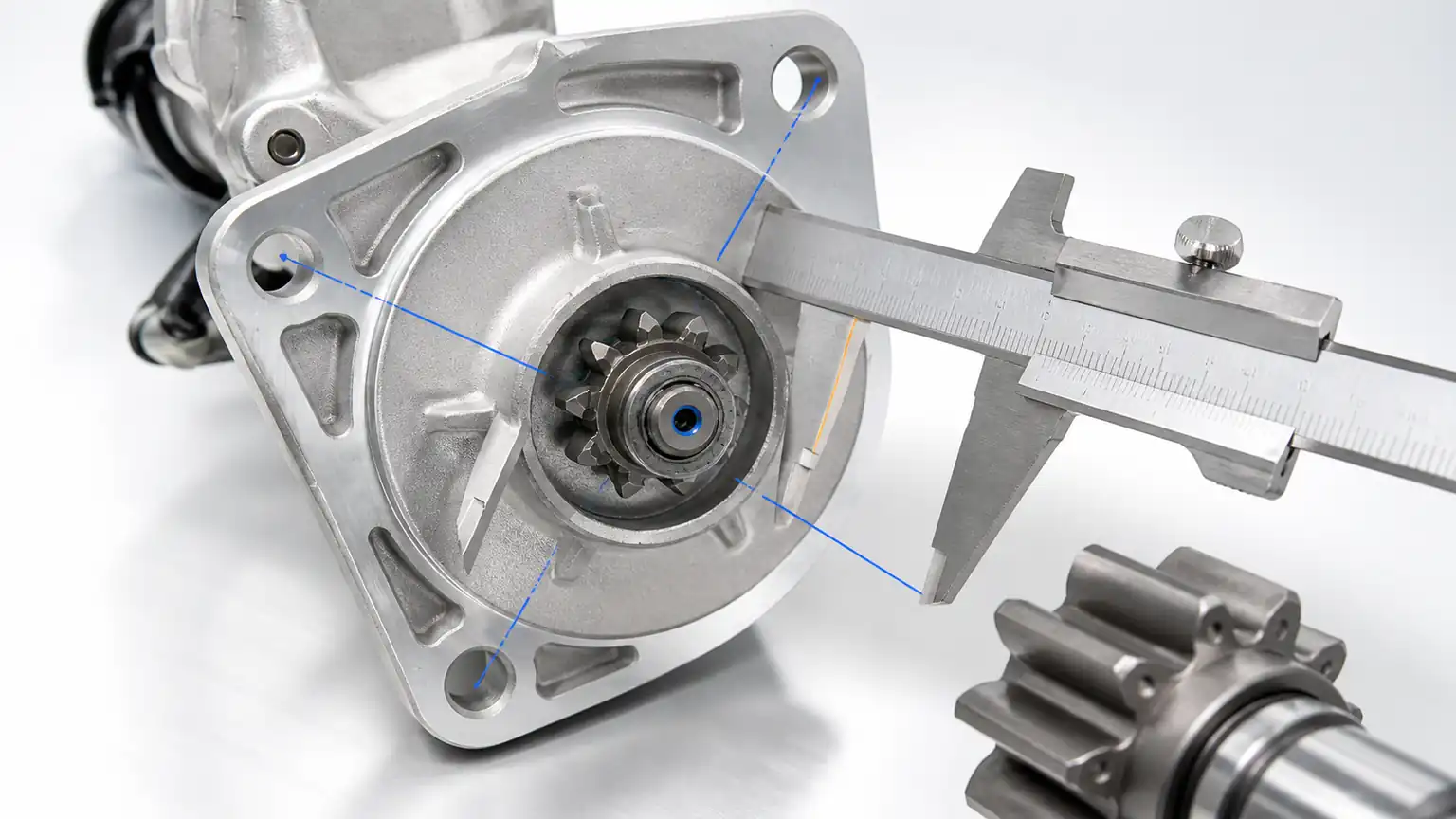
A purchasing inquiry should begin with the engine model, starter OE number, electrical system voltage, and a clear image of the unit’s mounting face. Add the tooth count, pinion travel, terminal layout, nose-cone profile, and the installation environment. These fields separate a viable heavy-duty replacement from a look-alike starter that may bolt on incorrectly or mesh poorly with the ring gear.
Control area | Evidence to request | Why it matters |
|---|---|---|
Fitment | OE cross-reference, mounting drawing, pinion and flange photographs | Protects against mismatch at the flywheel housing and starter drive. |
Electrical design | Rated voltage, nominal power, terminal map, solenoid specification | Confirms that the starter will suit the vehicle or equipment electrical system. |
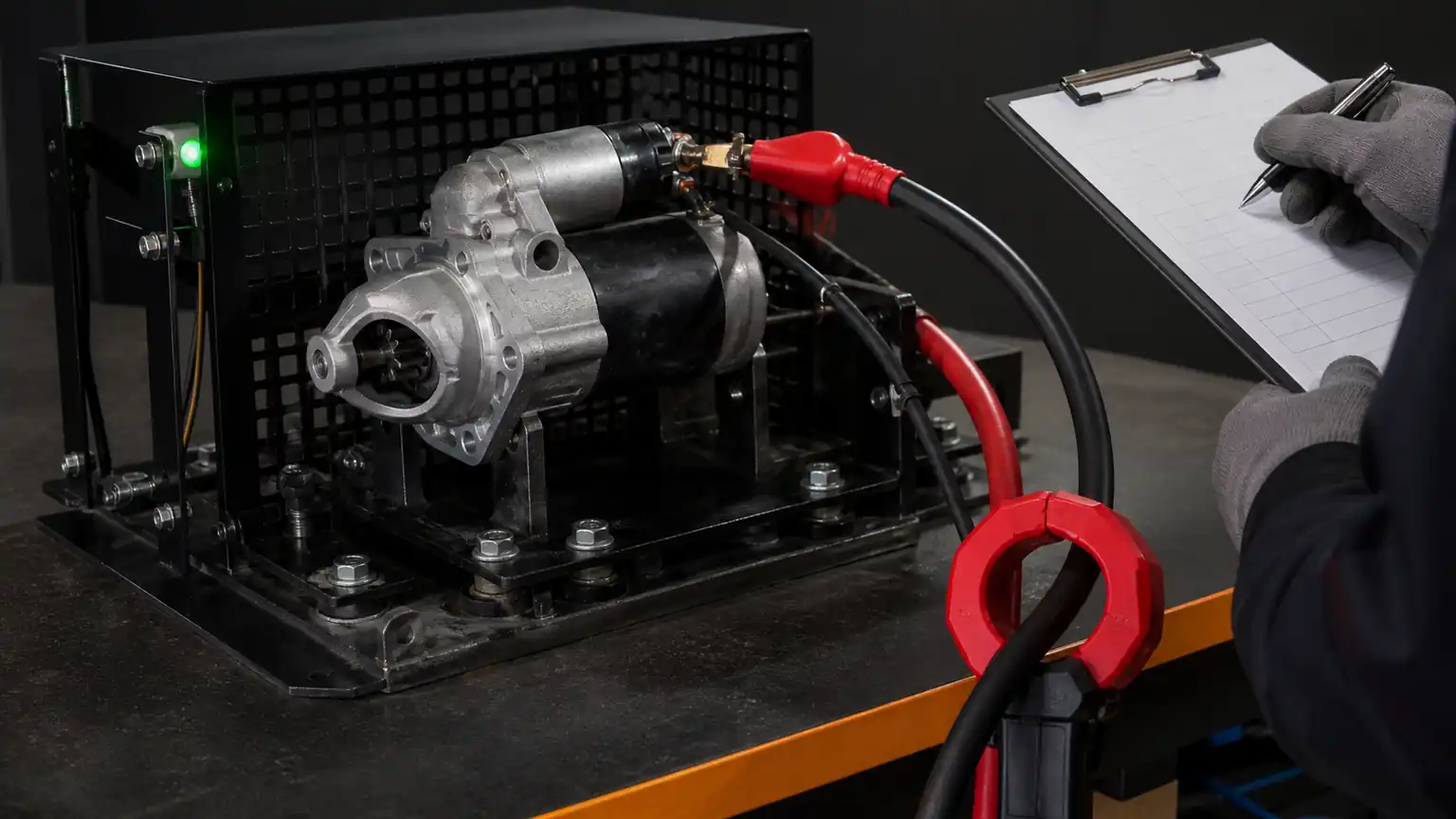
Function test | No-load test result, current draw, pinion engagement observation | Creates a baseline before the unit enters stock or leaves the supplier. |
Batch traceability | Lot code, serial marking, packing list, inspection record | Supports a controlled response if a receiving or warranty issue appears. |
Commercial control | Incoterms, lead time, warranty terms, claim process, replacement availability | Prevents a low unit price from hiding an unusable after-sales route. |
An OE number is valuable, but a buyer should still request physical and electrical confirmation. A superseded reference can describe multiple revisions, and a distributor may quote an aftermarket equivalent. The right practice is to compare the reference with the actual starter geometry, duty requirements, and test evidence.
Make voltage, current, engagement, and noise observations concrete for fleet and distributor buyers.
For a sample, ask the supplier to record a controlled no-load start sequence. The record should identify the test voltage, current draw, rotation behavior, solenoid pull-in action, pinion travel, abnormal noise, and return action after power is removed. This is not a substitute for an engine cranking test, but it detects basic assembly and engagement problems before the item reaches a fleet workshop.
Inspect the drive, mounting ears, terminal protection, housing damage, label accuracy, and carton markings before shelving the unit. On a controlled sampling plan, repeat the no-load check and retain the test result against the lot number. If the supplied reference differs from the RFQ, hold the lot rather than re-labeling it as an assumed equivalent.
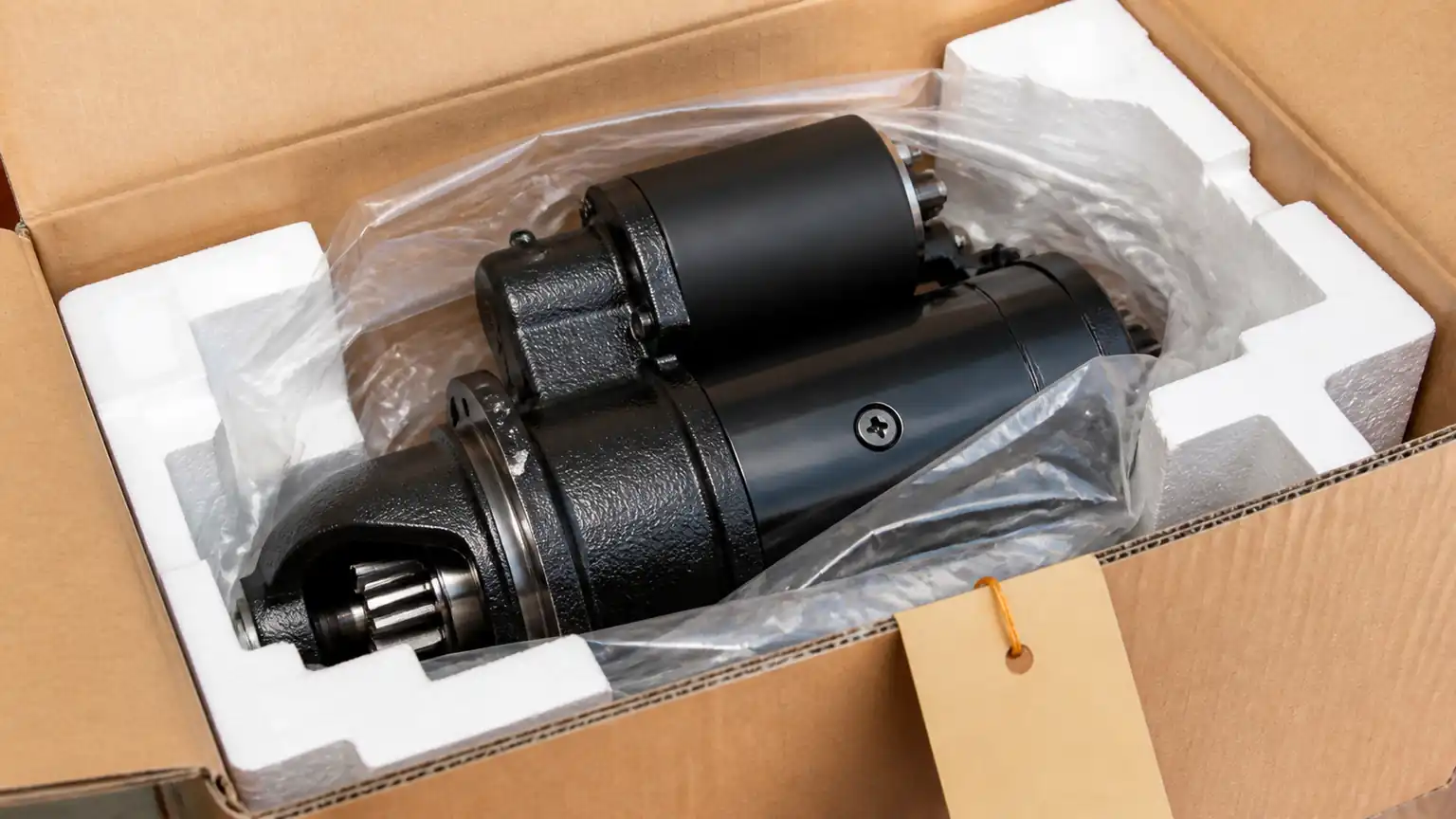
A starter motor should be immobilized in a carton that protects the nose housing, terminals, and solenoid. The box should carry the internal part number, quantity, lot identifier, and destination mark. For export consolidation, request moisture protection and a layout that prevents heavy units from contacting one another in transit.
India may offer a useful distributor, export, or assembly route without being the factory origin of every item in the shortlist. Ask each candidate to state the manufacturing entity, country of origin, authorized selling territory, and warranty responsibility in writing. If those answers cannot be reconciled with the part number and packaging labels, the route should remain unapproved.
Desktop screen: eliminate candidates that cannot provide fitment data, traceability, or a clear commercial entity.
Sample qualification: compare dimensions, electrical information, and a documented no-load test against the RFQ.
Batch release: approve only after the packaging, labels, quantity, warranty route, and receiving checks match the agreed control plan.
When you are ready to turn a shortlist into an RFQ, send Elecdurauto the starter reference and application data. A comparison request is strongest when it includes the engine model, voltage, OE number, photographs, annual quantity, and delivery destination.
A complete new unit is normally the simplest purchasing specification because the buyer can compare one assembly number, one label, and one incoming test. A remanufactured unit needs more detail: the seller should state what has been renewed, what is retained from the core, whether the solenoid and drive have been inspected or replaced, and how the unit was tested. A repair-component route is different again. An armature, drive assembly, brush set, or solenoid may be appropriate for an established rebuild program, but it should not be casually substituted for a complete-starter offer.
Make the supply condition visible on every RFQ line and purchase-order line. If a supplier answers only with an OE number, ask for the condition and the warranty route. This stops a buyer from comparing a new complete starter against a remanufactured exchange unit as if they were the same product. It also gives a distributor a clearer basis for inventory segmentation: emergency replacement stock, price-sensitive aftermarket stock, and rebuild components can be controlled as separate offerings.
Heavy-duty starter applications vary widely. A transit bus with repeated starts, a generator set that must start after long standby periods, a mining machine exposed to dust, and a long-haul truck operating in hot conditions do not place identical demands on the starter circuit. State the expected duty in the RFQ. Include start frequency, ambient conditions, engine displacement, any overcrank protection requirement, and whether the machine has a 12-volt or 24-volt system. These details help suppliers avoid quoting a starter that has the right outline but the wrong duty expectation.
When a starter has failed in service, the procurement team should ask the workshop for a concise fault record. Useful observations include battery state, positive-cable voltage drop during cranking, ground-path voltage drop, engine mechanical condition, relay or ignition-command behavior, and the symptom heard at the starter. A low voltage at the starter terminals can create a slow-crank complaint even when the motor is not the primary fault. Conversely, a damaged drive or solenoid may be visible even when the cables are healthy.
This evidence affects the buying decision. If the circuit problem is not corrected, a new starter may return under warranty even though the root cause was external. The supplier should not be asked to diagnose a vehicle remotely without the application and test observations, but a clear record improves the discussion of what must be checked before a warranty claim is accepted.
For the first unit from a new route, compare the removed starter and the proposed replacement side by side before installation. Verify mounting ears, nose depth, pinion position, tooth geometry, terminal locations, and solenoid clearance. After installation, record cranking behavior and the voltage available at the unit. Retain the evidence with the batch file. This one controlled installation can reveal a cross-reference problem before a container, distributor replenishment order, or fleet roll-out is released.
A buyer does not need to stock every possible starter. A better approach is to group the fleet or customer base by engine family, critical assets, common OE references, and known lead times. Keep fast-moving, high-downtime references in controlled local stock and manage rare references through a quotation or import route. For an exporter, use the same logic to build a mixed order: protect the critical references first, then add lower-volume units only when their application data is secure.
Ask each candidate to quote minimum order quantity, standard lead time, sample lead time, package dimensions, gross weight, and availability of related service parts. These fields are operational rather than promotional. They help a distributor decide whether a product line can support urgent repairs without turning the warehouse into a collection of untraceable slow-moving items.
Once a starter reference is approved, do not replace it in purchasing records with a broad product description such as “24V truck starter.” Keep the approved brand or manufacturer route, exact SKU, cross-reference basis, terminal arrangement, drive type, and approved evidence. If a later shipment changes the label, design, country of origin, or output description, treat it as a controlled change rather than automatic replenishment.
A workable warranty route should ask for useful evidence without making normal diagnosis impossible. Agree in advance on the required photographs, label details, installation observations, electrical-test results, failure description, and return process. If the supplier needs the unit returned, clarify who arranges freight, whether a replacement can be supplied before inspection, and how the result will be communicated. These details should be visible to the buyer, distributor, and workshop.
For a batch program, link any claim to the lot record and original inspection evidence. That makes it possible to see whether a concern is isolated to one unit, one shipment, an installation pattern, or a repeated configuration error. It also protects a supplier from a vague complaint that cannot be connected to a specific part and protects the buyer from an untraceable product line.
Show how a buyer can evaluate protection of a dense, heavy starter during export handling.
For an India-origin or India-supplied route, record the legal seller, manufacturer where declared, export party, consignee, and warranty contact separately. Attach the approved part-number list, country-of-origin declaration where available, quotation revision, packing specification, and the agreed Incoterms. This is not administrative excess. A starter-motor claim can become difficult when the party that invoiced the goods is different from the party responsible for technical questions or warranty review.
Starter motors are dense and vulnerable at their mounting noses, drives, and terminals. Ask for unit weight and carton dimensions early so that a buyer can plan palletization, container loading, and receiving equipment. For mixed orders, use a carton map that ties each position to a part number and quantity. When a shipment includes both complete units and repair components, pack and identify them separately. That distinction avoids a receiving team shelving a solenoid or drive assembly as a complete starter.
A pre-shipment checklist should compare the final packing list against the approved references, quantities, lot marks, label images, and any test documents. If an item differs from the sample, hold it for review before loading. This is particularly important when a procurement team has used a country list to qualify multiple routes: each approved reference should retain its own technical and commercial evidence instead of being merged under a broad “India starter” label.
New Indo Trading Company — commercial route signal for heavy-duty starters and alternators in India.
AutoStart India — public manufacturer/exporter signal for auto-electrical components.
ExportersIndia listing for New Indo Trading — directory signal used only to corroborate market visibility.
Editorial note: supplier status, authorization, product origin, test capability, stock, and warranty coverage must be verified directly before any purchase decision.