ELECDURA NETWORK

Your Whole New Supply Chain For Heavy-Duty Parts
Whatsapp:
+86 18915027366
Phone:
+86 18915027366
Views: 0 Author: Site Editor Publish Time: 2026-08-27 Origin: Site
Diesel fuel injectors should be sourced as precision fuel-system assemblies, not as interchangeable engine accessories. In the Philippines, public information from Ishimoto, MPMS Engine Parts Corporation, and Trademo points to a visible repair, calibration, and trade-information context. That is enough to research a commercial route, but it is not evidence that every brand below has a local factory, a current dealer appointment, or the same test capability.
This article is a 20-candidate B2B sourcing screen for diesel fuel injectors, not a performance ranking. It also does not state that all listed entities manufacture injectors in the Philippines. Buyers can begin a controlled inquiry with Elecdurauto’s heavy-duty diesel fuel injector range when they have the engine, injector, and application information required for a valid comparison.
Ishimoto publicly presents diesel fuel-system testing, calibration, and service. Trademo’s Philippines injector-buyer information names commercial entities including MPMS Engine Parts Corporation and Central Diesel Clinic. These references show that the country has a relevant commercial context. They do not establish a supplier’s current inventory, official authorization, factory origin, or the calibration standard applied to a specific injector.
An injector may be mechanical, electronic unit-injector, common-rail, or another system-specific design. A visually similar body can have a different connector, nozzle, control valve, coding requirement, or calibration target. The risk is not only a poor fit; an uncontrolled injector can create hard starting, smoke, imbalance, power loss, excessive fuel use, or repeat diagnosis work. The RFQ must identify the complete fuel-system configuration.
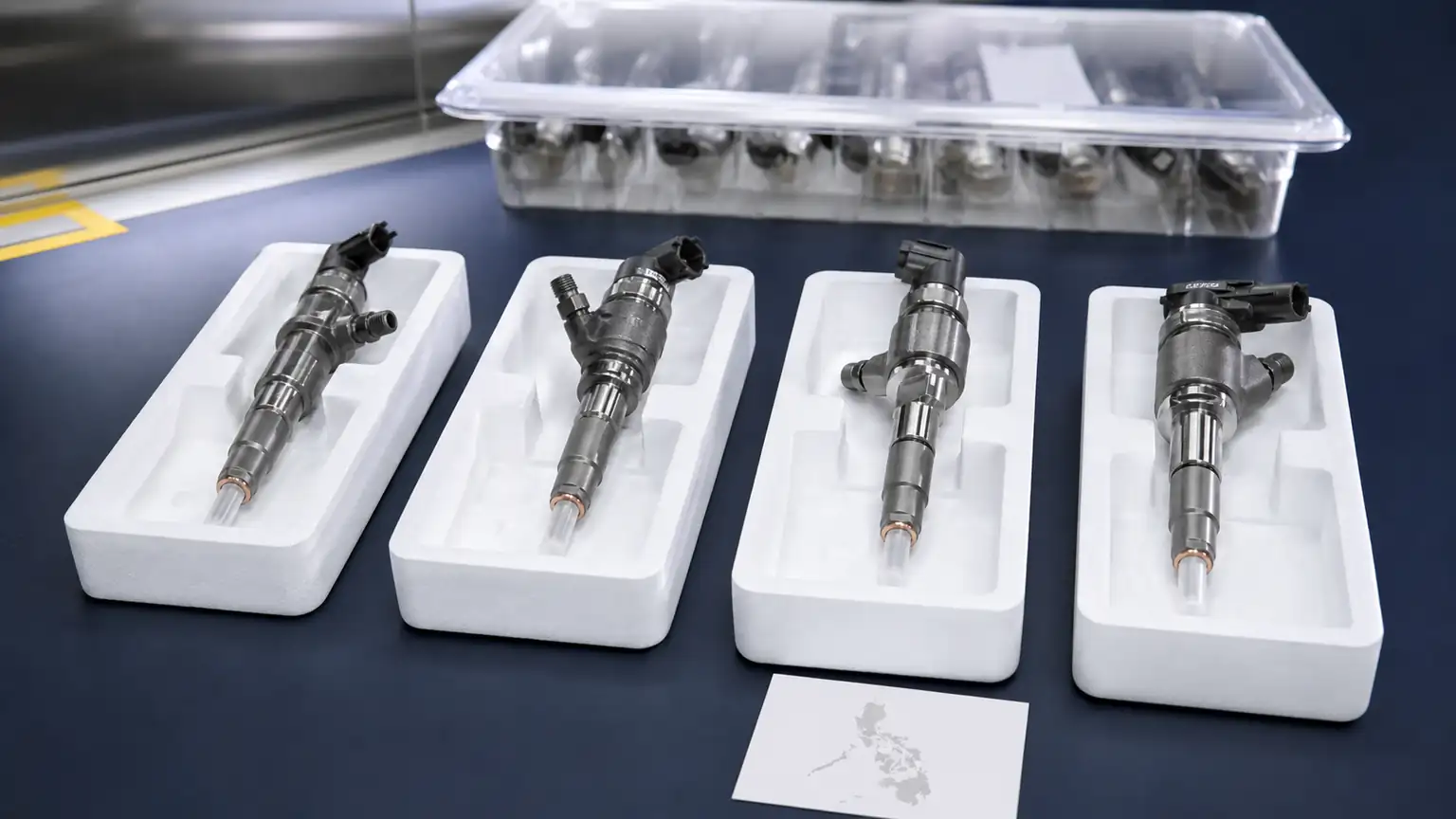
Anchor the country article in clean handling, test evidence, and part identification instead of unsupported list claims.
These entries are grouped as local service and trade routes, global injector brands, engine-OE service routes, and technical support routes. Every item should be investigated through a verified Philippine commercial channel before it is treated as an approved source.
No. | Candidate | Route to investigate | First technical control |
|---|---|---|---|
1 | Ishimoto Philippines | Local diesel fuel-system service and calibration route | Confirm the applicable system, test scope, and responsible commercial entity. |
2 | MPMS Engine Parts Corporation | Philippine trade and engine-parts route | Confirm current selling authority and the injector’s source chain. |
3 | Central Diesel Clinic | Philippine diesel-service and trade route | Ask whether the request is for supply, test, repair, or a combined route. |
4 | Bosch | Global diesel-injection brand route | Verify part number, coding, and authorized local channel. |
5 | DENSO | Global diesel-injection brand route | Confirm nozzle, connector, and application-specific reference. |
6 | Delphi | Fuel-system brand route | Request test and traceability evidence for the quoted injector. |
7 | Stanadyne | Diesel fuel-system manufacturer route | Confirm whether the unit is new, remanufactured, or an aftermarket equivalent. |
8 | Continental | Fuel-injection system route | Identify the system generation and electronic-control compatibility. |
9 | Zexel | Diesel-injection brand route | Ask for an OE-reference and model-specific data match. |
10 | Cummins Fuel Systems | Heavy-duty engine fuel-system route | Link the injector to the correct engine and calibration specification. |
11 | Caterpillar | Equipment-OE service route | Confirm machine serial or engine arrangement before price comparison. |
12 | Yanmar | Diesel-engine service route | Validate engine series and injector identity rather than relying on appearance. |
13 | Hino Genuine Parts | Commercial-vehicle OE parts route | Request a vehicle or engine-specific reference check. |
14 | Isuzu Genuine Parts | Commercial-vehicle OE parts route | Confirm engine family, connector, and coding requirements. |
15 | Komatsu Genuine Parts | Construction-equipment service route | Use machine model and serial information to prevent a wrong variant. |
16 | Perkins | Industrial-engine service route | Verify the engine build list and fuel-system family. |
17 | Alliant Power | Aftermarket diesel-injection route | Obtain a documentable cross-reference and batch identity. |
18 | BD Diesel | Aftermarket diesel-performance and fuel-system route | Confirm that the proposed item is intended for commercial duty and the exact application. |
19 | Hartridge | Injector-test equipment and technical-support route | Use as a test-capability benchmark, not as a direct injector supply assumption. |
20 | Bosch Diesel Service route | Calibration and authorized-service channel to investigate | Confirm the current service-center status and the documented test procedure. |
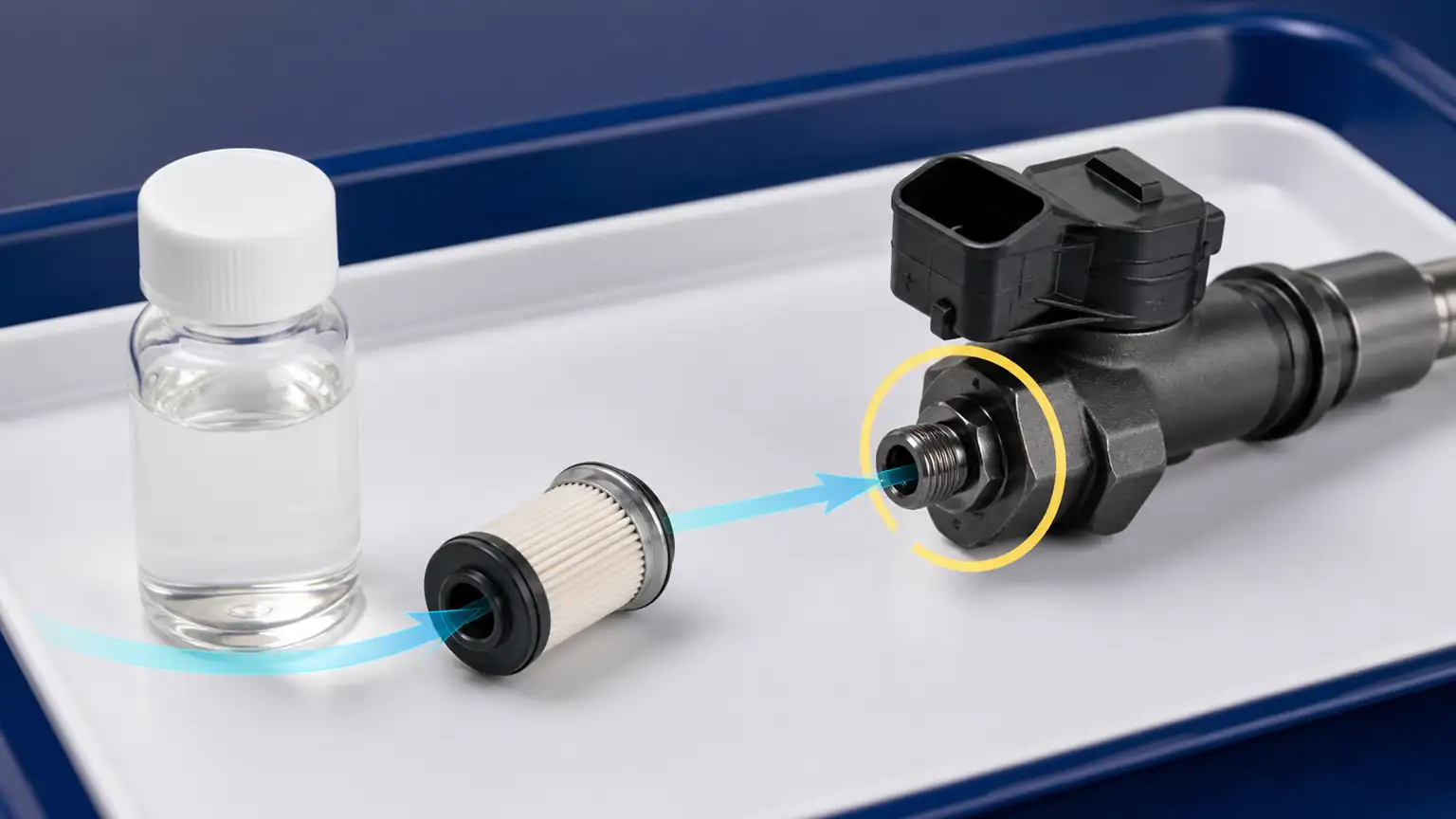
Make the link between fuel cleanliness and injector protection visually specific.
Collect the engine model, equipment or vehicle application, engine serial number when available, injector part number, and every readable label or code. Do not remove coding marks from the RFQ. For an engine with multiple revisions, the application alone may be insufficient; the fuel-system specification can change within the same engine family.
Ask whether the quoted injector is OE-new, an authorized remanufactured unit, a reconditioned unit, or an aftermarket equivalent. Specify whether it must be coded, whether it is supplied with sealing parts, whether a core is required, and whether it has been preserved for storage. This is where a simple “injector price” request becomes a controlled sourcing decision.
A test-and-repair quotation may be the right path for a recoverable unit, while a replacement quotation may be needed for a damaged or unavailable core. The buyer should keep those options separate. They have different lead times, warranty routes, evidence needs, and shipping controls.
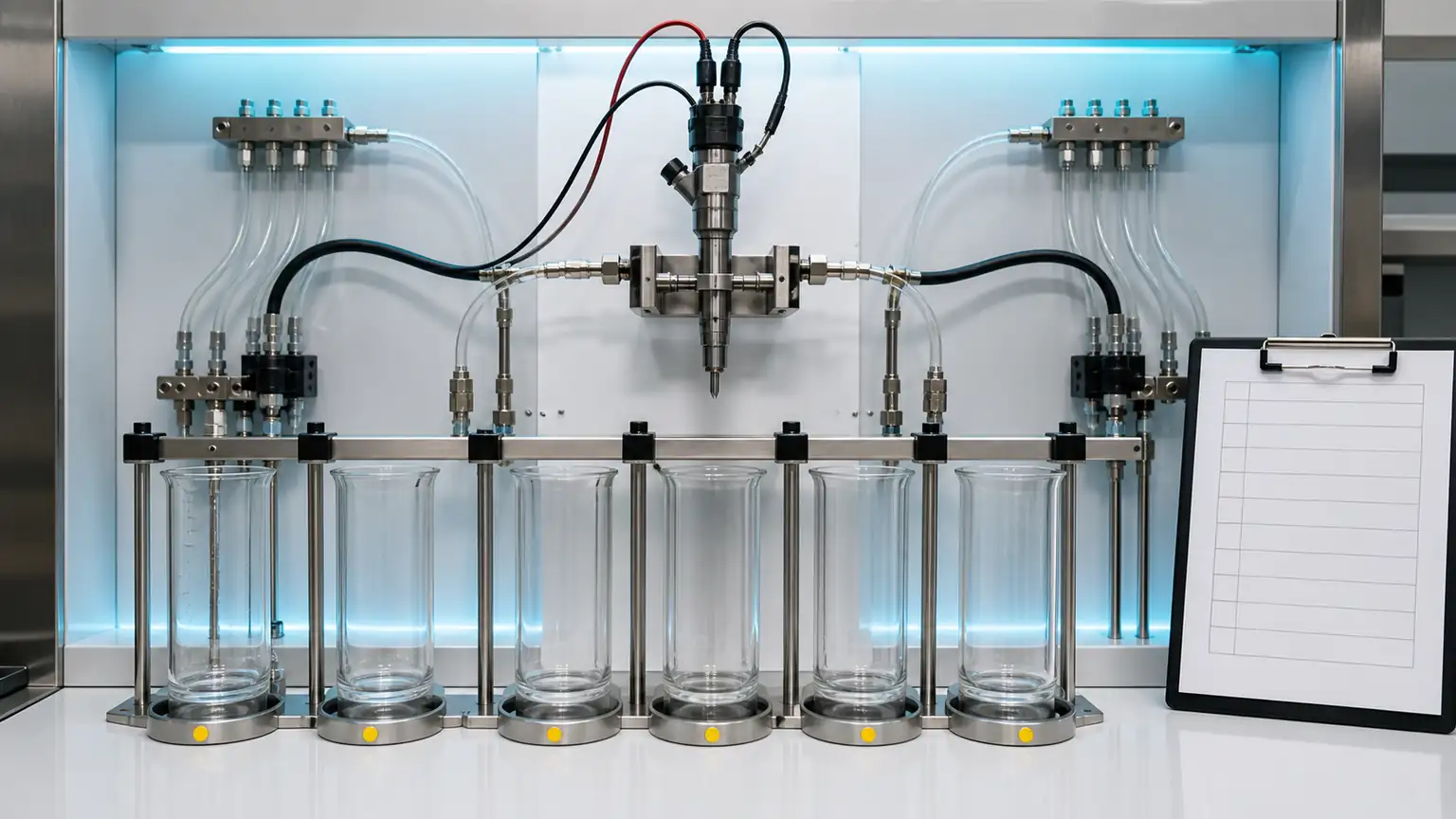
Give distributors a visual checklist for a controlled injector test report discussion.
A usable report should identify the injector, the test equipment or procedure reference, the tested condition, and the result against the applicable specification. It should make clear whether the unit was tested as received, repaired, or supplied as a replacement. Avoid accepting a generic certificate that does not show which injector or batch it belongs to.
Control | What to request | Buyer benefit |
|---|---|---|
Identity | Part number, code, label image, engine/application reference | Prevents different injector variants from being mixed in one order. |
Test trace | Injector-specific test record and stated test condition | Allows receiving inspection and later claim review to refer to a real record. |
Condition | New, authorized reman, reconditioned, or aftermarket-equivalent declaration | Aligns price and warranty expectations with the actual supply route. |
Installation items | Specified seals, washers, clamps, coding or programming notes | Reduces avoidable installation and leakage issues. |
Warranty route | Named seller, claim evidence, return process, and time limit | Gives a distributor or fleet a defined response path. |
Injectors should arrive with ports protected, identity labels readable, and the internal condition preserved according to the supplier’s guidance. During receiving, retain the carton label, compare the item to the approved reference, and keep the sealing parts associated with the correct injector. A clean work area is a sourcing control as well as a workshop habit: contamination introduced after shipping can make a good unit look defective.
Start with the local route if it can document the requested product and test scope, then compare that route with a global-brand or OE-service alternative using the same RFQ. The decision should weigh application accuracy, evidence, delivery, and warranty responsibility—not simply the country name or a low unit price. For an importer, record who is responsible for export packing, customs documents, and any return shipment of cores or failed samples.
To prepare a heavy-duty injector comparison, send Elecdurauto the injector number, engine information, application, photos, required condition, and destination. That information makes it possible to discuss an aftermarket equivalent without presenting it as a genuine OE product.
A mechanical injector inquiry should identify the engine and injector reference, nozzle configuration, opening-pressure requirement where specified by the engine documentation, and the intended condition of supply. An electronically controlled injector inquiry adds other controls: connector type, injector code or calibration marking, ECU or programming requirement, and the exact engine management system. The buyer should not use a generic “diesel injector” description for both routes. The required parts, test evidence, and installation controls can differ substantially.
For common-rail systems, retain every readable code from the removed injector and ask the workshop whether the replacement requires registration or coding after installation. For unit injectors or pump-line-nozzle systems, record the relevant mechanical configuration and engine application. The aim is not to force a workshop procedure into an RFQ; it is to prevent a supplier from quoting a superficially similar injector with a different control or calibration identity.
Use one of four clear descriptions: OE-new, authorized remanufactured, reconditioned, or aftermarket equivalent. If the buyer accepts more than one option, request separate quoted lines rather than a blended price. A reconditioned injector may be appropriate for a controlled repair route, while a new unit may be preferred for critical fleet stock. The commercial and technical record must show which option was selected for each reference.
A supplier SKU, a manufacturer part number, an OE reference, and an injector calibration code may all appear on the same order. Do not allow those fields to be collapsed into a single “part number” cell. Record each identifier with a label that explains its role. This makes later purchasing, workshop programming, batch tracing, and warranty discussion much less error-prone.
Before a sample is installed, compare the label, connector, nozzle protection, clamp surface, inlet and outlet protection, supplied seals, and any stated code against the approved RFQ. Photograph the unit and retain the carton label. If a protective cap is missing or the product arrives contaminated, hold it rather than cleaning and installing it without a record. A precision fuel-system component can be damaged by handling that would be harmless to a larger engine part.
For a distributor, open only a controlled sample unless the supplier’s packaging procedure requires a wider inspection. Keep the rest of the batch sealed, identified by lot, and separated from mixed references. This enables an incoming team to compare the sample with the approved information while preserving the traceability of the remaining stock.
A document should identify the injector or batch it relates to and state the source, supply condition, and test context. It is reasonable to ask for a test report or inspection record, but it is not reasonable to infer a test result where none is provided. When a supplier offers a generic certificate, ask whether an injector-specific record can be supplied for the sample or the batch. If not, score the commercial route accordingly rather than claiming that the unit has passed an unspecified calibration standard.
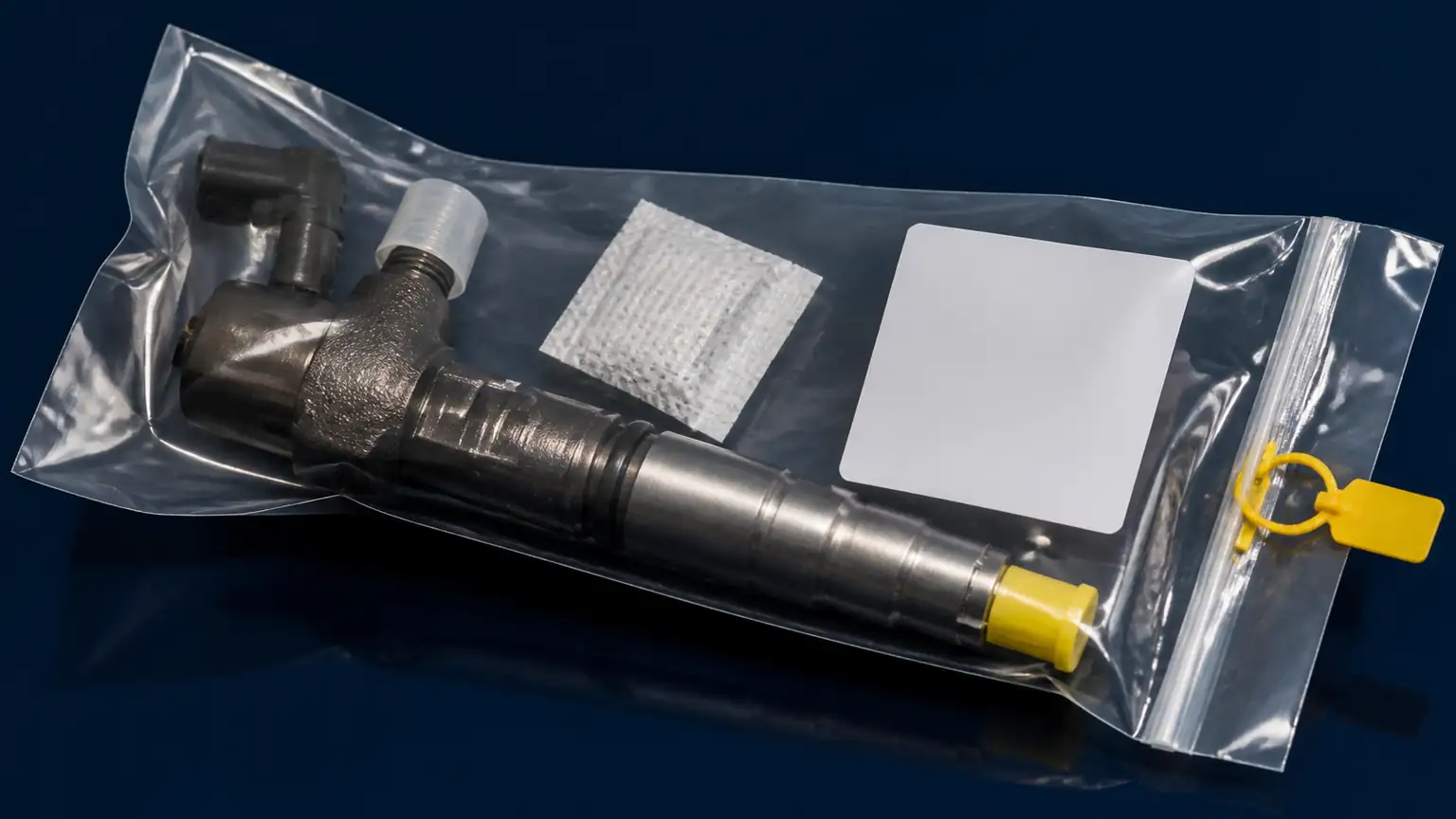
Help buyers inspect small, high-precision injector packaging without relying on a generic shipping image.
The best label or test record loses value if the injector is mixed with loose fittings, exposed to dust, or paired with the wrong sealing parts. Store individual units in their protective packaging with ports capped and the identification label visible. Keep washers, clamps, and other installation items in a package tied to the exact reference. For export, specify internal support so that the nozzle and connector cannot strike another component during transit.
At the warehouse, do not decant injectors into unmarked bins for convenience. Use a location label that preserves the supplier lot, product condition, and approved application group. If a customer returns an opened or used unit, segregate it from new inventory at once. It may be a warranty candidate, a test candidate, or a rejected return, but it should never re-enter new stock without a documented decision.
Where a remanufactured or exchange program requires a core, photograph the old injector’s markings, protect it against leakage or contamination, and use a return label that links it to the original transaction. Ask the seller how core acceptability, timing, freight, and credits are handled. This prevents a buyer from discovering after installation that an unreadable or damaged core cannot receive the expected credit.
A local calibration or repair route may be the most practical answer for a recoverable unit, while an imported new or remanufactured unit may be the right answer for stock or an unrecoverable core. The country context does not decide this by itself. Use the same evaluation fields for every route: product identity, condition, test evidence, source authorization, delivery lead time, packaging, warranty party, and return requirements. The result should be a documented decision, not a claim that one type of supplier is inherently better.
If a candidate cannot provide a clear application match, state the test condition, or identify the warranty party, do not turn missing information into a commercial assumption. Hold the candidate for clarification or choose a route with stronger evidence. That discipline is particularly important in a country-ranking article: public visibility shows a procurement path worth investigating, but the buyer still needs proof for the exact injector being supplied.
After a sourcing route passes the sample review, create a record that lists the engine family, injector reference, connector or coding requirement, supply condition, approved seller, stated brand or manufacturer, warranty party, and the evidence retained. Link the record to the test document, carton image, and any installation notes. This gives purchasing a controlled order description and gives the workshop a way to identify the intended item without reading a long email chain.
If the same engine can use more than one injector revision, keep separate records. Do not let a later buyer copy the price from one variation to another simply because the outside body looks similar. An injector inventory system should be able to answer which specific reference was approved, why it was approved, and what installation or coding condition was attached to that approval.
The second purchase is a useful control point. Compare its product label, carton, seller, condition declaration, and source documents with the original approval. If anything differs, pause before mixing it with the first batch. A controlled review at this stage is much less disruptive than discovering a changed connector, code, or product condition after units have been issued to customers or fitted to engines.
For Philippines purchasing or export delivery, ask the candidate to name the invoicing seller, dispatch point, expected lead time, and party handling technical or warranty questions. Attach that answer to the RFQ comparison. A supplier can be commercially visible without being the accountable source for the exact injector. Naming the route closes that gap and gives the buyer a practical contact if documents, packing, or product identity do not match the approved order.
Ishimoto Philippines — public diesel fuel-system service, testing, and calibration context.
Trademo Philippines diesel-injector buyers and importers — trade-information context that names MPMS Engine Parts Corporation and Central Diesel Clinic.
Ishimoto partners page — supplementary public product-category context only.
Editorial note: direct verification of source authority, product origin, technical condition, calibration evidence, and warranty coverage is mandatory before purchase.