ELECDURA NETWORK

Your Whole New Supply Chain For Heavy-Duty Parts
Whatsapp:
+86 18915027366
Phone:
+86 18915027366
Views: 0 Author: Site Editor Publish Time: 2026-08-29 Origin: Site
Protect the SCR dosing unit by treating the DEF filter as part of a clean, pressure-controlled urea circuit. A dosing complaint can begin with contaminated fluid, a restricted element, a weak supply module, incomplete thawing, or a blocked doser, and opening the circuit carelessly can add a second failure.
Searches for DEF filter often collapse those causes into one service item. A defensible repair instead tracks sample custody, pressure build, decay, dosing quantity, purge behavior, and material compatibility.
The Elecdurauto heavy-duty parts website provides the broader heavy-duty application context, while the actual filter identity must come from the target SCR architecture and approved service information. Appearance alone cannot establish seal compatibility or flow direction.
Because heavy-duty fleets, emissions-system workshops, parts distributors, and importers must protect both uptime and emissions-system integrity, clean handling and documented test conditions are release criteria, not optional workshop preferences.
Record tank pickup, quality sensor, pump or supply module, filter, heated lines, dosing valve, purge route, and control module as one evidence set. Before changing any hose, seal, element, valve, or electrical connection, the fleet technician should identify the vehicle, engine, component reference, date, operating state, and instrument.
Use the engine or system maker's procedure when one is available, and record any approved deviation before testing.
Tank pickup: record the condition or result for tank pickup; tie the tank pickup entry to the vehicle, engine, date, and operating condition.
Quality sensor: for quality sensor, document the applicable specification or observation; tie the quality sensor entry to its method and reviewer.
Pump or supply module: explain why pump or supply module matters; cite the source or measured limit used for pump or supply module.
Filter: use filter to test the suspected cause; when the filter evidence conflicts, define the next check.
Heated lines: retain a photograph, reading, or source note for heated lines; use the heated lines evidence to reproduce the decision.
Dosing valve: record the condition or result for dosing valve; tie the dosing valve entry to the vehicle, engine, date, and operating condition.
Purge route: for purge route, document the applicable specification or observation; tie the purge route entry to its method and reviewer.
Control module: explain why control module matters; cite the source or measured limit used for control module.
Filter diagnosis starts with the exact architecture because service locations and purge logic differ. Resolve a conflict by returning to the mapped interfaces and preserving the original physical and measured evidence. Accessibility is not proof of cause.
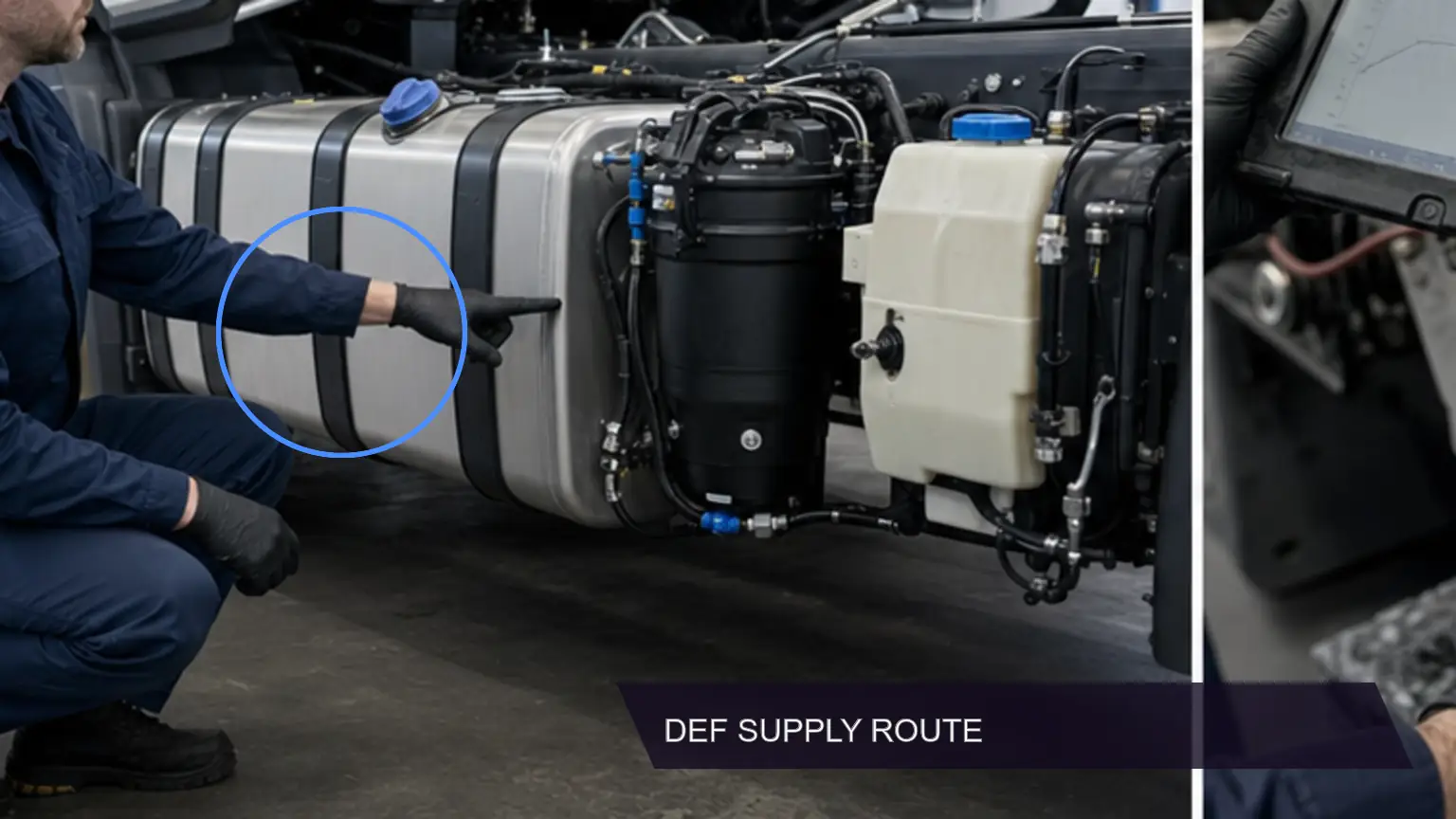
Close the map only after the inlet, treatment stage, controls, outlet, and any return path form one documented route. Name the missing connection whenever the path remains uncertain.
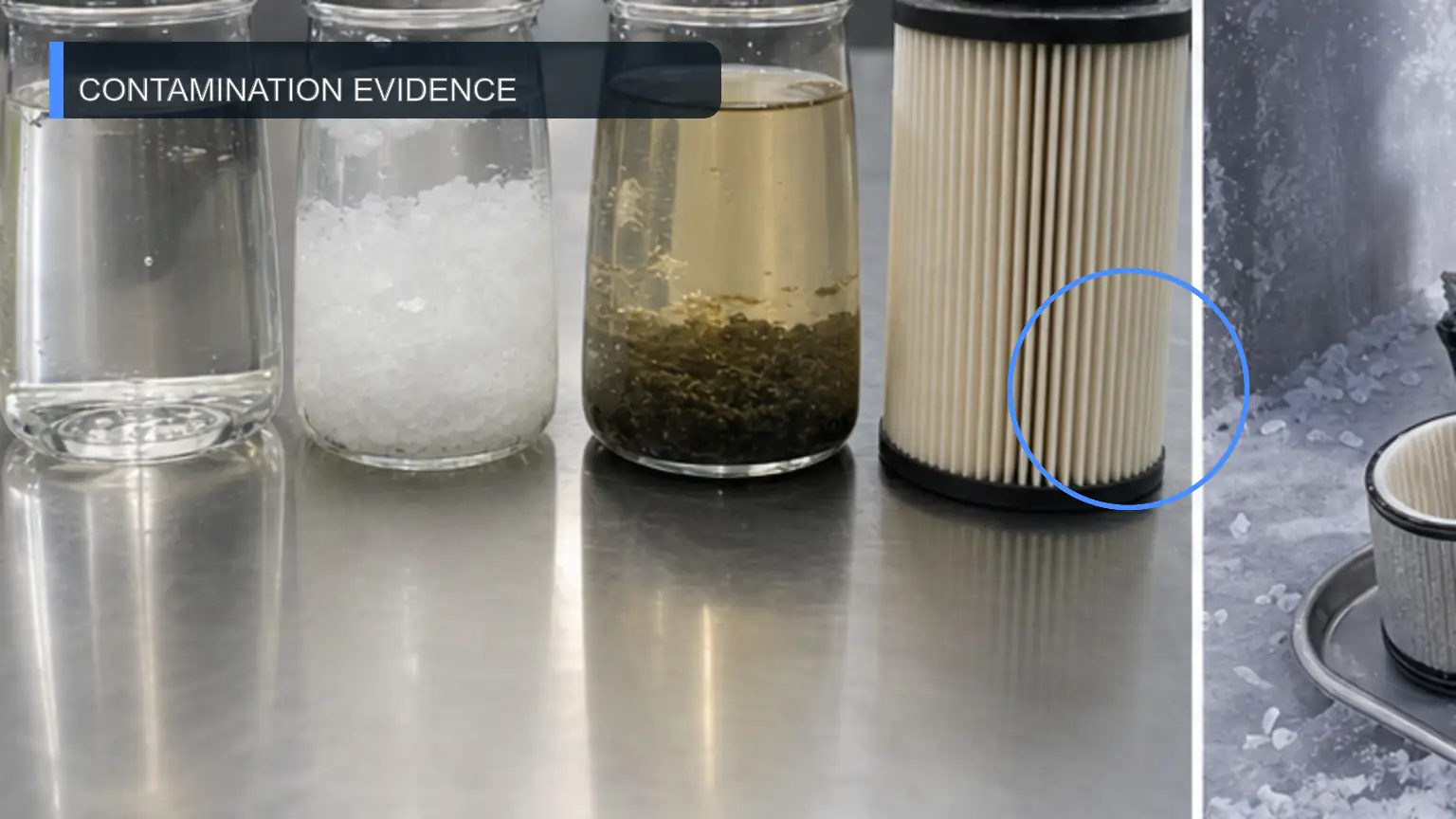
Evaluate incorrect fluid, diesel or oil, dirt, rust, crystallization, mixed containers, degraded caps, and sample custody together rather than as isolated observations. The diesel-system specialist should preserve the as-found condition and tie every result to the exact vehicle, engine, operating state, and test equipment.
Keep the units and test condition beside each result; a value without speed, load, temperature, or method cannot support a replacement decision.
Incorrect fluid: record the condition or result for incorrect fluid; tie the incorrect fluid entry to the vehicle, engine, date, and operating condition.
Diesel or oil: for diesel or oil, document the applicable specification or observation; tie the diesel or oil entry to its method and reviewer.
Dirt: explain why dirt matters; cite the source or measured limit used for dirt.
Rust: use rust to test the suspected cause; when the rust evidence conflicts, define the next check.
Crystallization: retain a photograph, reading, or source note for crystallization; use the crystallization evidence to reproduce the decision.
Mixed containers: record the condition or result for mixed containers; tie the mixed containers entry to the vehicle, engine, date, and operating condition.
Degraded caps: for degraded caps, document the applicable specification or observation; tie the degraded caps entry to its method and reviewer.
Sample custody: explain why sample custody matters; cite the source or measured limit used for sample custody.
Do not dissolve or wipe away crystals before the as-found condition is documented. If two readings disagree, repeat them at the same speed, load, temperature, and test point before replacing the element or opening a warranty claim.
Approve the measured step when the test point, instrument, stabilization state, demand, units, and repeated value can be reproduced by a second technician.
DEF filter system layout with the principal test points identified on a heavy-duty diesel application.
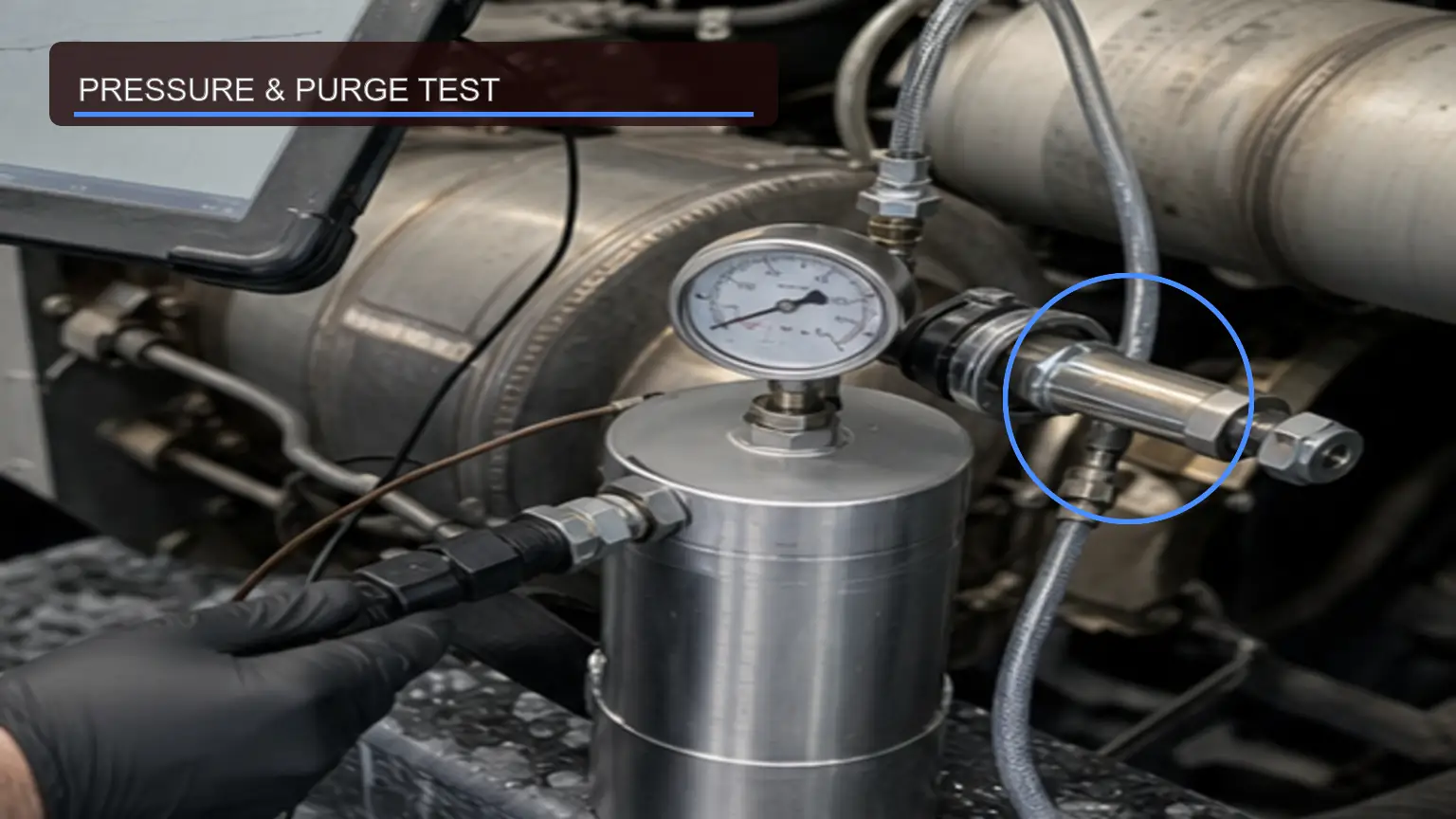
The working record should connect approved scan data, commanded pressure, build time, decay, dosing quantity, return or purge action, temperature, and fault codes. The receiving inspector should note when and where each check was made so that a later reviewer can reproduce the reasoning.
Compare repeated readings under the same conditions before treating a change as evidence of improvement.
Approved scan data: record the condition or result for approved scan data; tie the approved scan data entry to the vehicle, engine, date, and operating condition.
Commanded pressure: for commanded pressure, document the applicable specification or observation; tie the commanded pressure entry to its method and reviewer.
Build time: explain why build time matters; cite the source or measured limit used for build time.
Decay: use decay to test the suspected cause; when the decay evidence conflicts, define the next check.
Dosing quantity: retain a photograph, reading, or source note for dosing quantity; use the dosing quantity evidence to reproduce the decision.
Return or purge action: record the condition or result for return or purge action; tie the return or purge action entry to the vehicle, engine, date, and operating condition.
Temperature: for temperature, document the applicable specification or observation; tie the temperature entry to its method and reviewer.
Fault codes: explain why fault codes matters; cite the source or measured limit used for fault codes.
A pressure code can originate from a blocked filter, weak pump, leak, frozen line, or dosing restriction. When component restriction and upstream-condition evidence point in different directions, keep the conclusions separate until both sides are measured.
Release the cause decision when component service evidence and an upstream-condition test explain the complaint without forcing either result to fit the preferred theory.
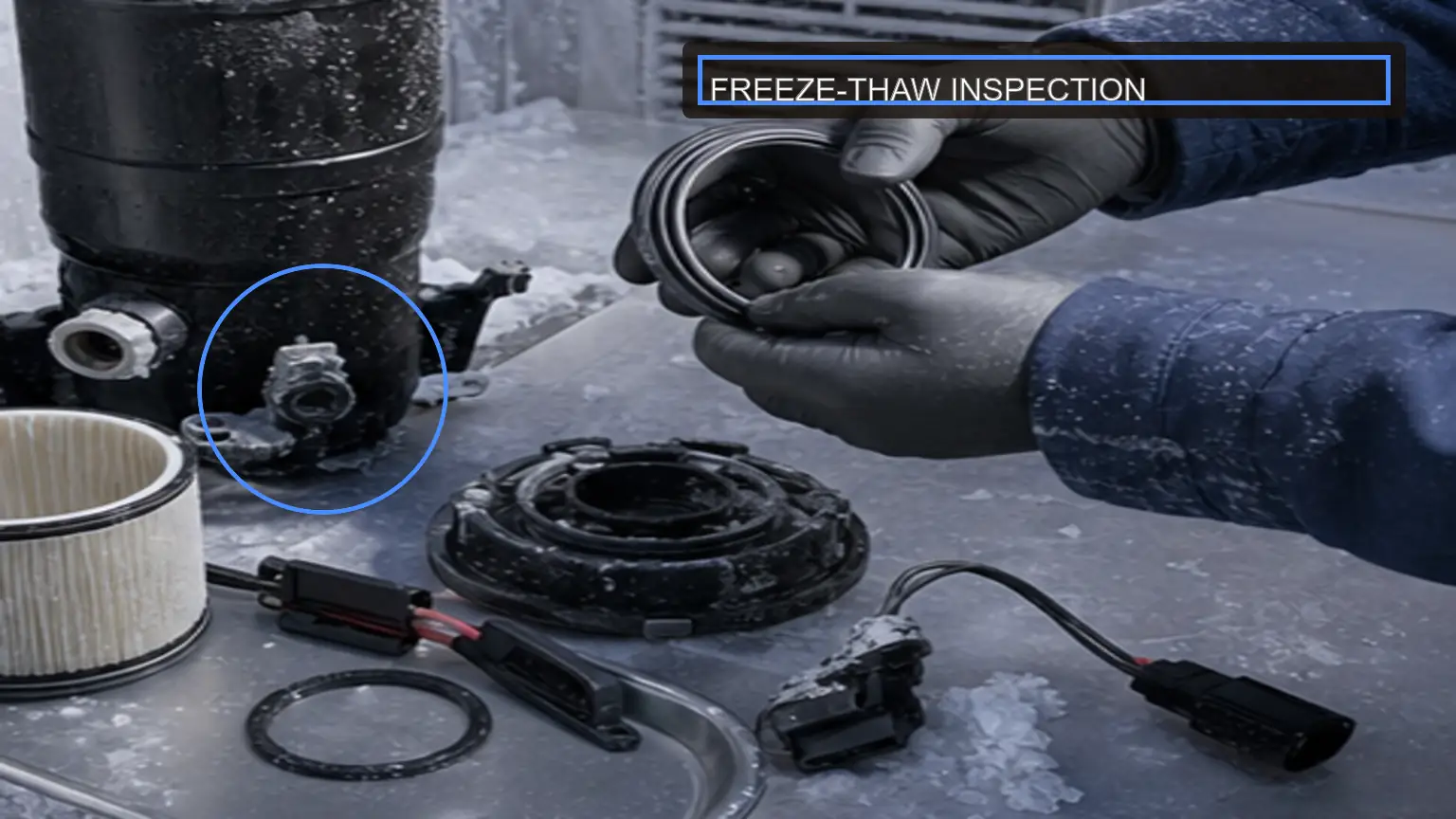
A reliable fault path links ambient temperature, tank heater, line heaters, electrical supply, thaw time, leaks after expansion, and low-temperature duty. Before disturbing the system, the technical buyer should photograph the interfaces and record the engine identity, operating condition, instrument, and units.
If the maker specifies a dedicated test point, tool, sequence, or limit, that requirement controls the check.
Ambient temperature: record the condition or result for ambient temperature; tie the ambient temperature entry to the vehicle, engine, date, and operating condition.
Tank heater: for tank heater, document the applicable specification or observation; tie the tank heater entry to its method and reviewer.
Line heaters: explain why line heaters matters; cite the source or measured limit used for line heaters.
Electrical supply: use electrical supply to test the suspected cause; when the electrical supply evidence conflicts, define the next check.
Thaw time: retain a photograph, reading, or source note for thaw time; use the thaw time evidence to reproduce the decision.
Leaks after expansion: record the condition or result for leaks after expansion; tie the leaks after expansion entry to the vehicle, engine, date, and operating condition.
Low-temperature duty: for low-temperature duty, document the applicable specification or observation; tie the low-temperature duty entry to its method and reviewer.
DEF freezing is expected; damage or incomplete thawing is not. A downstream symptom must be reconciled with upstream supply, control, and return conditions before a convenient component is blamed for the system fault.
Complete the symptom trace when upstream observations, component behavior, downstream evidence, and the control state agree on the probable source.
Technician performing a controlled def filter measurement with calibrated workshop instruments.
Review exact service kit, housing design, seal material, corrosion resistance, micron performance, flow direction, and approved compatibility within the same diagnostic sequence. The warranty analyst should keep the original condition intact until the decisive measurements and photographs have been captured.
Photographs should show the component identity and the measured location, not merely the general engine compartment.
Exact service kit: record the condition or result for exact service kit; tie the exact service kit entry to the vehicle, engine, date, and operating condition.
Housing design: for housing design, document the applicable specification or observation; tie the housing design entry to its method and reviewer.
Seal material: explain why seal material matters; cite the source or measured limit used for seal material.
Corrosion resistance: use corrosion resistance to test the suspected cause; when the corrosion resistance evidence conflicts, define the next check.
Micron performance: retain a photograph, reading, or source note for micron performance; use the micron performance evidence to reproduce the decision.
Flow direction: record the condition or result for flow direction; tie the flow direction entry to the vehicle, engine, date, and operating condition.
Approved compatibility: for approved compatibility, document the applicable specification or observation; tie the approved compatibility entry to its method and reviewer.
Substitute seals or unverified plastics can contaminate DEF or fail after repeated thermal cycles. Photograph any altered seal, valve, drain, or media condition before cleaning because the removed evidence may decide whether the case is service-related or product-related.
Finish this inspection after every named component, interface, control, damage pattern, and measurement is tied to the application record.
Normal and failed DEF filter conditions compared during incoming or warranty inspection.
The replacement decision depends on consistent evidence for dedicated clean tools, sealed containers, cap control, no tap water, dry handling, correct torque, prime or purge procedure, and leak check. The supplier-quality engineer should document the application, component identity, method, units, temperature, and repeat result.
State what each observation proves, what it rules out, and which alternative cause remains open.
Dedicated clean tools: record the condition or result for dedicated clean tools; tie the dedicated clean tools entry to the vehicle, engine, date, and operating condition.
Sealed containers: for sealed containers, document the applicable specification or observation; tie the sealed containers entry to its method and reviewer.
Cap control: explain why cap control matters; cite the source or measured limit used for cap control.
No tap water: use no tap water to test the suspected cause; when the no tap water evidence conflicts, define the next check.
Dry handling: retain a photograph, reading, or source note for dry handling; use the dry handling evidence to reproduce the decision.
Correct torque: record the condition or result for correct torque; tie the correct torque entry to the vehicle, engine, date, and operating condition.
Prime or purge procedure: for prime or purge procedure, document the applicable specification or observation; tie the prime or purge procedure entry to its method and reviewer.
Leak check: explain why leak check matters; cite the source or measured limit used for leak check.
The clean-side port must remain protected until the connection is made. Do not approve a look-alike replacement until its flow direction, valve arrangement, interfaces, and operating range match the engine record.
Accept the replacement match only when the engine reference, dimensions, interfaces, flow direction, valve function, and temperature range agree with approved evidence.
Release planning should bring together fault clearance, pressure and dosing verification, road or regeneration check, packaging seal, date code, lot trace, and change notification. The workshop supervisor should connect the technical findings to the approved sample, incoming lot, installation record, and follow-up check.
The final record should allow purchasing, service, and warranty teams to reach the same conclusion without relying on memory.
Fault clearance: record the condition or result for fault clearance; tie the fault clearance entry to the vehicle, engine, date, and operating condition.
Pressure and dosing verification: for pressure and dosing verification, document the applicable specification or observation; tie the pressure and dosing verification entry to its method and reviewer.
Road or regeneration check: explain why road or regeneration check matters; cite the source or measured limit used for road or regeneration check.
Packaging seal: use packaging seal to test the suspected cause; when the packaging seal evidence conflicts, define the next check.
Date code: retain a photograph, reading, or source note for date code; use the date code evidence to reproduce the decision.
Lot trace: record the condition or result for lot trace; tie the lot trace entry to the vehicle, engine, date, and operating condition.
Change notification: for change notification, document the applicable specification or observation; tie the change notification entry to its method and reviewer.
A replacement is complete only when the SCR system reaches stable commanded operation. A lot can move to released inventory only after the sample result, packaging identity, installation check, and responsible reviewer are linked in one record.
Release the fleet standard after purchasing, receiving, service, and warranty teams can follow the same baseline, trigger, lot, installation, and follow-up record.
DEF filter fitment, clean packaging, and traceable batch-release checks for a heavy-duty order.
A useful DEF filter RFQ begins with the exact engine family, serial or arrangement evidence, original reference, physical interfaces, system position, measured fault symptom, test conditions, monthly quantity, destination, and expected duty. It also states whether the offer is a new replacement kit with its seals, caps, and supplied components declared. Unverified genuine or OE language should not be inferred from appearance, packaging color, or a seller's keyword.
Include an approved DEF filter sample process that covers DEF cleanliness, filter location, pressure and flow, dosing protection, freeze-thaw behavior, material compatibility, service discipline, and sourcing evidence. Compare the sample with the heavy-duty truck parts supplier checklist, but keep public product pages as research aids rather than application authority. The supplier should return a drawing or structured data sheet, photographs of the actual configuration, functional evidence relevant to this failure, and the packaging proposal before production release.
Legal seller and manufacturing or remanufacturing source
Exact part and application references with declared cross-reference basis
Included sensors, valves, seals, fittings, caps, and service hardware
Sample quantity, functional test method, acceptance limit, and report format
MOQ, lead time, Incoterm, warranty route, claim turnaround, and core terms where applicable
Lot code, date code, carton label, moisture and shock protection, and change notification
Receiving inspection should identify the DEF filter shipment before opening every protective cap. Compare the label, housing reference, connector and port layout, mounting geometry, sealing surfaces, included hardware, and lot code with the approved application and released sample record. Sample checks should use the method and units agreed during approval; improvised pass limits create disputes rather than quality control.
After the DEF filter is installed, follow the maker's clean-handling, filter replacement, prime-or-purge, torque, and leak-check procedure and all applicable safety instructions. Recreate the operating condition that produced the original complaint as closely as practical, watch for leaks and abnormal pressure or temperature, and retain the first-run and loaded results. A cleared fault code alone does not prove that dosing, purge, thawing, and pressure control will remain stable in service.
No. Crystals identify dried urea solution at a location, not the originating fault. Document the pattern, verify fluid quality, and test pressure, leakage, purge, heating, and dosing before replacing the filter.
The number is a strong DEF filter identity field, not the entire approval. Verify the engine application, interfaces, included accessories, product condition, functional data, packaging, warranty owner, and lot traceability required by this guide.
Quarantine an affected DEF filter lot when identity, geometry, functional sample results, packaging, or declared source differs from the approved record. Do not mix the disputed units with released inventory while the supplier reviews the documented deviation.
Close the DEF-filter case only after the entire dosing circuit behaves as specified. Fluid identity, pressure, dosing, purge, thawing, material compatibility, and clean handling must support the same conclusion.
For sourcing support, use the heavy-duty truck parts supplier checklist, review Elecdurauto company information, and send the verified SCR application through the B2B contact page.