ELECDURA NETWORK

Your Whole New Supply Chain For Heavy-Duty Parts
Whatsapp:
+86 18915027366
Phone:
+86 18915027366
Views: 0 Author: Site Editor Publish Time: 2026-08-29 Origin: Site
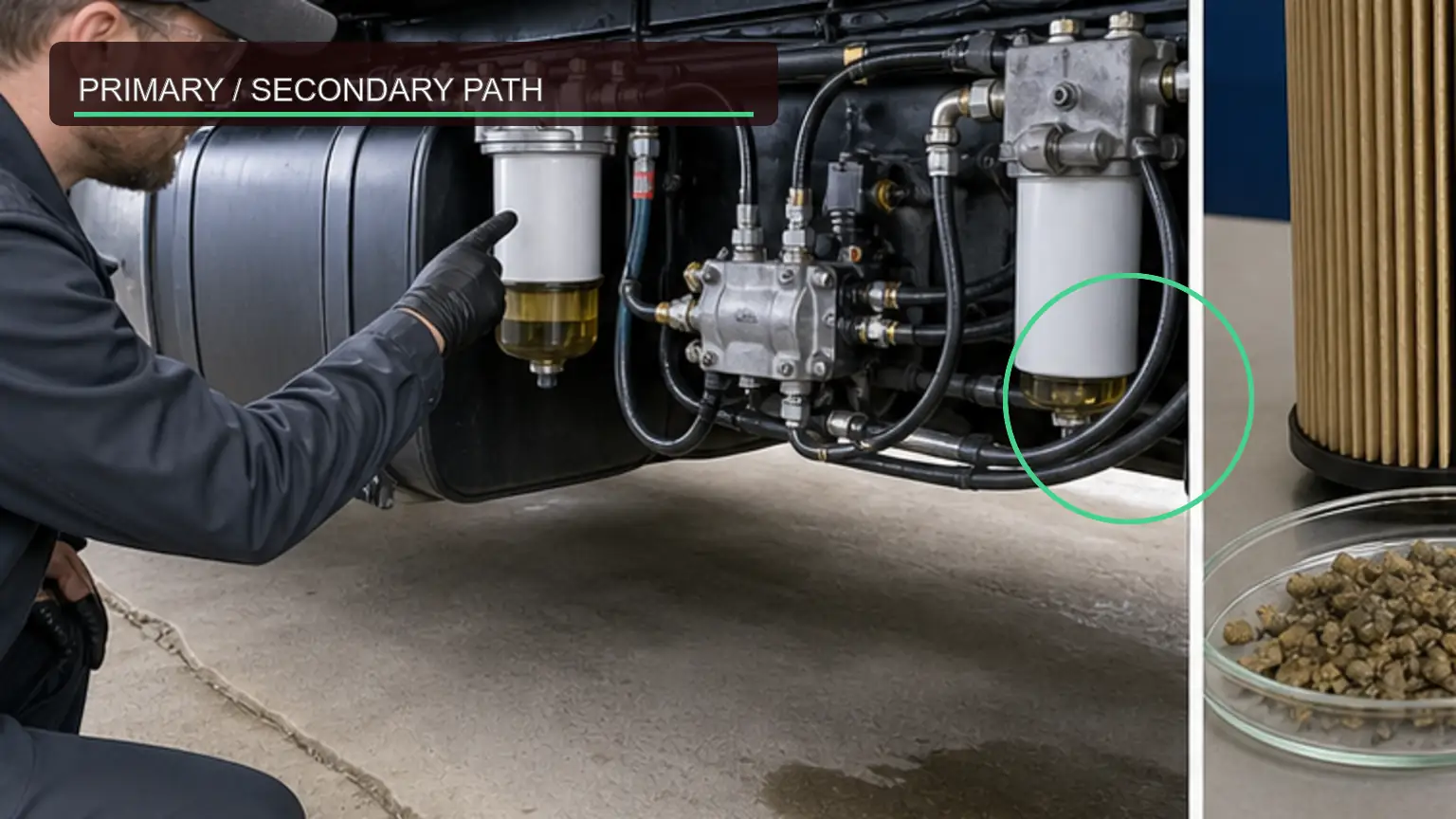
Stage primary and secondary diesel fuel filters so water removal, dirt capacity, and final injector protection work together. The primary stage should remove bulk contamination and water without consuming the restriction budget needed by the secondary stage and high-pressure fuel system.
Comparisons of diesel fuel filters are meaningful only when micron efficiency, dirt capacity, flow, viscosity, temperature, and terminal restriction are stated together. A smaller nominal number by itself does not prove better injector protection.
The fuel filter catalogue can support part-number research, but the filter pair must be approved as one staged system for the exact engine and duty cycle. Mixing unrelated cross-references can create excellent laboratory filtration and poor vehicle fuel supply.
Fleet engineers, workshop managers, filter distributors, and diesel-system sourcing teams should therefore document the job of each stage before selecting elements, defining service intervals, or accepting a replacement lot.
Record primary water separation and bulk dirt capture, lift-pump protection, secondary fine filtration, high-pressure pump, rail, and injector cleanliness as one evidence set. Before changing any hose, seal, element, valve, or electrical connection, the fleet technician should identify the vehicle, engine, component reference, date, operating state, and instrument.
Use the engine or system maker's procedure when one is available, and record any approved deviation before testing.
Primary water separation and bulk dirt capture: record the condition or result for primary water separation and bulk dirt capture; tie the primary water separation and bulk dirt capture entry to the vehicle, engine, date, and operating condition.
Lift-pump protection: for lift-pump protection, document the applicable specification or observation; tie the lift-pump protection entry to its method and reviewer.
Secondary fine filtration: explain why secondary fine filtration matters; cite the source or measured limit used for secondary fine filtration.
High-pressure pump: use high-pressure pump to test the suspected cause; when the high-pressure pump evidence conflicts, define the next check.
Rail: retain a photograph, reading, or source note for rail; use the rail evidence to reproduce the decision.
Injector cleanliness: record the condition or result for injector cleanliness; tie the injector cleanliness entry to the vehicle, engine, date, and operating condition.
Two filters add value only when their functions and restriction budget are defined. Resolve a conflict by returning to the mapped interfaces and preserving the original physical and measured evidence. Accessibility is not proof of cause.
Close the map only after the inlet, treatment stage, controls, outlet, and any return path form one documented route. Name the missing connection whenever the path remains uncertain.
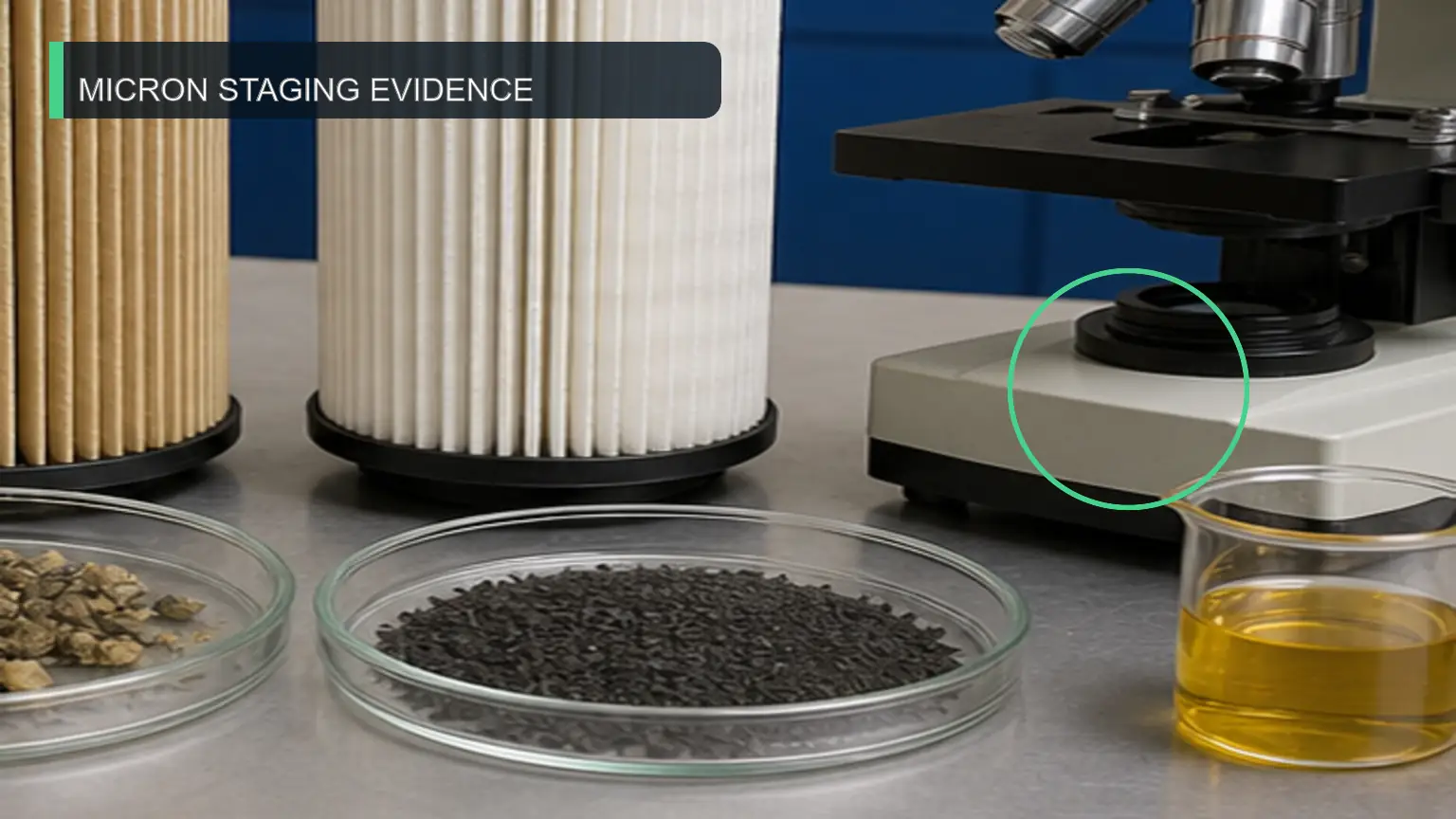
Evaluate nominal versus absolute language, beta ratio, particle-size efficiency, multi-pass method, media type, and contaminant distribution together rather than as isolated observations. The diesel-system specialist should preserve the as-found condition and tie every result to the exact vehicle, engine, operating state, and test equipment.
Keep the units and test condition beside each result; a value without speed, load, temperature, or method cannot support a replacement decision.
Nominal versus absolute language: record the condition or result for nominal versus absolute language; tie the nominal versus absolute language entry to the vehicle, engine, date, and operating condition.
Beta ratio: for beta ratio, document the applicable specification or observation; tie the beta ratio entry to its method and reviewer.
Particle-size efficiency: explain why particle-size efficiency matters; cite the source or measured limit used for particle-size efficiency.
Multi-pass method: use multi-pass method to test the suspected cause; when the multi-pass method evidence conflicts, define the next check.
Media type: retain a photograph, reading, or source note for media type; use the media type evidence to reproduce the decision.
Contaminant distribution: record the condition or result for contaminant distribution; tie the contaminant distribution entry to the vehicle, engine, date, and operating condition.
A bare micron number is not enough to compare two elements. If two readings disagree, repeat them at the same speed, load, temperature, and test point before replacing the element or opening a warranty claim.
Approve the measured step when the test point, instrument, stabilization state, demand, units, and repeated value can be reproduced by a second technician.
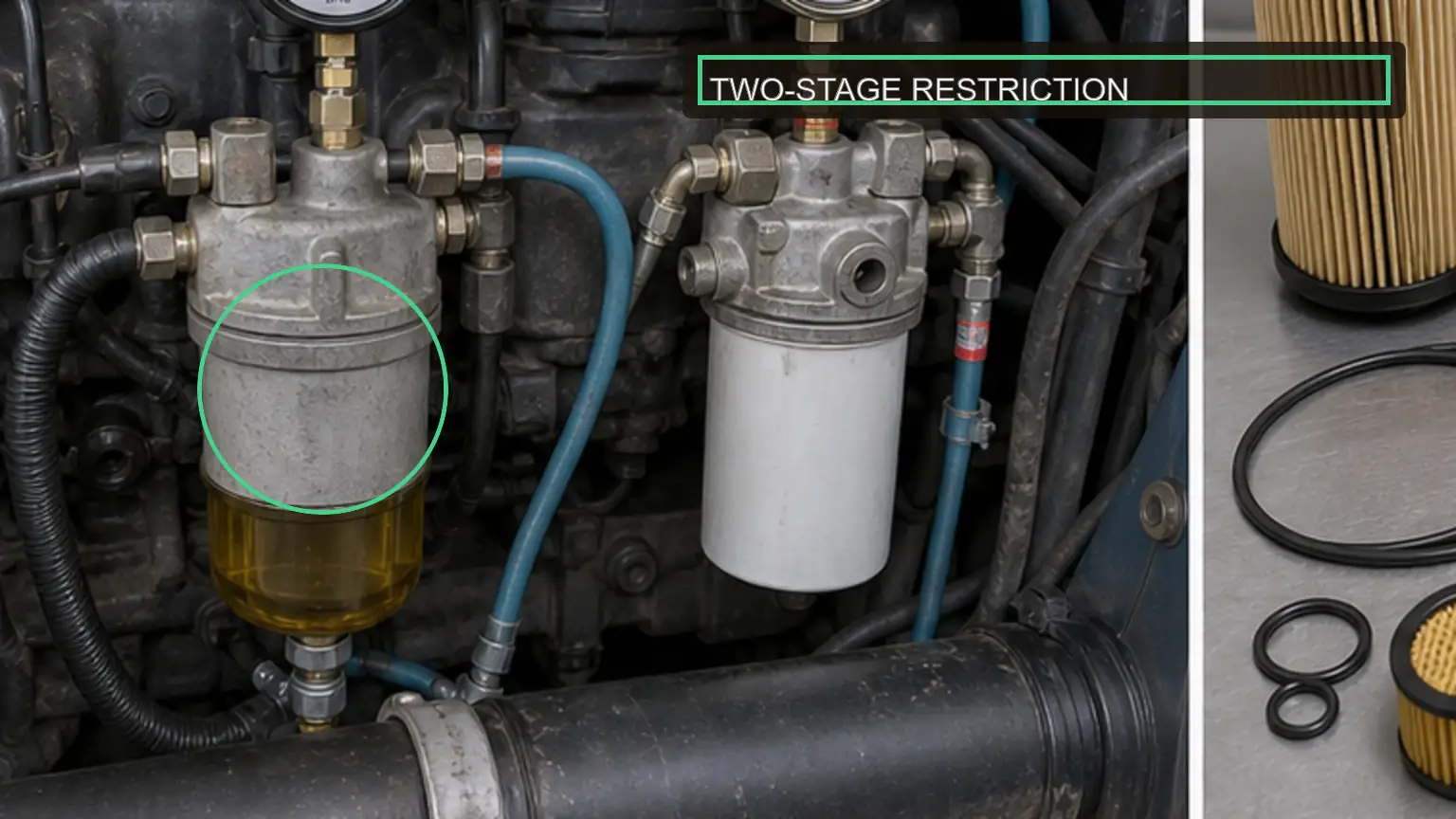
Diesel fuel filter system layout with the principal test points identified on a heavy-duty diesel application.
The working record should connect clean pressure drop, flow rate, viscosity, temperature, fuel blend, terminal restriction, bypass behavior, and service interval. The receiving inspector should note when and where each check was made so that a later reviewer can reproduce the reasoning.
Compare repeated readings under the same conditions before treating a change as evidence of improvement.
Clean pressure drop: record the condition or result for clean pressure drop; tie the clean pressure drop entry to the vehicle, engine, date, and operating condition.
Flow rate: for flow rate, document the applicable specification or observation; tie the flow rate entry to its method and reviewer.
Viscosity: explain why viscosity matters; cite the source or measured limit used for viscosity.
Temperature: use temperature to test the suspected cause; when the temperature evidence conflicts, define the next check.
Fuel blend: retain a photograph, reading, or source note for fuel blend; use the fuel blend evidence to reproduce the decision.
Terminal restriction: record the condition or result for terminal restriction; tie the terminal restriction entry to the vehicle, engine, date, and operating condition.
Bypass behavior: for bypass behavior, document the applicable specification or observation; tie the bypass behavior entry to its method and reviewer.
Service interval: explain why service interval matters; cite the source or measured limit used for service interval.
A high-efficiency element that starves the pump under winter load does not protect the system. When component restriction and upstream-condition evidence point in different directions, keep the conclusions separate until both sides are measured.
Release the cause decision when component service evidence and an upstream-condition test explain the complaint without forcing either result to fit the preferred theory.
A reliable fault path links free and emulsified water, coalescing, bowl or drain, WIF sensor, biodiesel effects, and service frequency. Before disturbing the system, the technical buyer should photograph the interfaces and record the engine identity, operating condition, instrument, and units.
If the maker specifies a dedicated test point, tool, sequence, or limit, that requirement controls the check.
Free and emulsified water: record the condition or result for free and emulsified water; tie the free and emulsified water entry to the vehicle, engine, date, and operating condition.
Coalescing: for coalescing, document the applicable specification or observation; tie the coalescing entry to its method and reviewer.
Bowl or drain: explain why bowl or drain matters; cite the source or measured limit used for bowl or drain.
WIF sensor: use WIF sensor to test the suspected cause; when the WIF sensor evidence conflicts, define the next check.
Biodiesel effects: retain a photograph, reading, or source note for biodiesel effects; use the biodiesel effects evidence to reproduce the decision.
Service frequency: record the condition or result for service frequency; tie the service frequency entry to the vehicle, engine, date, and operating condition.
The final filter should not be forced to manage a water load the primary stage failed to remove. A downstream symptom must be reconciled with upstream supply, control, and return conditions before a convenient component is blamed for the system fault.
Complete the symptom trace when upstream observations, component behavior, downstream evidence, and the control state agree on the probable source.
Technician performing a controlled diesel fuel filters measurement with calibrated workshop instruments.
Review vacuum before and after stages, supply pressure, loaded response, air ingress, tank vent, cold fuel, and filter history within the same diagnostic sequence. The warranty analyst should keep the original condition intact until the decisive measurements and photographs have been captured.
Photographs should show the component identity and the measured location, not merely the general engine compartment.
Vacuum before and after stages: record the condition or result for vacuum before and after stages; tie the vacuum before and after stages entry to the vehicle, engine, date, and operating condition.
Supply pressure: for supply pressure, document the applicable specification or observation; tie the supply pressure entry to its method and reviewer.
Loaded response: explain why loaded response matters; cite the source or measured limit used for loaded response.
Air ingress: use air ingress to test the suspected cause; when the air ingress evidence conflicts, define the next check.
Tank vent: retain a photograph, reading, or source note for tank vent; use the tank vent evidence to reproduce the decision.
Cold fuel: record the condition or result for cold fuel; tie the cold fuel entry to the vehicle, engine, date, and operating condition.
Filter history: for filter history, document the applicable specification or observation; tie the filter history entry to its method and reviewer.
Separate a plugged element from a line restriction, weak lift pump, or air leak. Photograph any altered seal, valve, drain, or media condition before cleaning because the removed evidence may decide whether the case is service-related or product-related.
Finish this inspection after every named component, interface, control, damage pattern, and measurement is tied to the application record.
Normal and failed diesel fuel filter conditions compared during incoming or warranty inspection.
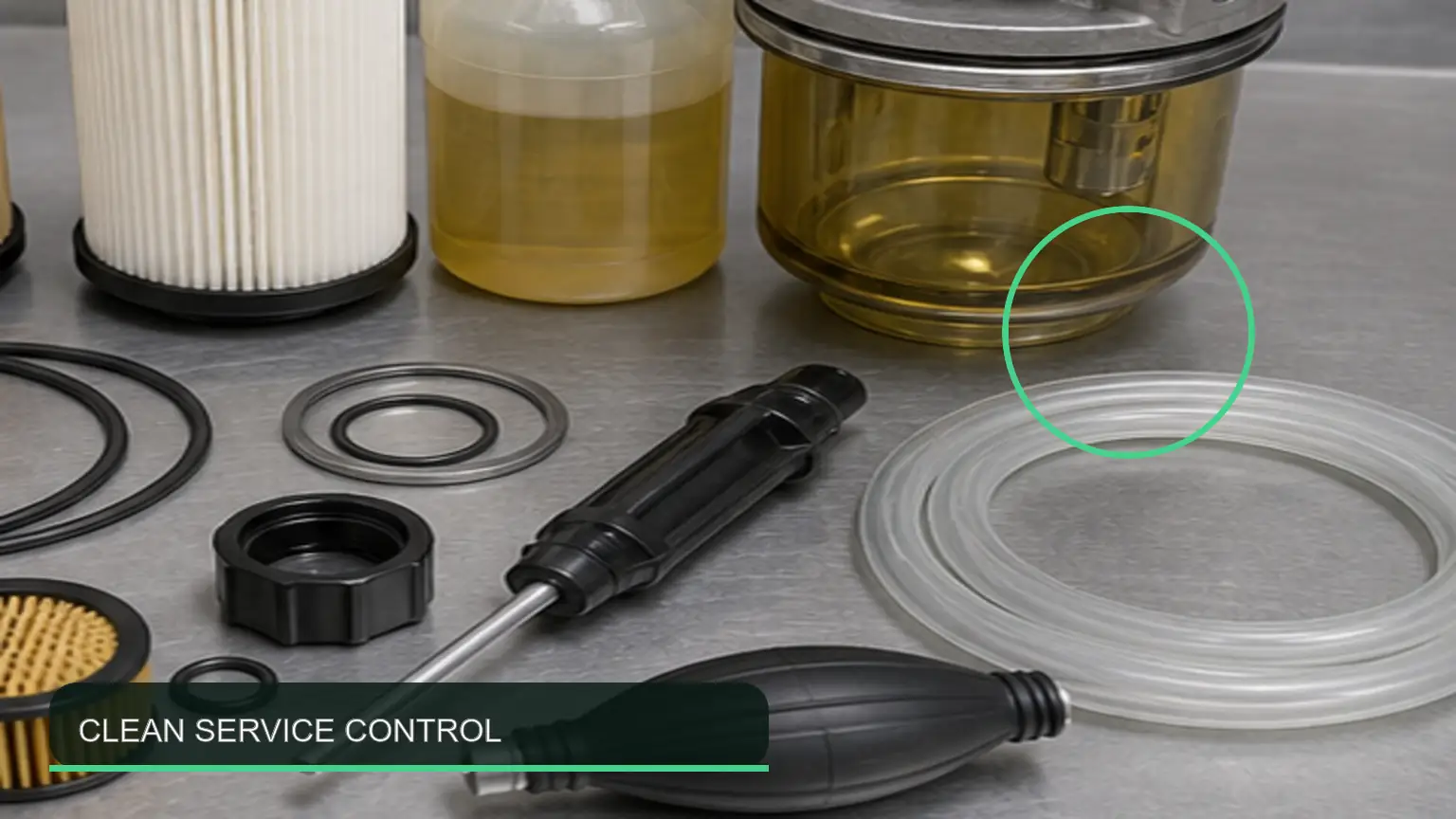
The replacement decision depends on consistent evidence for clean caps, dedicated containers, approved prefill policy, seal wetting, primer function, bleed route, and leak inspection. The supplier-quality engineer should document the application, component identity, method, units, temperature, and repeat result.
State what each observation proves, what it rules out, and which alternative cause remains open.
Clean caps: record the condition or result for clean caps; tie the clean caps entry to the vehicle, engine, date, and operating condition.
Dedicated containers: for dedicated containers, document the applicable specification or observation; tie the dedicated containers entry to its method and reviewer.
Approved prefill policy: explain why approved prefill policy matters; cite the source or measured limit used for approved prefill policy.
Seal wetting: use seal wetting to test the suspected cause; when the seal wetting evidence conflicts, define the next check.
Primer function: retain a photograph, reading, or source note for primer function; use the primer function evidence to reproduce the decision.
Bleed route: record the condition or result for bleed route; tie the bleed route entry to the vehicle, engine, date, and operating condition.
Leak inspection: for leak inspection, document the applicable specification or observation; tie the leak inspection entry to its method and reviewer.
One dirty service event can bypass months of filtration performance. Do not approve a look-alike replacement until its flow direction, valve arrangement, interfaces, and operating range match the engine record.
Accept the replacement match only when the engine reference, dimensions, interfaces, flow direction, valve function, and temperature range agree with approved evidence.
Release planning should bring together exact engine and housing references, stage role, efficiency data, restriction curve, water performance, packaging, lot trace, and change control. The workshop supervisor should connect the technical findings to the approved sample, incoming lot, installation record, and follow-up check.
The final record should allow purchasing, service, and warranty teams to reach the same conclusion without relying on memory.
Exact engine and housing references: record the condition or result for exact engine and housing references; tie the exact engine and housing references entry to the vehicle, engine, date, and operating condition.
Stage role: for stage role, document the applicable specification or observation; tie the stage role entry to its method and reviewer.
Efficiency data: explain why efficiency data matters; cite the source or measured limit used for efficiency data.
Restriction curve: use restriction curve to test the suspected cause; when the restriction curve evidence conflicts, define the next check.
Water performance: retain a photograph, reading, or source note for water performance; use the water performance evidence to reproduce the decision.
Packaging: record the condition or result for packaging; tie the packaging entry to the vehicle, engine, date, and operating condition.
Lot trace: for lot trace, document the applicable specification or observation; tie the lot trace entry to its method and reviewer.
Change control: explain why change control matters; cite the source or measured limit used for change control.
Approve the pair as a system rather than accepting unrelated cross-references. A lot can move to released inventory only after the sample result, packaging identity, installation check, and responsible reviewer are linked in one record.
Release the fleet standard after purchasing, receiving, service, and warranty teams can follow the same baseline, trigger, lot, installation, and follow-up record.
Diesel fuel filter fitment, clean packaging, and traceable batch-release checks for a heavy-duty order.
A useful diesel fuel filter RFQ begins with the exact engine family, serial or arrangement evidence, original reference, physical interfaces, system position, measured fault symptom, test conditions, monthly quantity, destination, and expected duty. It also states whether the offer is new primary and secondary elements with each supplied condition declared. Unverified genuine or OE language should not be inferred from appearance, packaging color, or a seller's keyword.
Include an approved diesel fuel filter sample process that covers primary-versus-secondary roles, micron staging, water separation, restriction budget, dirt capacity, high-pressure-system cleanliness, service, and acceptance testing. Compare the sample with the heavy-duty fuel filter example, but keep public product pages as research aids rather than application authority. The supplier should return a drawing or structured data sheet, photographs of the actual configuration, functional evidence relevant to this failure, and the packaging proposal before production release.
Legal seller and manufacturing or remanufacturing source
Exact part and application references with declared cross-reference basis
Included sensors, valves, seals, fittings, caps, and service hardware
Sample quantity, functional test method, acceptance limit, and report format
MOQ, lead time, Incoterm, warranty route, claim turnaround, and core terms where applicable
Lot code, date code, carton label, moisture and shock protection, and change notification
Receiving inspection should identify the diesel fuel filter shipment before opening every protective cap. Compare the label, housing reference, connector and port layout, mounting geometry, sealing surfaces, included hardware, and lot code with the approved application and released sample record. Sample checks should use the method and units agreed during approval; improvised pass limits create disputes rather than quality control.
After the diesel fuel filter is installed, follow the maker's clean-service, approved prefill or priming, bleeding, torque, and leak-check procedure and all applicable safety instructions. Recreate the operating condition that produced the original complaint as closely as practical, watch for leaks and abnormal pressure or temperature, and retain the first-run and loaded results. An easy start or smooth idle does not prove that both filter stages preserve adequate flow at rated load.
No. Color alone cannot show efficiency, dirt capacity, terminal restriction, water load, or available fuel flow. Measure restriction under the specified condition and review the staged-filter service record.
The number is a strong diesel fuel filter identity field, not the entire approval. Verify the engine application, interfaces, included accessories, product condition, functional data, packaging, warranty owner, and lot traceability required by this guide.
Quarantine an affected diesel fuel filter lot when identity, geometry, functional sample results, packaging, or declared source differs from the approved record. Do not mix the disputed units with released inventory while the supplier reviews the documented deviation.
Primary and secondary filters protect the high-pressure system only when their assigned jobs and restriction budgets complement each other. Define efficiency at the intended flow and temperature, protect the clean side, and approve the pair against engine limits.
Use the fuel filter catalogue, review the fuel-filter restriction and priming guide, and share the staged-filter specification through the Elecdurauto B2B contact page.