
English
Views: 0 Author: Site Editor Publish Time: 2026-08-06 Origin: Site


A starter armature may spin on a no-load bench test yet lose torque under diesel cranking load because of shorted turns, grounded windings, open connections, distorted laminations, a worn commutator, or poor brush contact. Cosmetic cleaning cannot establish whether the rotating assembly is electrically and mechanically fit for another service cycle.
Heavy-duty rebuilders also need repeatable limits. An armature accepted by feel at one branch and rejected by measurement at another produces inconsistent warranty outcomes, unstable wholesale batches, and avoidable damage to field coils, brushes, bearings, or the ring gear. Buyers can use the Elecdurauto starter motor category to organize reference and application research while the workshop keeps measured evidence in control of the final decision.
This guide builds a controlled inspection route from core identification and visual evidence through continuity, insulation, growler, runout, diameter, surface-finish, balance, and loaded release testing.
Record starter reference, voltage, power rating, application, complaint, prior repair marks, pinion damage, contamination, and rotor orientation before parts are separated. Before testing, the bench technician ties core reference to a named vehicle, engine, or bench configuration. That baseline gives armature winding integrity, growler interpretation, commutator geometry, mica condition, dynamic balance, and rebuild release a measurable starting point and prevents a convenient no-load observation from defining the entire starter motor case.
Establish core reference first, then compare complaint history while the original complaint is reproduced. Use orientation marks to challenge the first interpretation and retain contamination evidence as the condition that another workshop or supplier can repeat. Temperature, speed, load, connection point, and instrument identity belong beside every value.
The opening record must explain why core reference represents the starting state and how complaint history changes when the suspected failure appears. If orientation marks points elsewhere, the diagnosis stays open. contamination evidence becomes the reference used to compare the removed unit, approved sample, and later production lot.
core reference: capture the initial value and the exact operating condition.
complaint history: compare the response before and during the complaint.
orientation marks: use an independent observation to test the first theory.
contamination evidence: preserve the reference with date, instrument, and reviewer.
Armature findings are useful only when they remain tied to the exact starter family and failure event that produced the core. A missing baseline cannot be recreated from memory after replacement, so unresolved fields remain marked pending. The first gate closes only when the complaint and the recorded starter motor behavior describe the same event.
Sign the preserve core identity before disassembly baseline against the complaint, starter motor identity, operating state, and named reviewer. This first decision authorizes controlled testing while leaving fitment and purchasing approval open.
Examine windings, riser joints, laminations, shaft journals, thrust faces, fan features, balance material, rubbing marks, solder movement, and burnt insulation. This stage converts the initial observation into a controlled test route. The receiving inspector prepares winding discoloration, verifies the connection or mechanical setup, and records the ambient and starting condition before applying a load, command, or movement.
Measure lamination contact at the first defined point, then recheck shaft journal wear after the starter motor reaches the second condition. riser joint condition should reveal whether the change follows the component, the host system, or the test setup. A changed cable, adapter, fixture, or speed invalidates the comparison unless it is documented.
For inspect the armature for thermal and mechanical damage, the test sheet should let a second technician rebuild the same arrangement. It identifies the fixture, probe locations, timing, units, applied demand, and the reason each reading matters to the suspected failure.
winding discoloration: define the pre-test state and preparation method.
lamination contact: log the first controlled response with its unit and tolerance.
shaft journal wear: repeat at the second condition without changing unrelated variables.
riser joint condition: note the deciding observation and any remaining ambiguity.
Heat pattern and rub location often explain whether the damage began electrically, through bearing clearance, or through housing misalignment. If the two controlled points do not support one explanation, return to the setup instead of forcing a conclusion. Release requires a repeatable route, not a single favorable reading.
Close inspect the armature for thermal and mechanical damage only after the setup can be rebuilt from the recorded fixture, connection, load, timing, and instrument details. The result advances diagnosis but does not waive later batch controls.

S14-102 Yanmar 4TNV98 Starter Motor Wholesale, Drive-End Front View provides a physical reference for the opening application discussion.
Compare segment-to-segment continuity and test commutator-to-core and commutator-to-shaft insulation with instruments appropriate to the winding and insulation class. The purpose here is pattern recognition rather than collection of isolated numbers. The technical buyer aligns adjacent segment continuity, open winding, core insulation, and test voltage on one time line so the sequence of the starter motor response remains visible.
Interpret adjacent segment continuity together with open winding; either item alone can support several causes. Compare their timing with core insulation, then use test voltage to decide whether the pattern follows electrical demand, pressure, airflow, rotation, temperature, or another case-specific driver.
A strong test continuity, opens, and ground insulation report saves raw traces or photographs before adding conclusions. The analyst labels normal features, suspected anomalies, and the point where the pattern changes, allowing a supplier to compare claim evidence with the approved sample.
adjacent segment continuity: retain the unedited trace, image, or measured sequence.
open winding: mark the feature that changes with the complaint.
core insulation: compare the same feature under a control condition.
test voltage: state which cause the combined pattern supports or excludes.
A low-resistance winding requires lead compensation and family-specific limits; a generic continuity beep is not an acceptance standard. When the pattern is incomplete, collect the missing operating interval instead of repeating the interpretation. The decision gate closes when the evidence sequence explains why the starter motor changed.
Release test continuity, opens, and ground insulation when the saved pattern and control condition support one interpretation of the starter motor behavior. Contradictory traces remain attached as open evidence.
Apply the growler correctly, rotate the armature through all positions, interpret blade response, and distinguish true magnetic concentration from geometry or fixture effects. This module examines how the starter motor behaves after time, heat, load, or contamination has had an opportunity to act. The warranty analyst defines the exposure interval and tracks growler setup before, during, and after that interval.
Correlate blade response with shorted turn location rather than treating either value as a universal limit. Add repeatability to show whether cooling, lubrication, sealing, supply, or surrounding hardware changed the result. The exposure must be long enough to reveal the complaint without exceeding the declared duty.
The use a growler to locate shorted turns worksheet should include ambient condition, starting temperature, applied duty, elapsed time, peak observation, stabilization point, and recovery behavior. These details distinguish a genuine stress-related defect from a test that simply overheated the assembly.
growler setup: establish the pre-exposure reference.
blade response: capture the peak or worst-case behavior.
shorted turn location: compare the response at a fixed elapsed time.
repeatability: document recovery and any permanent change.
A growler result must be repeatable and correlated with heat, current, or winding evidence before the armature is condemned. A result outside the limit requires the surrounding system to be checked before the starter motor is condemned. Approval waits until the stress route and recovery evidence agree.
Approve use a growler to locate shorted turns after exposure, peak response, stabilization, and recovery form one defensible sequence. The signature covers this stress route rather than unrelated endurance claims.
For a physical reference, the starter motor product example can help a buyer compare visible interfaces and application clues. Product photography supports use a growler to locate shorted turns, but it cannot replace the controlled readings and documented limits required by this section.
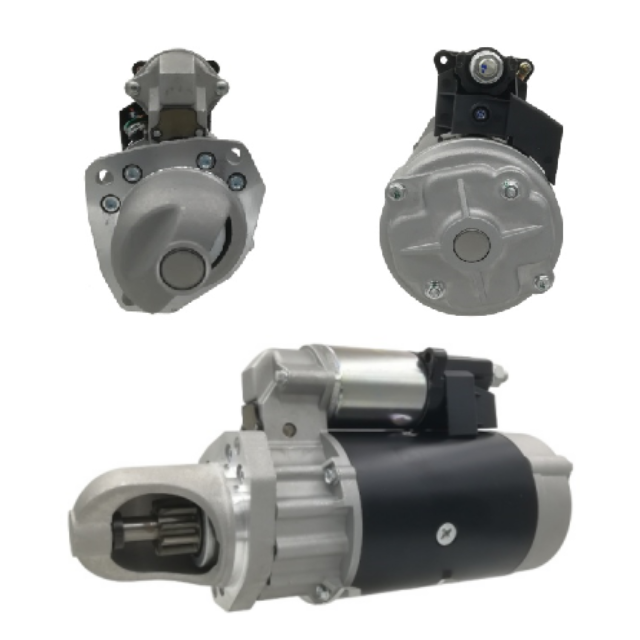
Elecdurauto DENSO-Type 1546 Starter Motor for Heavy-Duty John Deere Equipment supports the first technical inspection module.
Measure diameter at multiple points, check eccentricity on supported journals, inspect bars, mica, risers, burning, grooving, and evidence of brush bounce. Bench inspection now tests the internal or component-level theory developed on the machine. The fleet electrician preserves the removed condition, cleans only what the method requires, and records minimum diameter before disassembly can erase useful evidence.
Quantify radial runout with equipment suited to its expected range, verify bar condition through a second method where practical, and photograph mica depth beside the part identity. Compensation, temperature, fixture pressure, and zeroing matter when small differences drive the conclusion.
The bench record separates observation from interpretation. It states what was measured directly, what was inferred from the pattern, what limit was used, and whether that limit belongs to the exact starter motor family under review.
minimum diameter: preserve the as-removed condition and reference marks.
radial runout: record calibrated measurement and environmental correction.
bar condition: confirm the suspected mechanism with a second observation.
mica depth: connect visible condition with the measured failure path.
Machining can restore a surface only when sufficient material, bar security, and shaft geometry remain within the exact starter specification. If cleaning, dismantling, or fixture force could have changed the result, the report states that limitation. A batch decision must not rely on a bench value whose method cannot be reproduced.
Accept measure commutator diameter, runout, and surface when as-removed condition, calibrated values, compensations, and component photographs identify the same mechanism. Any destructive inspection limitation stays visible.
Define lathe support, cut depth, surface finish, mica undercut, chamfer, burr removal, copper dust removal, and post-machining electrical retest. Competing causes must now be separated so that the replacement addresses the failed section rather than the most visible symptom. The bench technician compares finished diameter and surface roughness under the same demand before changing any component.
Use mica undercut to test the alternative explanation, then inspect debris removal for evidence that the host system created or amplified the complaint. Each branch needs a pass/fail reason; swapping parts until the symptom disappears does not identify the original starter motor failure.
A cause map for control machining, undercutting, and cleaning lists the evidence expected if each candidate fault were true. The actual readings are then placed against those expectations, including contradictory observations that prevent premature closure.
finished diameter: define what this result would mean for the primary theory.
surface roughness: compare the alternative component or system response.
mica undercut: run the discriminating check that separates both paths.
debris removal: inspect the interface where one fault could imitate another.
A bright commutator is not acceptable if machining leaves taper, high mica, smeared copper, embedded abrasive, or an unverified electrical fault. Replace the starter motor only after the selected cause explains the complaint and the rejected cause fails its own evidence test. This gate protects the fleet from repeat failure and protects the supplier from an unsupported claim.
Pass control machining, undercutting, and cleaning after the chosen cause explains the complaint and the competing cause fails its defined check. The signature prevents parts substitution from masquerading as diagnosis.
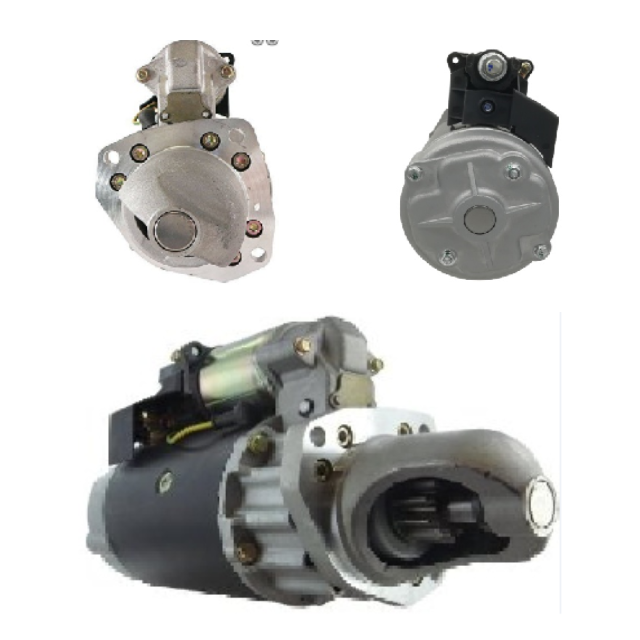
Elecdurauto DENSO-Type 1546F Starter Motor for Heavy-Duty John Deere illustrates a mid-article fitment or test-control point.
Reassemble with verified bearings, brushes, field components, insulation, endplay, and drive, then record no-load and loaded voltage, current, speed, torque, temperature, and engagement. The final module converts technical findings into an acceptance standard that purchasing, receiving, and warranty teams can apply consistently. The receiving inspector defines how endplay and no-load current will be compared between the approved sample and production units.
Add loaded torque to expose changes that a label or catalogue cross-reference cannot show. Use post-test temperature to connect each result with the supplier lot, purchase order, and reviewer. Tolerances should reflect the actual heavy-duty duty cycle rather than an unspecified generic test.
The acceptance sheet for release the rebuilt starter under load identifies mandatory evidence, sampling frequency, instruments, pass limits, quarantine action, and escalation owner. It also states which changes require a new sample or field trial.
endplay: define the release value and sampling method.
no-load current: compare sample evidence with the incoming lot.
loaded torque: retain the technical record that exposes configuration drift.
post-test temperature: trace approval, deviation, and claim decisions to one identity.
The armature is approved only when its component measurements and the complete starter performance agree under a traceable rebuild standard. A production lot advances only when its evidence follows the approved route. Price, urgency, or stock shortage cannot silently waive a mandatory starter motor acceptance field.
Authorize release the rebuilt starter under load through a sampling plan, stated limits, traceable lot, quarantine rule, and deviation owner. Production release follows evidence rather than schedule pressure.
Technical diagnosis becomes commercially useful when an RFQ carries the same identity and limits. A starter motor inquiry should include the original reference, engine or vehicle, photographs, measured interfaces, operating symptoms, tested conditions, required quantity, destination, and expected reorder frequency. This prevents a broad catalogue match from replacing the evidence developed above.
State whether the requested starter motor is new aftermarket, remanufactured, or another declared condition.
List mandatory electrical, hydraulic, air-path, or mechanical interfaces relevant to this starter motor case.
Define sample evidence, receiving checks, packaging, labels, and change notification.
Keep price, MOQ, and lead time separate from unresolved technical fitment.
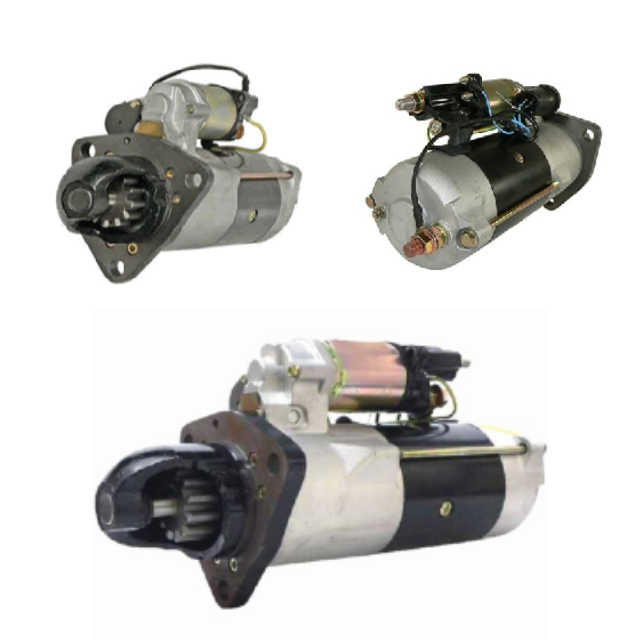
Elecdurauto DENSO SYSTEM 1645 Starter Motor for Heavy-Duty Mack & International Trucks supports the sourcing evidence and comparison discussion.
The approved starter motor sample is useful only when its measurable configuration follows the purchase order into later shipments. Receiving should compare markings, connectors, mounting, visible construction, packaging, selected functional readings, and any promised documents. A changed configuration returns to technical review instead of entering fleet stock by habit.
Retain the approved starter motor sample or a complete photo and measurement record.
Trace each incoming lot to the supplier declaration and purchase-order revision.
Quarantine a changed interface, label, internal reference, or test result.
Feed field failures back into the same evidence route used for initial approval.
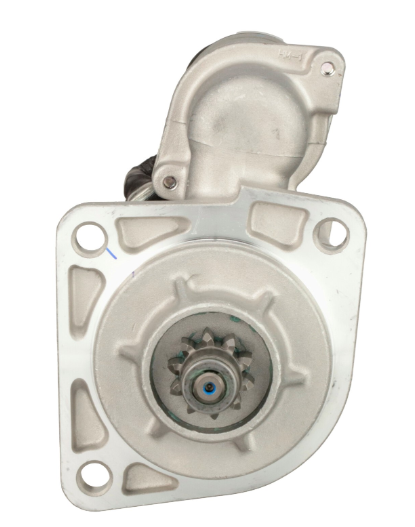
31 34023N heavy duty starter motor for diesel engines 800 800 provides a late-stage receiving or repeat-order reference.
A defensible starter motor case file links the complaint, operating duty, removed-part markings, test setup, raw readings, photographs, interpretation, and unresolved questions. For this diagnostic workflow, that record should also identify which evidence came from the vehicle, the bench, the supplier, and the receiving team so later decisions do not mix unlike sources.
Identify the starter motor, host vehicle or machine, duty cycle, and original complaint.
Attach measurements that support the investigation described above without rewriting raw results.
Name the person who accepted each starter motor limit and the person who owns each open question.
Connect the approved sample, purchase order, supplier lot, and incoming inspection record.
Starter Motor Armature and Commutator Testing for Heavy-Duty Rebuilders works when every reading belongs to a defined condition and every decision belongs to a named owner. The result is a clearer root cause, a more precise aftermarket specification, and a receiving standard that can expose a change before it reaches a heavy-duty fleet.
Importers and fleet buyers can review Elecdurauto company information, send the completed evidence through the B2B contact page, and use the Elecdurauto heavy-duty parts catalogue to connect the case with the appropriate product family. The quotation should answer the documented application rather than imply an unverified genuine or OE status.


