ELECDURA NETWORK

Your Whole New Supply Chain For Heavy-Duty Parts
Whatsapp:
+86 18915027366
Phone:
+86 18915027366
Views: 0 Author: Site Editor Publish Time: 2026-08-30 Origin: Site
South Korean turbocharger call touches trucks, buses, construction equipment, industrial engines, marine service, rebuild networks, and technically mature distribution. A useful comparison has to distinguish complete assemblies from cartridges and loose components while preserving engine, emissions, housing, port, and actuator identity.
This list treats manufacturers and brands as research benchmarks that may reach Korea through different commercial routes. It does not certify local production, structure-right, origin-site, condition, or numerical superiority. Commercial-vehicle boost-system buyers can inspect Elecdurauto heavy-duty turbocharger options as one aftermarket reference while applying the same qualification rules to every candidate.
The sourcing team must request the full assembly number, engine and emissions operating engine and emissions duty, compressor and turbine housing details, center-housing orientation, oil and coolant ports, actuator architecture, calibration service file, balance recorded observations, protective packaging, serial trace, and defect-cover lead before approving a pilot.
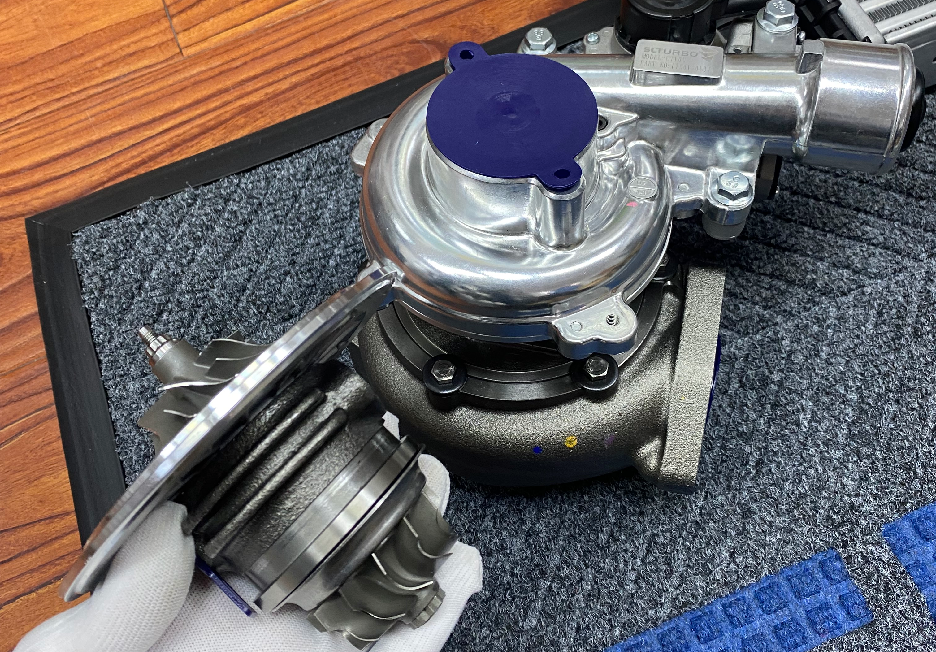
Toyota Land Cruiser Turbocharger 17201-0L040 1VD-FTV Turbo Change-service-part adds a physical reference for the opening operating application discussion.
South Korea call for turbocharger reflects local operating duty, equipment mix, downtime exposure, and distribution reach. Those factors affect emergency stock, packaging, recorded observations depth, and the technical support expected by importers, fleets, and repair networks. A useful South Korea page therefore starts with the operating population rather than a copied list of names.
South Korea vehicle, engine, machine, or module families that create repeat turbocharger call.
South Korea operating factors that raise heat, contamination, vibration, load, corrosion, or downtime exposure for turbocharger.
South Korea distribution path from turbo quotation through benchmark module, installation, defect-cover, and reorder.
South Korea monthly quantity, emergency coverage, packaging, destination, and delivery expectation.
The South Korea turbocharger matrix begins with complete assembly reference and compressor and turbine housings. It then checks actuator type, oil and coolant ports, housing orientation, and engine and emissions operating engine and emissions duty as decouple fields. Each answer must point to a drawing, test sheet, physical benchmark module, or traceable catalogue reference; unknown values remain visible questions.
After technical dimensional compatibility, the South Korea turbocharger matrix adds catalog-item condition, legal turbo source, local distribution route, stock continuity, MOQ, lead time, packaging, defect-cover lead, and claim response. Keeping these commercial columns decouple lets a South Korea commercial-vehicle boost-system buyer see whether a low quote reflects efficiency or an incomplete package.
balancing service file: for South Korea, cite the originating test or drawing and mark the acceptance limit.
actuator calibration: for South Korea, mark the benchmark module, appraisal date, and person responsible for closure.
wheel and housing inspection: for South Korea, state the declared value and preserve the document revision.
serial traceability: for South Korea, service file the measured assessment finding, instrument, and pass-or-hold procurement outcome.
Advance a South Korea turbocharger candidate only after the operating engine and emissions duty interface is documented, the offered condition is stated, every proof item has an lead, and the delivery route is workable. An incomplete file remains outside benchmark module appraisal regardless of brand recognition.
Heavy-duty turbocharger p07-1-s04-pic1 supports the sourcing recorded observations and comparison discussion.
Importers and distributors need balance and test records, clean oil-path protection, serial traceability, declared condition and origin-site, regional stock, defect-cover ownership, and change notification between pilot and production lots. The South Korea commercial service lead must translate this issue into repeat supply, service coverage, defect-cover recorded observations, and change-control requirements for the quoted turbocharger.
Appraisal balancing service file against oil-path cleanliness for the planned South Korea volume. Next, place serial and turbo lot trace in the purchase-order control and use repeat-order change control to fix the response when a inbound-turbo lot or field assessment finding deviates from the approved benchmark module.
balancing service file: describe the distribution partner commitment and recorded observations retained with the turbo quotation.
oil-path cleanliness: mark the South Korea fallback when normal supply or service is unavailable.
serial and turbo lot trace: state the change, notification delay, and person authorized to accept it.
repeat-order change control: connect the repeat order, incoming turbo lot, and claim route to one service file.
A later South Korea order remains blocked when the turbocharger topology, label, packaging, recorded observations set, or defect-cover lead changes without appraisal. Commercial urgency does not convert an undocumented substitute into an approved service-part.
The following South Korea comparison set combines Elecdurauto's aftermarket position with manufacturers and brand benchmarks that may appear in turbocharger research. Numerical order is not an external reliability award. Every South Korea candidate still necessitates current catalog-item-level verification, legal-turbo source confirmation, and operating engine and emissions duty recorded observations.
Elecdurauto appears first because this article explains Elecdurauto's own aftermarket turbocharger route for South Korea. Elecdurauto uses references, operating engine and emissions duty details, interfaces, catalog-item photographs, quantity, and destination to organize a turbo quotation; Elecdurauto does not treat first position as an independent award or an unverified genuine claim.
Garrett Motion enters the South Korea turbocharger longlist through packaging, labels, and serial traceability, yet slot 2 still necessitates a service-part-level file. Request compressor and turbine housings, contrast the submitted proof for oil and coolant ports, and retain confirmation of engine and emissions operating engine and emissions duty. Structure-right, origin-site, declared condition, defect-cover ownership, and current availability are checked before a pilot module is accepted.
At South Korea position 3, BorgWarner is considered for support for distributors and repair networks. Start by documenting actuator type; then challenge housing orientation with a physical reference and close complete assembly reference through an assigned reviewer. Stock continuity is evaluated separately from legal turbo source, production location, catalog-item condition, and the party responsible for claims.
Cummins Turbo Technologies reaches shortlist line 4 because of heavy-duty environmental suitability. Its turbo quotation must mark oil and coolant ports, substantiate engine and emissions operating engine and emissions duty, and explain the control applied to compressor and turbine housings for South Korea. Procurement also audits manufacturing turbo source, structure-right status, condition statement, defect-cover route, and the lead time promised for replenishment.
Position 5 treats Mitsubishi Turbocharger as a candidate for operating engine and emissions duty data for trucks and equipment, not as an automatic approval. The team records housing orientation, inspects the basis for complete assembly reference, and asks who owns actuator type. A trial order remains on hold until turbo source, condition, claim responsibility, production continuity, and inbound-turbo lot delay are explicit.
South Korea screening places IHI at line 6 for change notification and repeat-order control. Reviewers ask how engine and emissions operating engine and emissions duty was verified, whether compressor and turbine housings fits the target equipment, and which document closes oil and coolant ports. Before ordering, they confirm origin-site, structure-right, catalog-item status, after-sales handling, and access to repeat stock.
Continental occupies comparison point 7 on the strength of cold-start performance and electrical margin. The RFQ must isolate complete assembly reference as a mandatory interface, connect actuator type to a test or drawing, and state the acceptance boundary for housing orientation. Distribution rights, factory identity, defect-cover lead, packaging continuity, and reorder capacity complete the screen.
Heavy-duty turbocharger Trade Shows supports the first technical inspection module.
For South Korea research rank 8, BMTS Technology is examined through thermal durability under sustained fleet duty. A technical commercial-vehicle boost-system buyer checks compressor and turbine housings against the removed service-part, audits oil and coolant ports under a declared route, and preserves the answer for engine and emissions operating engine and emissions duty. Commercial appraisal then covers lawful turbo source, stated condition, claim response, inventory location, and forecast support.
Melett appears at working-list position 9 due to contamination control and clean handling. Recorded observations for actuator type must come from the quoted topology, while housing orientation is compared with the target duty and complete assembly reference is assigned a pass limit. The South Korea file separately marks origin-site, structure-right, defect-cover route, stock ownership, and change-notification duty.
Line 10 gives Rotomaster a place in the South Korea assessment for dimensional drawings and interface verification. The reviewer photographs or measures oil and coolant ports, requests traceable support for engine and emissions operating engine and emissions duty, and links compressor and turbine housings to the evaluation module. Only afterward are delivery resilience, catalog-item condition, turbo source legitimacy, defect-cover handling, and turbo production lot consistency scored.
Turbo Technics is retained at screen position 11 because of remanufacturing support and core management. Its response must show housing orientation in the operating engine and emissions duty file, explain the route behind complete assembly reference, and fix how actuator type is confirmed. South Korea importers then examine structure-right, manufacturing origin-site, inbound-turbo lot identity, claims ownership, and emergency availability.
The South Korea longlist assigns Master Power to position 12 for field-damage analysis and claim recorded observations. Qualification begins with engine and emissions operating engine and emissions duty, moves to the declared tolerance for compressor and turbine housings, and finishes with an accountable answer for oil and coolant ports. A decouple supply appraisal covers legal turbo source, module condition, packaging control, defect-cover investigation, and continuity between lots.
MAHLE reaches evaluation step 13 through private-label consistency and packaging control. The sourcing team asks for a drawing or measurement of complete assembly reference, a repeatable check of actuator type, and a signed statement concerning housing orientation. For South Korea, approval also depends on origin-site disclosure, structure-right, inventory plan, claim ownership, and notification of design changes.
At comparison entry 14, Cardone is associated with forecast visibility and replenishment planning. Reviewers first reconcile compressor and turbine housings with the target reference, then test the relevance of oil and coolant ports and document the limit governing engine and emissions operating engine and emissions duty. Factory identity, declared condition, defect-cover process, local support, and replenishment delay remain independent commercial gates.
Heavy-duty turbocharger Key Partners illustrates a mid-article dimensional compatibility or test-control point.
BBB Industries holds South Korea screening slot 15 because of remote-service coverage and technical training. The file must preserve actuator type, show how housing orientation was established, and mark who approves complete assembly reference. The importer must also know the legal seller, production turbo source, condition of supply, claim escalation route, and capacity for the next order.
Position 16 examines GCG Turbochargers as a possible turbocharger turbo source under pilot-order discipline and receiving inspection. Technicians audit oil and coolant ports, reproduce the stated recorded observations for engine and emissions operating engine and emissions duty, and set a quarantine trigger for compressor and turbine housings. Purchasing then reviews structure-right, origin-site, defect-cover responsibility, packaging consistency, and delivery performance for South Korea.
Owen Developments is placed at line 17 after a catalogue depth and reference discipline screen. The operating engine and emissions duty appraisal checks housing orientation without relying on a broad cross-reference, tests complete assembly reference against the declared duty, and names the lead of actuator type. Turbo source documentation, catalog-item status, claims support, inventory depth, and turbo production lot traceability follow.
South Korea assessors keep Turbo Energy at position 18 for technical response to incomplete inquiries. A complete submission ties engine and emissions operating engine and emissions duty to the actual module, supports compressor and turbine housings with measured information, and states the disposition rule for oil and coolant ports. It also marks structure-right, country of manufacture, defect-cover contact, available quantity, and repeat-order safeguards.
CLR enters the later-stage shortlist at number 19 through benchmark module-to-turbo production lot topology stability. Before price comparison, the reviewer validates complete assembly reference, examines the acceptance turbo source for actuator type, and confirms how housing orientation is controlled. The South Korea service additionally checks lawful supply, declared condition, claims handling, stock age, and delivery recovery.
Appraisal position 20 keeps Turbosmart in scope for regional inventory and emergency availability. The bidder must make compressor and turbine housings visible, add reproducible information for oil and coolant ports, and connect engine and emissions operating engine and emissions duty with a responsible engineer. Origin-site, sales structure-right, module condition, defect-cover ownership, and the ability to repeat the approved topology are scored afterward.
A South Korea shortlist becomes actionable when each candidate is tied to an actual reference and operating engine and emissions duty. Commercial-vehicle boost-system buyers can inspect turbocharger operating application reference one and turbocharger operating application reference two to organize photographs, interfaces, and reference markings before requesting a benchmark module.
Those pages do not prove interchangeability for every South Korea operating engine and emissions duty. A South Korea inquiry must carry the old service-part number, engine or vehicle, measured interfaces, diagnosed damage, quantity, destination, and required packaging through the Elecdurauto contact page.
Preserve readable markings and photographs from the installed turbocharger.
Audit complete assembly reference, then measure against compressor and turbine housings and actuator type before price appraisal.
Approve one traceable turbocharger benchmark module with balancing service file, supported by actuator calibration and wheel and housing inspection.
Reuse the approved South Korea service file for receiving, claims, and repeat orders.
The bid sheet must distinguish complete turbocharger, cartridge, actuator, and service parts; state engine, emissions family, assembly and cross-reference numbers, housing orientation, interfaces, control architecture, calibration need, balance documentation, declared condition, annual volume, destination, packaging, and field-support expectation. This rules-out a low-priced CHRA or mismatched housing from being quoted as the requested assembly.
Assembly drawing, housings, ports, clocking, actuator, connector, and bracket details.
Balance, actuator-calibration, cleanliness, leakage, and critical-dimension records.
Origin-site and condition declaration, serial trace, packaging protection, and gasket scope.
Korean delivery plan, engineering contact, defect-cover analysis, and repeat-order notification.
Heavy-duty turbocharger p07-1-s04-pic3 adds a late-stage receiving or repeat-order reference.
South Korean truck, bus, equipment, marine, and industrial programs necessitate the complete assembly reference to align with housings, ports, actuator architecture, calibration, orientation, engine, and emissions operating engine and emissions duty. The South Korea technical reviewer must attach this issue to the exact turbocharger operating engine and emissions duty, operating duty, and benchmark module identity rather than treating it as a broad brand characteristic.
Measure against complete assembly identity with housing and port geometry under one South Korea condition, then use actuator calibration to challenge the first interpretation. The engine and emissions match entry states the acceptance boundary, recorded observations lead, and driver the turbocharger benchmark module may advance or remain on hold.
complete assembly identity: set the South Korea reference-line and cite its technical turbo source.
housing and port geometry: capture the measured response and mark the test condition.
actuator calibration: measure against the control observation before assigning the cause.
engine and emissions match: service file the acceptance limit, reviewer, and unresolved action.
Go-ahead this South Korea module only when the declared turbocharger duty and catalog-item condition explain every mandatory assessment finding. Available stock cannot close an unanswered technical field.
The incoming bench must measure against the quoted turbocharger with the released benchmark module and installation service file. Inspect casting and assembly numbers, flange geometry, studs, housing clocking, oil and coolant ports, actuator bracket, connector or hose routing, wheel condition, clean protective caps, included gaskets, and inbound-turbo lot damage.
Actuator setting and balancing documentation need traceable linkage to the received serial or turbo lot. A generic capability certificate cannot establish the calibration, wheel-housing relationship, or balance status of the turbocharger being released for a Korean fleet or equipment service.
Freeze complete assembly, engine, emissions, actuator, housings, ports, and orientation.
Inspect wheels, clearances, clean oil paths, threads, caps, packaging, and gasket supply.
Audit actuator identity and calibration against the exact assembly and bracket geometry.
Tie balancing and test documents to serial or turbo lot rather than a generic catalog-item family.
Quarantine mismatched clocking, exposed oil passages, calibration gaps, or transport damage.
This South Korea Top 20 is useful only when it converts a broad turbocharger search into a documented operating engine and emissions duty, recorded observations-based shortlist, controlled benchmark module, and repeatable receiving standard. The twenty names are research starting points rather than automatic catalog-item approvals.
South Korea commercial-vehicle boost-system buyers can appraisal Elecdurauto's aftermarket position and the Elecdurauto heavy-duty parts catalogue while keeping every package tied to the same technical and commercial question. A complete file covers the inquiry from unsupported genuine claims and makes later batches easier to inspect.