ELECDURA NETWORK

Your Whole New Supply Chain For Heavy-Duty Parts
Whatsapp:
+86 18915027366
Phone:
+86 18915027366
Views: 0 Author: Elecdura Publish Time: 2026-09-07 Origin: Site
The United States has several documented injector routes, including new and remanufactured fuel-system production, OEM-aligned technology groups, independent remanufacturers, replacement-parts manufacturers and specialist distributors. Their published roles are different, so this seven-company guide is a route comparison rather than a ranking. This guide uses official company pages available on the research date and asks what a buyer can verify before sending money or committing a fleet application.
Elecdura supplies heavy-duty replacement parts to B2B buyers, but it does not certify the third parties below or imply a commercial relationship with them. For product identification, buyers can also review the diesel injector shipping inspection and the diesel injector test report guide.
A company is included only when an official company page or corporate document supports the stated role. The number in the headline is the number of documented routes found for this focused comparison; it is not a league table. No position indicates product quality, sales volume, price, inventory or preference.
The screening keeps five facts separate: who manufactures, who sells, who services or remanufactures, what applications the published source mentions, and what the buyer must still confirm. Corporate capability pages can become outdated, and they rarely prove that a specific part is available today. A current written quotation and application packet remain mandatory.
The correct path depends on engine platform, injector family, warranty expectations, calibration or trim-code needs, core economics and available test evidence. A fleet seeking authorized new parts, an engine rebuilder buying reman units and a workshop needing components or tooling should not receive the same shortlist.
Before contacting any route, record the installed part number and every readable suffix, equipment make and model, engine family, serial or build range, electrical or control specification, interface photographs, failure symptoms and required quantity. If the old part has been superseded, ask the seller to state the chain of supersession and the evidence used.
Cummins Fuel Systems is included because its own published material supports a defined role. Cummins states that its U.S. fuel-systems operations produce and remanufacture unit-injector and common-rail systems. This evidence establishes a sourcing route; it does not prove current inventory, price, quality superiority or access for every buyer.
Buyer verification: Confirm engine platform, injector family, calibration or trim requirement, new/reman condition and authorized channel. The quotation should name the invoicing entity and declared product condition so the buyer can compare like with like.
Stanadyne / PurePower Technologies is included because its own published material supports a defined role. Stanadyne lists diesel injectors, pumps and PurePower injector and remanufacturing activities from a U.S.-headquartered organization. This evidence establishes a sourcing route; it does not prove current inventory, price, quality superiority or access for every buyer.
Buyer verification: Separate Stanadyne mechanical products from PurePower applications and verify the exact program and sales route. The quotation should name the invoicing entity and declared product condition so the buyer can compare like with like.
North America Fuel Systems Remanufacturing is included because its own published material supports a defined role. NAFS describes high-precision remanufacturing for unit and common-rail injectors with OE-level testing and trim-code classification. This evidence establishes a sourcing route; it does not prove current inventory, price, quality superiority or access for every buyer.
Buyer verification: Request part identity, recovery limits, test points, trim-code handling, traceability and core acceptance terms. The quotation should name the invoicing entity and declared product condition so the buyer can compare like with like.
GB Remanufacturing is included because its own published material supports a defined role. GB publishes diesel catalogs and application lookup for diesel fuel-injection products. This evidence establishes a sourcing route; it does not prove current inventory, price, quality superiority or access for every buyer.
Buyer verification: Verify catalog coverage, condition, included seals, coding instructions, warranty and return authorization. The quotation should name the invoicing entity and declared product condition so the buyer can compare like with like.
JASPER Fuel and Air Components is included because its own published material supports a defined role. JASPER lists remanufactured electronic, mechanical and common-rail injectors and describes test criteria. This evidence establishes a sourcing route; it does not prove current inventory, price, quality superiority or access for every buyer.
Buyer verification: Confirm platform coverage, replaced components, calibration evidence, warranty scope and installer requirements. The quotation should name the invoicing entity and declared product condition so the buyer can compare like with like.
Interstate-McBee / Interstate Diesel is included because its own published material supports a defined role. Its company history documents U.S. fuel-injection manufacturing, injector rebuilding and branch distribution development. This evidence establishes a sourcing route; it does not prove current inventory, price, quality superiority or access for every buyer.
Buyer verification: Identify whether the quote is an in-house product, distributed product or rebuilt unit and request application evidence. The quotation should name the invoicing entity and declared product condition so the buyer can compare like with like.
Redat North America is included because its own published material supports a defined role. Redat lists a North American operation in Florida and catalogs unit and common-rail injector products and tooling. This evidence establishes a sourcing route; it does not prove current inventory, price, quality superiority or access for every buyer.
Buyer verification: Do not label the U.S. branch as the manufacturer; verify product maker, condition, calibration scope and lead time. The quotation should name the invoicing entity and declared product condition so the buyer can compare like with like.
Documented route | What the source supports | What the buyer still must verify |
|---|---|---|
1. Cummins Fuel Systems | New and remanufactured heavy-duty fuel-system producer | Confirm engine platform, injector family, calibration or trim requirement, new/reman condition and authorized channel. |
2. Stanadyne / PurePower Technologies | Fuel-system manufacturer and injector/reman technology group | Separate Stanadyne mechanical products from PurePower applications and verify the exact program and sales route. |
3. North America Fuel Systems Remanufacturing | Unit-injector and common-rail remanufacturer | Request part identity, recovery limits, test points, trim-code handling, traceability and core acceptance terms. |
4. GB Remanufacturing | Application-cataloged diesel injector supplier and remanufacturer | Verify catalog coverage, condition, included seals, coding instructions, warranty and return authorization. |
5. JASPER Fuel and Air Components | Mechanical and electronic diesel injector remanufacturer | Confirm platform coverage, replaced components, calibration evidence, warranty scope and installer requirements. |
6. Interstate-McBee / Interstate Diesel | Heavy-duty replacement-parts manufacturer and fuel-injection supplier | Identify whether the quote is an in-house product, distributed product or rebuilt unit and request application evidence. |
7. Redat North America | U.S. supply operation for diesel injection parts and tools | Do not label the U.S. branch as the manufacturer; verify product maker, condition, calibration scope and lead time. |
Use the table as a routing tool, not as an award. Two sellers may quote the same reference under different condition, warranty, packaging, calibration, core and delivery assumptions. Normalize those fields before comparing price.
A controlled RFQ reduces the chance that each supplier interprets the request differently. Put the following information in one revision-controlled document and require every response to reference that revision:
Asset identity: equipment maker, model, engine, serial or VIN range, market and operating voltage where relevant.
Installed-unit identity: complete label, manufacturer number, customer number, suffix, date or batch code and any proposed cross-reference.
Physical interfaces: mounting, ports, terminals or connector, drive or actuator arrangement, orientation and dimensions taken from undamaged datums.
Commercial condition: new, OEM reman, independent reman, rebuilt or other; included hardware; packaging; minimum order; lead time; Incoterm and destination.
Release evidence: the requested inspection or test report tied to the unit or lot, plus traceability, warranty and return procedure.
The Diesel Fuel Injectors category page can help define the product family, but category membership alone is not fitment approval. If the supplier cannot connect its reference to the application packet, keep the quote on hold.
U.S. state location alone does not determine fulfilment. Confirm which legal entity invoices the order, where the unit is stocked or remanufactured, how cores are graded, which test facility released it and where a warranty return must go.
For international purchasing, confirm packaging, moisture and impact protection, customs description, country of origin, HS-code responsibility, dispatch photographs and the process for concealed transit damage. A lower unit price can be offset by an unusable core-return route or a warranty process that requires undocumented installation tests.
1. A U.S. branch or warehouse is not manufacturing evidence unless the source explicitly says it manufactures there.
2. New, remanufactured, rebuilt and serviceable used injectors are materially different commercial conditions.
3. A part number match does not resolve trim code, calibration file, connector revision or supersession.
4. A generic “tested” statement is weaker than a serialized report showing relevant test points and limits.
Do not convert a marketing adjective into a specification. Words such as genuine, OEM quality, heavy duty, calibrated, tested or direct replacement should each be tied to a named manufacturer, part identity, procedure, limit or authorization document.
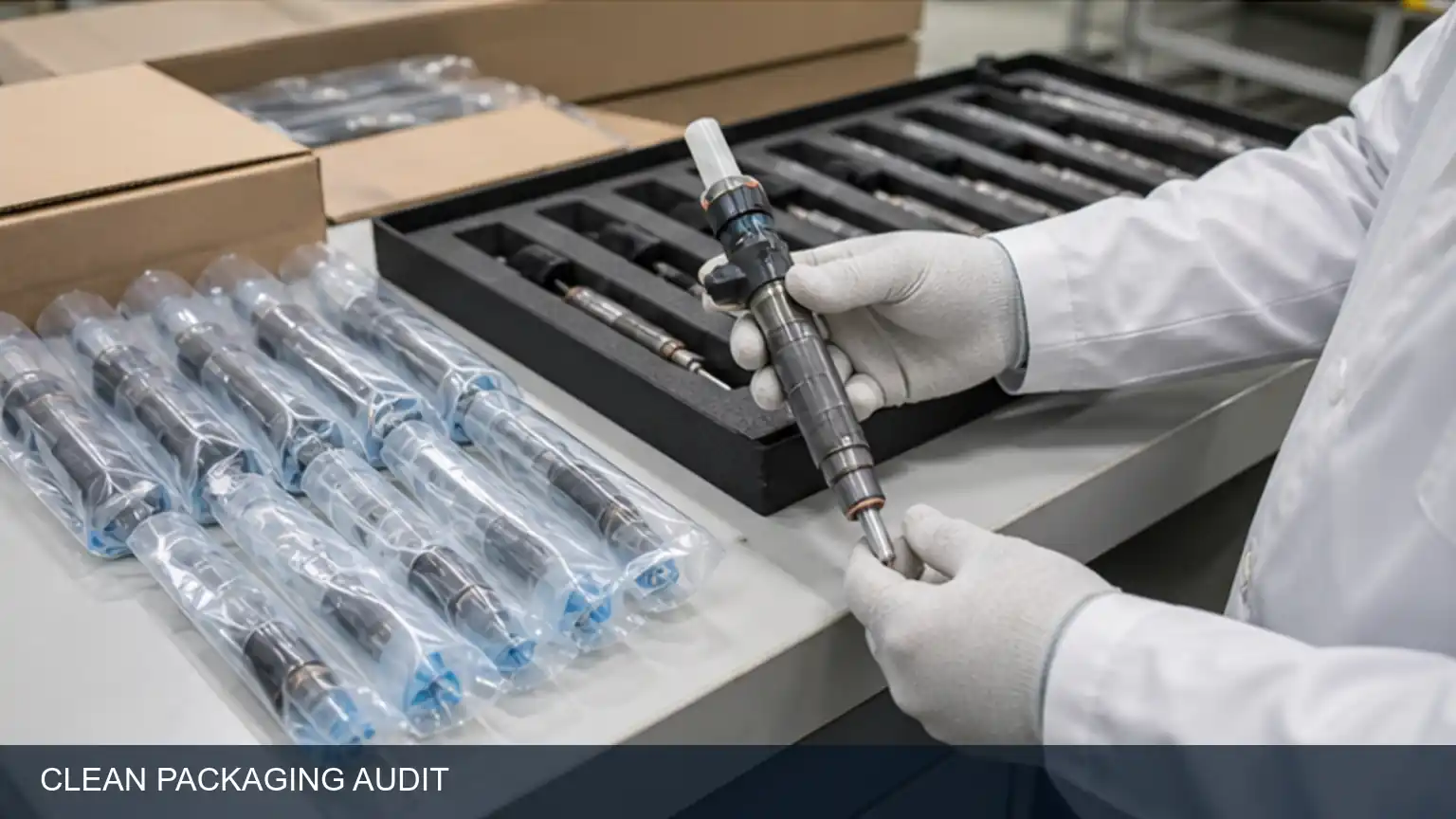
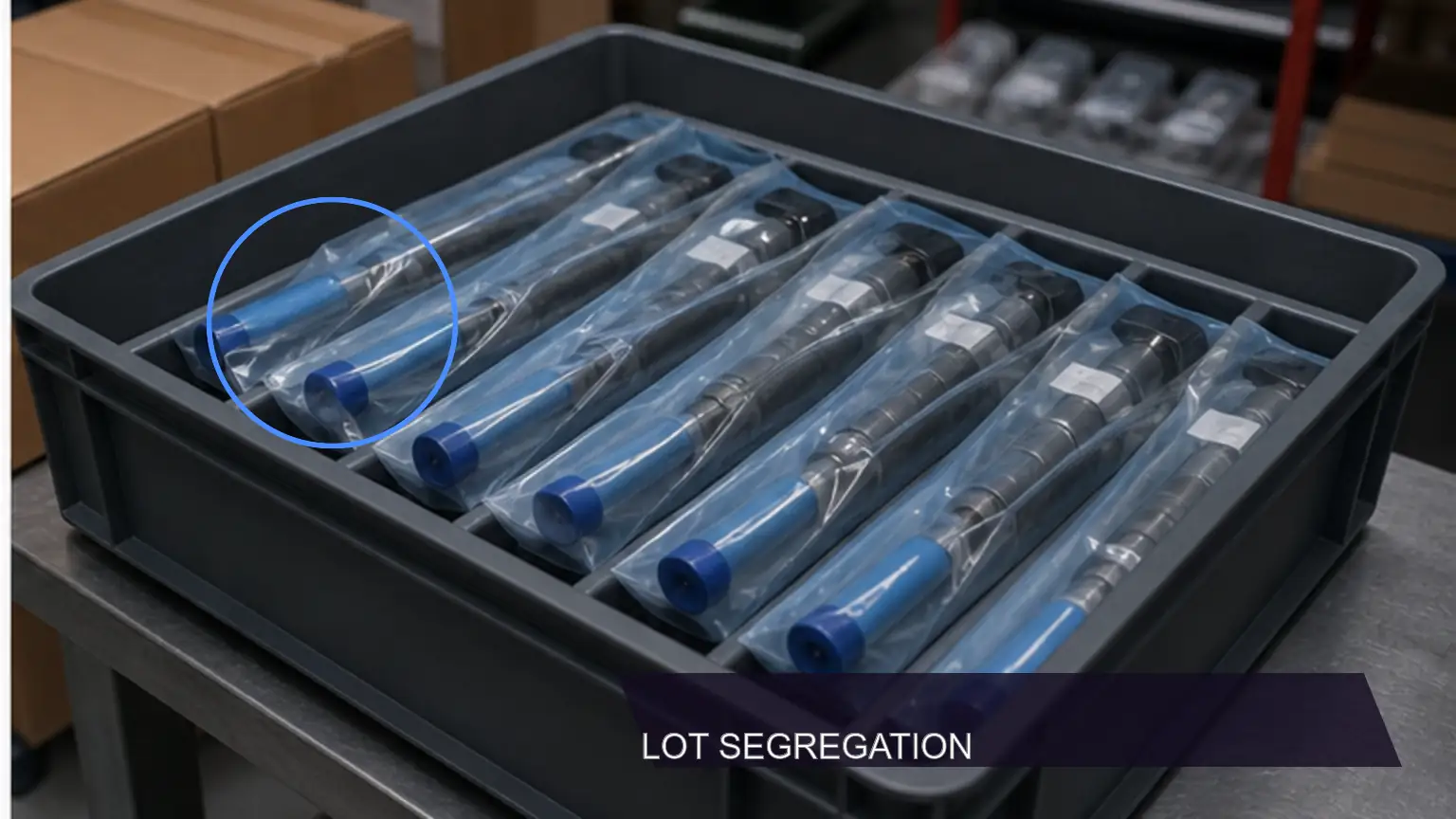
When the shipment arrives, match the purchase-order line, label, unit and packaging before disturbing protective caps or installing the part. Photograph all sides, capture the serial or batch identity, compare interfaces against the approved evidence and quarantine mixed or damaged lots. A visual match is useful but cannot replace the product-specific electrical, hydraulic, pneumatic or calibration checks required by the application.
Record who released the unit, which document revision was used and what deviations were accepted. If identity, condition or interfaces do not match, stop the release and send the seller a concise discrepancy packet. This preserves the evidence needed for replacement, credit or warranty handling.
Shortlist a route only when three gates pass: the documented company role fits the buying task, the seller connects the exact proposed reference to the application evidence, and the commercial offer states condition and release evidence. Price comparison comes after those gates. This approach may produce a shorter list, but it gives a procurement team a defensible reason for every supplier retained or rejected.
For a cross-border identification or supply discussion, contact Elecdura with the installed-unit evidence and destination. Elecdura can review a requested heavy-duty replacement part without representing that every third-party route in this article carries it.
No. The list separates manufacturing, remanufacturing and supply operations. Redat North America, for example, is presented as a U.S. supply route, not as manufacturing proof.
Compare the donor or core identity, replaced components, recovery limits, calibration and coding process, test points, traceability, warranty and core-charge policy.
Requirements vary by engine and injector family. The buyer should confirm the code format, how it is generated and how it must be entered before installation.
Quarantine the unit, preserve caps and packaging, photograph the lot and interfaces, record the shipping condition and obtain disposition before installation.
7 U.S. Diesel Injector Manufacturing and Reman Supply Routes is best used as a map of verifiable roles. It should not be read as a universal ranking or a promise of availability. Define the job, preserve the identity evidence, normalize condition and warranty, and release only the exact unit or lot that matches the approved packet.